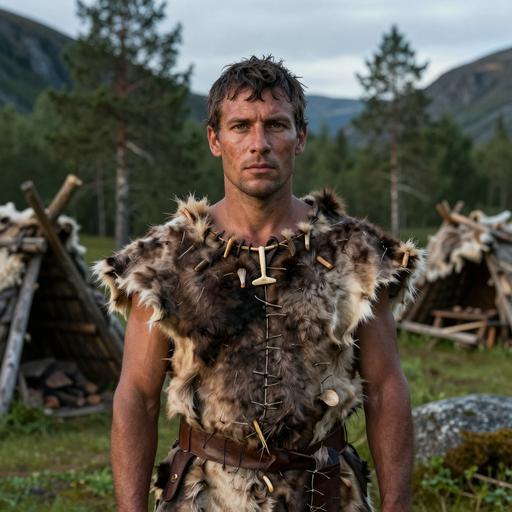
The Mesolithic era in Norway, spanning approximately from 9500 to 4000 BCE, marks a significant period of adaptation and development following the last Ice Age, as Scandinavia transitioned from a glacial environment to one more temperate and conducive to human habitation. This era is characterized by the activities of Scandinavian hunter-gatherers who adapted to the changing landscapes and ecosystems.
Environment and Climate
During the Mesolithic period, Norway underwent significant climatic and environmental changes. As the glaciers retreated, new landscapes emerged, creating a rich tapestry of forests, rivers, coastal areas, and fjords. This transformation led to a rise in biodiversity, with lush forests comprising primarily pines and birches, and abundant wildlife, including elk, reindeer, beavers, and various bird species, which provided ample resources for human sustenance.
The coastlines of Norway became increasingly accessible and fertile, fostering marine ecosystems teeming with fish, seals, and whales. These resources were crucial for the hunter-gatherer societies that gradually moved northwards following the retreating ice.
Lifestyle and Subsistence
Mesolithic societies in Norway were primarily hunter-gatherers who developed a highly adaptive subsistence strategy to exploit the diverse environments they inhabited. The coastal areas became important centers for fishing, sealing, and gathering shellfish, while inland groups focused on hunting land mammals and gathering plant resources.
Seasonal movement was essential for survival, as groups traveled between coastal and inland sites to exploit different resources throughout the year. In summer, groups would congregate at coastal sites to fish and hunt marine mammals, while winter would see a dispersion into smaller family units that moved inland to hunt terrestrial game.
Tools and Technology
Mesolithic Norwegians are noted for their advanced tool-making abilities, particularly their use of microliths—small, flaked stone tools that were typically set in wooden or bone handles for use as arrows or spears. These tools represented a significant leap in efficiency and versatility compared to earlier Paleolithic implements.
Aside from microliths, Mesolithic tool kits included scrapers, burins, and axes made from flint, quartz, and other locally available stones. The use of bone, antler, and wood was also common, with remains suggesting the crafting of fishing gear such as hooks, harpoons, and nets, which were essential for exploiting marine resources.
Social Organization and Culture
The social structure of Mesolithic Norway likely consisted of small, kin-based groups with fluid territories defined by resource availability rather than strict borders. This social organization facilitated cooperation in resource-rich areas and allowed for flexibility when resources became scarce.
Evidence from archaeological sites indicates some degree of ritual and symbolic behavior. Personal ornaments like pendants made from animal teeth and bones suggest the presence of social differentiation or status, as well as possible belief systems or spiritual practices tied to nature and animal life.
Camps and settlements in this period were often temporary, reflecting the nomadic lifestyle of the people. However, some sites, such as those near rich fishing grounds, may have been used repeatedly over many generations, hinting at the beginnings of more complex settlement patterns.
Archaeological Discoveries
Norway's Mesolithic sites, such as those found in the coastal regions and around the Oslofjord, have provided significant insights into the lives of these early Scandinavians. Excavations have uncovered the remains of dwellings, tools, and food debris, giving a detailed picture of daily life and subsistence.
Notable sites include the settlement at Slettnes, which has provided evidence of long-term occupation and varied subsistence strategies, and the Fosna culture sites, named after Fosna in Møre og Romsdal, which have been pivotal in understanding the migration patterns and technological innovations of the time.
Conclusion
The Mesolithic era in Norway is a testament to the resilience and adaptability of early Scandinavian populations. As a period of transition and innovation, it laid the foundation for subsequent Neolithic cultures, characterized by the introduction of farming and more permanent settlement patterns. Understanding Mesolithic Norway offers valuable insights into human adaptation to climatic and environmental changes, a subject as relevant today as it was millennia ago.