Menu
Store
Blog
Armenia_LateHellenistic Aghitu, Armenia (Caucasus)

Aghitu in the Late Hellenistic Shadow

Three maternal lineages glimpse life in Armenia, 72 BCE–60 CE

72 BCE - 60 CE
3 Ancient Samples
Scroll to begin
Chapter I

The Story

Understanding the Aghitu in the Late Hellenistic Shadow culture

Archaeological and ancient mtDNA evidence from Aghitu, Armenia (72 BCE–60 CE) offers a tentative window into Late Hellenistic lifeways and maternal ancestry. Small sample sizes mean conclusions are preliminary; results hint at West Eurasian mitochondrial continuity amid regional cultural exchange.

Time Period

72 BCE – 60 CE

Region

Aghitu, Armenia (Caucasus)

Common Y-DNA

Not reported in these samples

Common mtDNA

W (1), T2h (1), H (1)

Chapter II

Timeline

Key moments in the history of this culture

72 BCE

Earliest dated sample at Aghitu

A human remain from Aghitu is radiocarbon-dated to c.72 BCE, placing it within Late Hellenistic Armenia.

60 CE

Latest dated sample in series

The most recent individual in the small series dates to c.60 CE, framing the samples within a century-long window.

Chapter III

Origins & Emergence

The samples from Aghitu sit at the crossroads of empires and itineraries. Dated between 72 BCE and 60 CE, they belong to what archaeologists classify as Late Hellenistic Armenia — a landscape where local Armenian polities engaged with Hellenistic, Parthian and Near Eastern networks. Archaeological data indicates continued occupation and re-use of earlier settlement loci in the foothills of the Armenian Highlands; material culture in the broader region shows both indigenous traditions and imported forms, reflecting trade and elite exchange.

Limited evidence suggests these communities were neither culturally isolated nor monolithic: ceramic styles, metalwork types and burial practices recorded elsewhere in Late Hellenistic Armenia point to a mosaic of local innovation and cross-cultural influence. At Aghitu, the recovered human remains provide direct biological links to this entangled story. Because the sample set is small, any narrative of origin must remain provisional, but the combination of stratigraphic context, radiocarbon anchors, and typological parallels allows archaeologists to place these individuals within a dynamic, multi-directional sphere of cultural interaction across the southern Caucasus and adjacent Near East.

  • Samples dated 72 BCE–60 CE from Aghitu, Armenia
  • Late Hellenistic Armenia shows mixed local and imported cultural traits
  • Interpretations are provisional due to small sample numbers
Chapter IV

Daily Life & Society

Archaeological evidence from Late Hellenistic contexts in Armenia paints a picture of resilient rural and small urban communities. People at sites like Aghitu likely practiced mixed agriculture and pastoralism, exploiting valley soils and upland pastures; craft production and small-scale trade linked them to regional market networks. Funerary remains — the archaeological context for the DNA samples — suggest varied mortuary behaviors, with burial treatments reflecting age, sex and possibly status.

Material culture across Late Hellenistic Armenia demonstrates both continuity with local Iron Age traditions and adoption of Hellenistic motifs in objects of display. Imported goods and local imitations imply participation in wider exchange systems that carried ideas, goods, and people across vast distances. Archaeobotanical and zooarchaeological datasets from comparable sites show diets rich in cereals, pulses, and domesticated animals; however, such specialized studies have not yet been published for Aghitu’s DNA-bearing contexts. In short, the archaeological record frames the Aghitu individuals as inhabitants of a region where everyday life was shaped by local landscapes and broader geopolitical entanglements.

  • Mixed agriculture and pastoralism probable
  • Material culture shows local traditions plus Hellenistic influence
Chapter V

Genetic Profile

Three mitochondrial genomes recovered from Aghitu yield haplogroups W, T2h, and H. These mtDNA lineages are broadly distributed across West Eurasia: haplogroup H is the most common European maternal lineage and also present in the Near East; W is less frequent but present across Europe and western Asia; T2h is a subclade of T2 with Near Eastern and European occurrences. Together, the trio points to maternal ancestry components common to the larger West Eurasian gene pool rather than to a unique, isolated signature.

Crucially, only three samples were analyzed and no Y-chromosome haplogroups are reported for these individuals; therefore any broader claims about population structure, sex-biased migration, or continuity with later groups are preliminary. Limited evidence suggests affinities with regional maternal lineages known from Late Iron Age and Hellenistic contexts across the southern Caucasus and Near East, but genome-wide data and larger sample sizes would be necessary to test models of admixture, migration, and kinship. Ancient DNA methods — careful contamination controls, damage-pattern authentication, and direct radiocarbon dating — enable confident recovery of these mitochondrial sequences, yet the small n mandates caution: these sequences are illustrative vignettes rather than definitive population summaries.

  • mtDNA haplogroups: W, T2h, H — indicating West Eurasian maternal affinities
  • Sample size (n=3) and absence of Y-DNA mean conclusions are preliminary
Chapter VI

Legacy & Modern Connections

The biological and cultural traces from Aghitu contribute a small but vivid tile to the long mosaic of Armenian history. Archaeological continuity in settlement and material traditions across the Late Hellenistic into later periods implies durable regional lifeways; genetically, the mtDNA types observed are part of a spectrum that persists in West Eurasia today.

However, linking three ancient mitochondrial genomes directly to modern Armenian genetic identity would be an overreach. Broader ancient DNA sampling across time and space in the Armenian Highlands is needed to map continuity, migration, and the impact of subsequent historical events. Cultural legacies — language shifts, artistic repertories, and religious transformations — evolved through many episodes of contact and change, and the preliminary genetic signals from Aghitu underscore both continuity and connectivity rather than simple replacement.

  • mtDNA types echo wider West Eurasian maternal lineages found today
  • Direct links to modern populations require larger, temporally deep datasets
Chapter VII

Sample Catalog

3 ancient DNA samples associated with the Aghitu in the Late Hellenistic Shadow culture

Ancient DNA samples from this era, providing genetic insights into the people who lived during this period.

3 / 3 samples
Portrait Sample Country Era Date Culture Sex Y-DNA mtDNA
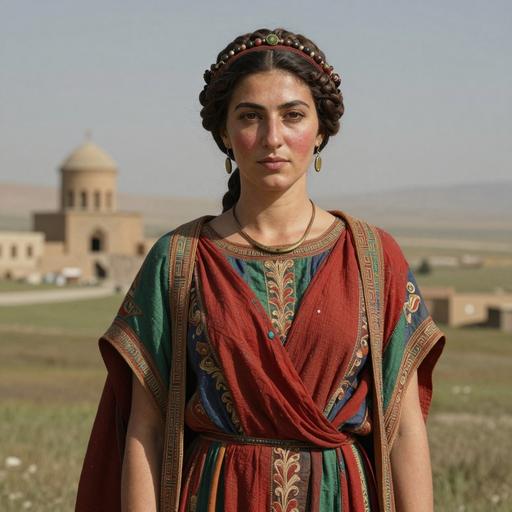
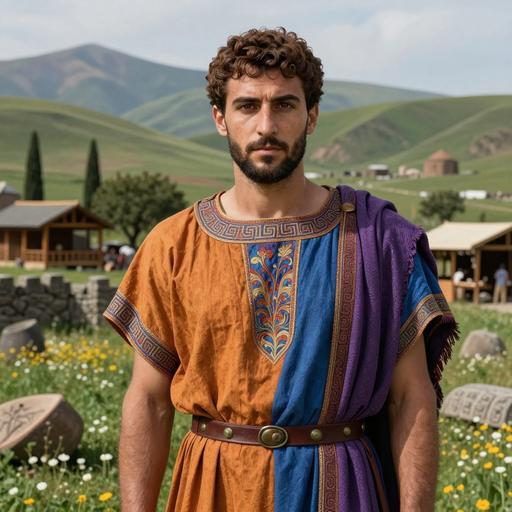
Portrait of ancient individual I1636 from Armenia, dated 72 BCE
I1636
Armenia Armenia_LateHellenistic 72 BCE Hellenic Civilization M - W3a1
Portrait of ancient individual I1639 from Armenia, dated 33 BCE
I1639
Armenia Armenia_LateHellenistic 33 BCE Hellenic Civilization F - T2h
Portrait of ancient individual I1637 from Armenia, dated 72 BCE
I1637
Armenia Armenia_LateHellenistic 72 BCE Hellenic Civilization M - H13a1a2
AI Powered

AI Assistant

Ask questions about the Aghitu in the Late Hellenistic Shadow culture

AI Assistant by DNAGENICS

Unlock this feature
Ask questions about the Aghitu in the Late Hellenistic Shadow culture. Our AI assistant can explain genetic findings, historical context, archaeological evidence, and modern connections.
Sample AI Analysis

The Aghitu in the Late Hellenistic Shadow culture represents a fascinating chapter in human history...

Genetic analysis reveals connections to earlier populations while showing evidence of unique adaptations and cultural innovations. The ancient DNA samples provide insights into migration patterns, social structures, and the biological relationships between ancient populations.

This is a preview of the AI analysis. Unlock the full AI Assistant to explore detailed insights about:

  • Genetic composition and ancestry
  • Migration patterns and origins
  • Daily life and cultural practices
  • Modern genetic legacy
Use code for 30% off Expires May 12