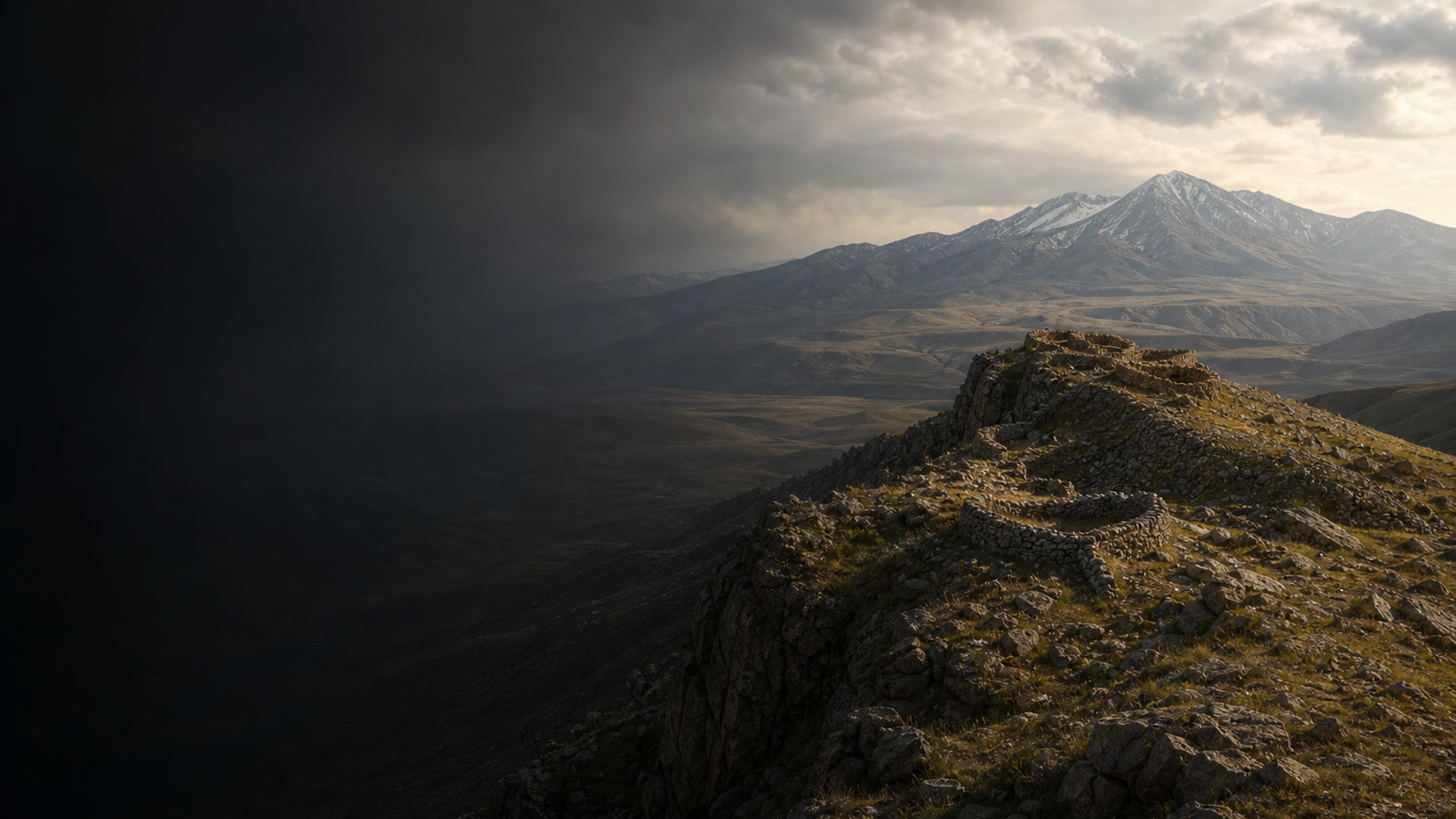
The Armenia_IA assemblage — 11 individuals dated between 1124 and 197 BCE and recovered from cemeteries and complexes such as Lori Berd, Bardzryal, Bragdzor, Karnut, Keti, Karmir Blur (Teishebaini) and Noratus — sits squarely in the Iron Age tapestry of the southern Caucasus. Archaeological data indicate continuity with earlier Bronze Age settlement patterns in the highlands: fortified hilltop citadels, specialized craft quarters and monumental burials appear in stratigraphies at Karmir Blur and other Urartian-linked sites.
Material culture from these sites (pottery styles, metalwork, and architectural traits) suggests regional political entities and networks of exchange extending toward the Levant and Anatolia. Limited epigraphic and material traces connect some sites to the Urartian kingdom (9th–6th centuries BCE), though chronological overlap and local variation mean that not every burial belongs to a single political horizon.
Genetic sampling provides a complementary lens: while 11 individuals form a modest dataset, their geographic spread across multiple cemeteries allows preliminary inferences about population persistence and mobility within the Armenian highlands. Archaeology points to a landscape of fortified towns and rural villages; genetics begins to test whether those visible patterns correspond to demographic continuity, elite movement, or episodic influxes from neighboring regions. Given the sample size and uneven Y‑chromosome reporting, conclusions remain cautious and open to revision as more data accumulate.