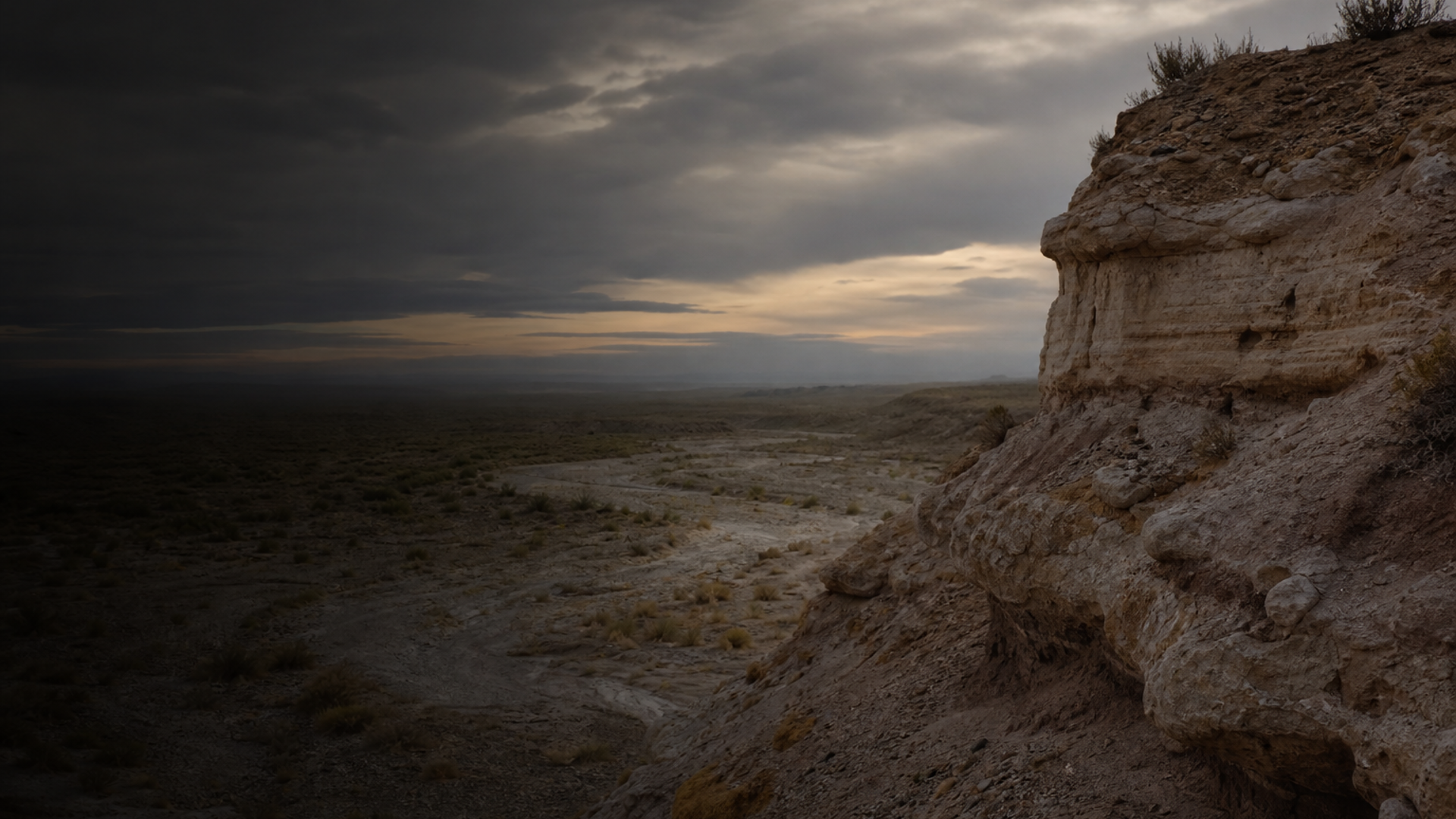
Archaeological indicators from Early Holocene contexts in Argentina suggest mobile hunter‑gatherer lifeways adapted to grassland and riverine landscapes. At Arroyo Seco II, the material record — lithic tools and faunal remains in primary contexts — implies skills in stone tool manufacture, hunting, and resource processing. Limited evidence suggests seasonal mobility patterns tied to local ecological zones: rivers, wetlands, and open plains would have offered fish, small and large mammals, and plant resources.
Social organization likely centered on small, flexible groups. Burial deposits at the site provide intimate glimpses of individuals within those groups; mortuary contexts, where preserved, can indicate treatment of the dead and possible social differentiation, but preservation and sample sizes are small. Crafting and tool use left durable traces, while ephemeral behaviors — social rituals, language, and belief — remain archaeologically elusive.
The cinematic image is of low-density populations moving across a mosaic landscape, carrying knowledge of toolkits, seasonal rounds, and social ties. Archaeology illuminates the rhythms of daily life; genetics helps identify who those people were and how they connected to later populations.