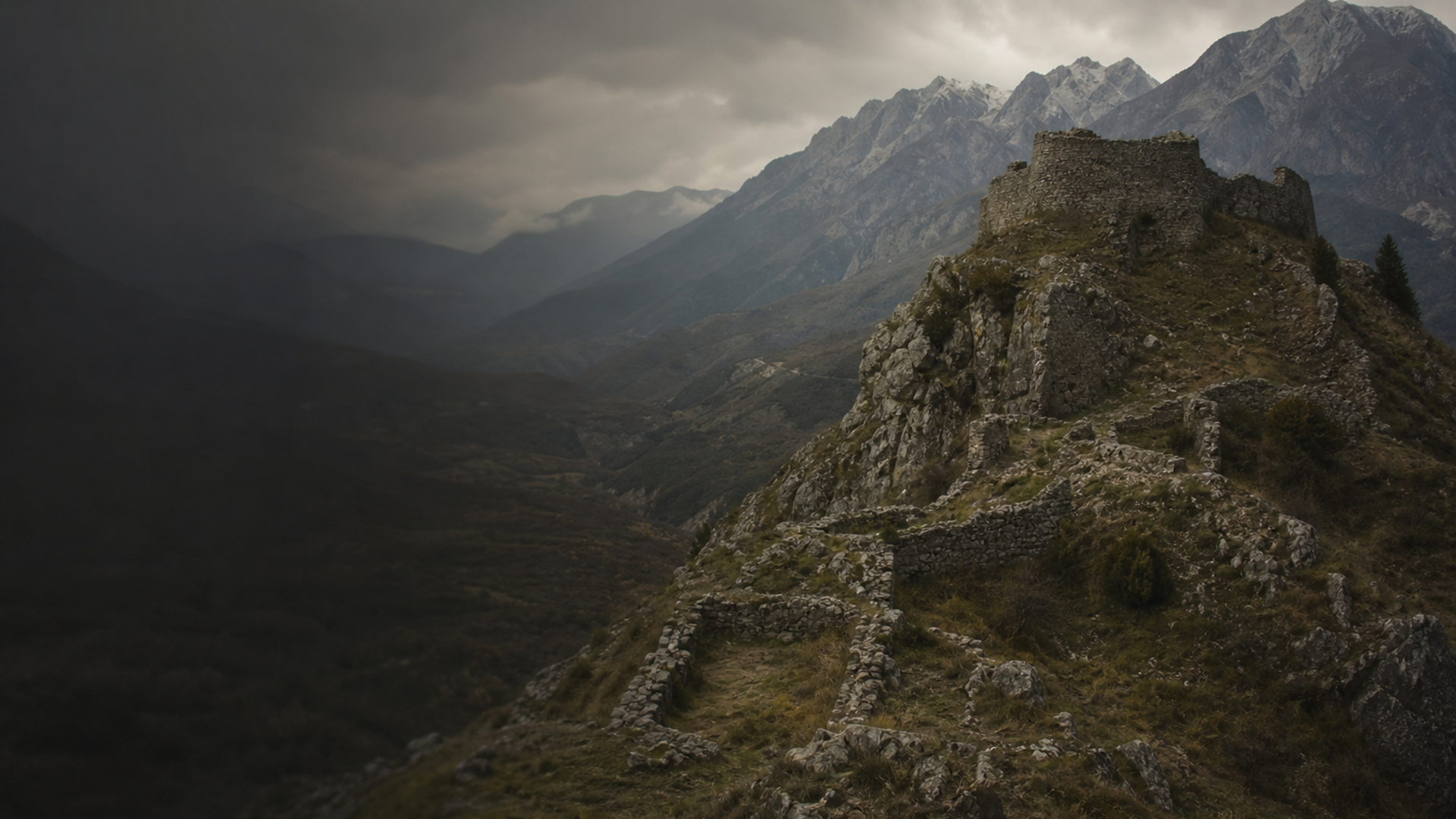
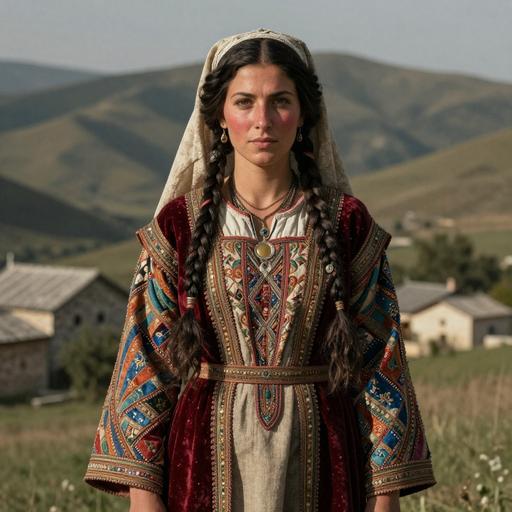
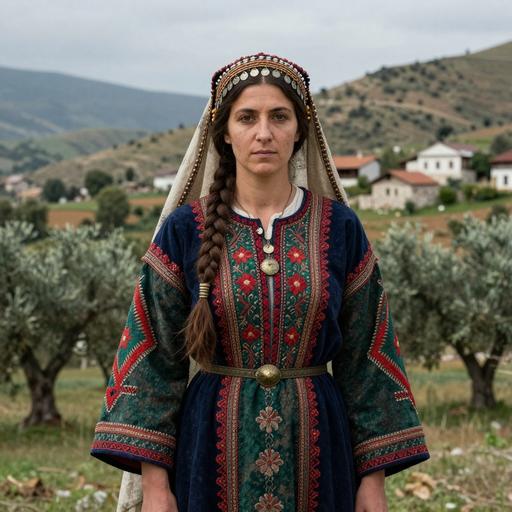
The Barç assemblage sits at the crossroads of history and landscape: a small cluster of Post‑Medieval burials and settlement debris recorded in the Korça Basin of southeast Albania. Archaeological survey and targeted excavation in and around the village of Barç have revealed funerary contexts consistent with 15th–17th century burial practices in the region. Material culture from nearby sites — pottery fragments, metalwork typologies and stratigraphic relationships — anchors these remains within a turbulent era of Ottoman expansion, local principalities, and shifting trade networks.
Archaeological data indicate continuity of rural settlement in the Korça Basin across the late medieval into the Post‑Medieval period, though the local record is fragmentary. Limited structural remains and isolated graves suggest small, dispersed communities rather than dense urban centers at this locality. Environmental evidence from the basin points to mixed agriculture and pastoralism as the economic backdrop for inhabitants of Barç.
Because only two human samples are available, any reconstruction of origins for the Barç individuals must be cautious. The archaeological context provides a canvas — graves and associated finds hint at lifeways and chronology — but does not, by itself, resolve the complex tapestry of migration, local continuity, and cultural exchange that characterized the Balkans in this period. Genetic data, though sparse here, add a complementary axis for exploring those possibilities.