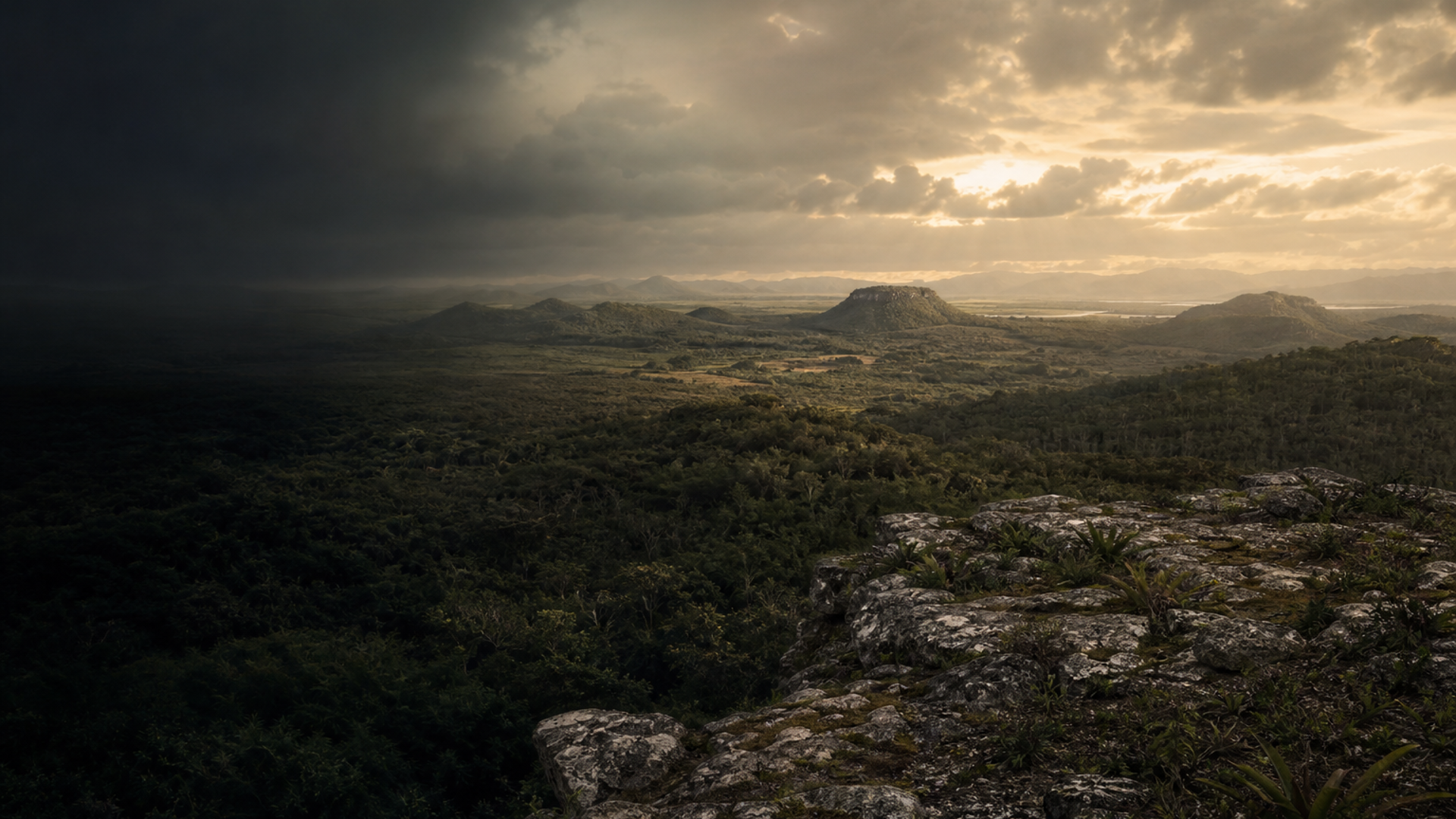
In the dusky lowlands of Belize, where lagoons and limestone sinkholes capture the light of an ancient sky, the Mayahak Cab Pek assemblage provides a fragile window into human presence roughly 3,600 years ago. Radiocarbon dates from the burial context cluster between 3708 and 3543 BCE, placing this individual in the Late Archaic to early formative horizon of southern Mesoamerica. Archaeological data indicates a lifeway adapted to coastal and near-coastal wetlands: shell middens, chipped stone, and ephemeral camp features hint at fishing, mollusc gathering, and seasonal mobility.
Material culture at this site shows affinities with contemporaneous lowland traditions rather than fully developed Classic-era Maya expression, suggesting cultural networks that were regional and dynamic. Limited evidence suggests early plant management may have been practiced alongside foraging, though clear agrarian features are not preserved at Mayahak Cab Pek. The lone genetic sample emerges from this matrix of subsistence and exchange as an evocative but solitary point of contact: it anchors one human story in a much larger, still-opaque tapestry of population movement along the Caribbean coast and inland wetlands.
Because the genetic and archaeological record here is based on a single individual, broad reconstructions of population dynamics remain preliminary. Ongoing excavations and future ancient DNA sampling across Belize are essential to transform this solitary voice into a chorus that reveals regional origins more confidently.