Menu
Store
Blog
Austria_N_HG_LBK Brunn Wolfholz, Austria (Central Europe)

Brunn Wolfholz: Neolithic Threshold

A lone genome at the frontier between Mesolithic hunter‑gatherers and LBK farmers in Austria.

5604 CE - 5230 BCE
1 Ancient Samples
Scroll to begin
Chapter I

The Story

Understanding the Brunn Wolfholz: Neolithic Threshold culture

Single ancient genome (5604–5230 BCE) from Brunn Wolfholz, Austria, illuminates contact between local hunter‑gatherers and Linear Pottery Culture farmers. Limited evidence suggests continuity of mtDNA U and an ancestral Y lineage (CT); conclusions remain preliminary.

Time Period

5604–5230 BCE

Region

Brunn Wolfholz, Austria (Central Europe)

Common Y-DNA

CT (single sample)

Common mtDNA

U (single sample)

Chapter II

Timeline

Key moments in the history of this culture

5600 BCE

Early Neolithic presence at Brunn Wolfholz

Radiocarbon‑calibrated dates place the individual between 5604 and 5230 BCE, at the interface of hunter‑gatherer and LBK farmer activity in Austria.

Chapter III

Origins & Emergence

Archaeological data from the Brunn Wolfholz locality (Austria) places this individual in a turbulent transitional horizon between local Mesolithic traditions and the expanding Linear Pottery Culture (LBK). Dated to roughly 5604–5230 BCE, the burial or recovered remains sit within a landscape where incoming Neolithic farmers and indigenous hunter‑gatherers overlapped in time and space.

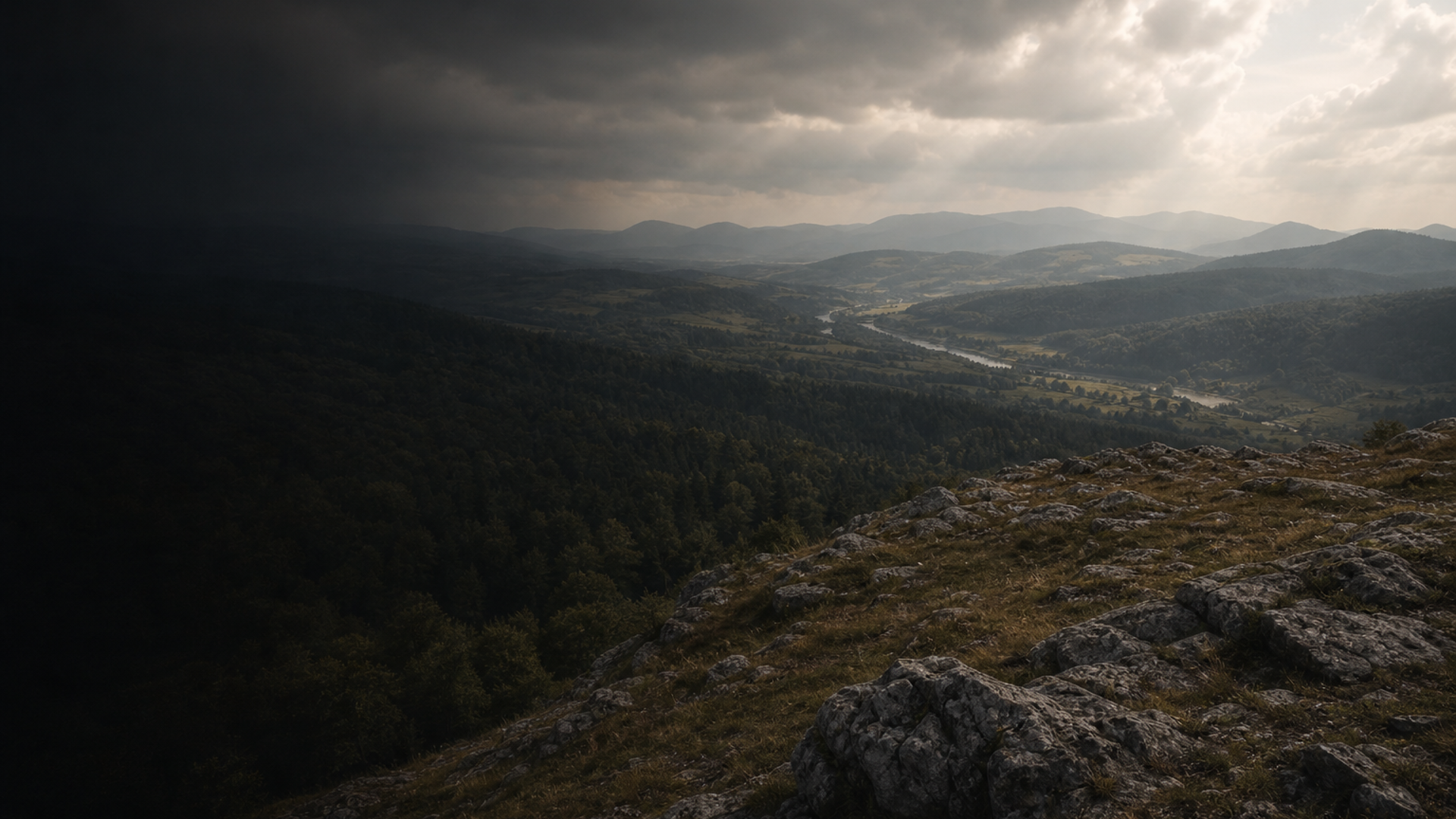
The scene is cinematic: dense temperate woodlands opening onto river valleys that funneled early farmers, while mobile forager groups exploited rich seasonal resources. Material culture in nearby LBK settlements—longhouses, decorated pottery, and agriculture—contrasts with the older stone tool types and subsistence signals of hunter‑gatherer contexts. Limited evidence suggests that some individuals at these frontiers retained genetic and cultural ties to pre‑Neolithic populations even as Neolithic lifeways spread.

Because this dataset is based on a single genome, broad claims about population replacement or sustained coexistence must be tentative. Nevertheless, the Brunn Wolfholz individual offers a palpable glimpse of a moment when deep Paleolithic lineages and novel Neolithic lifeways met, exchanged, and sometimes merged.

  • Dated to 5604–5230 BCE at Brunn Wolfholz, Austria
  • Contextualized at the interface of hunter‑gatherers and LBK farmers
  • Evidence is limited — conclusions are preliminary
Chapter IV

Daily Life & Society

Material traces of everyday life in this region suggest a tapestry of economies and practices. LBK settlements emphasize sedentary agriculture—cereal cultivation, animal husbandry, timber longhouses and pottery—while hunter‑gatherer groups retained mobility, intensive foraging, fishing, and small‑scale exchange. At a frontier site like Brunn Wolfholz, archaeological indicators could include mixed toolkits, transient occupation features, and artifacts showing stylistic blending.

Dietary signals in Neolithic Central Europe point to increasing reliance on domesticated grains and livestock, but isotopic and faunal data from nearby contexts show continued consumption of wild protein for many generations. Social life would have been negotiated at multiple scales: household production in agricultural villages, seasonal gatherings, and exchange networks that moved raw materials and ideas across valleys. Limited faunal or botanical remains directly tied to this single individual restrict firm conclusions about their exact lifestyle, but the regional pattern implies a world of shifting strategies and cultural entanglements.

Archaeological reconstructions must therefore balance evocative scenarios with caution—the lived reality at Brunn Wolfholz likely combined elements of mobility, farming knowledge, and cultural negotiation.

  • Frontier lifeways likely mixed farming and foraging practices
  • Material culture may show hybrid toolkits and exchanges
Chapter V

Genetic Profile

The genetic evidence from Brunn Wolfholz is striking in its brevity: one sequenced individual (sample count = 1). That single genome carries Y‑DNA assigned to haplogroup CT and mitochondrial DNA within haplogroup U.

Haplogroup CT is an early, broadly distributed paternal lineage from which many later Y branches descend; its presence here does not pinpoint a specific derived male lineage but signals retention of an ancient paternal lineage at this frontier. Mitochondrial haplogroup U is commonly associated with European hunter‑gatherers across the Mesolithic and into the early Neolithic and often indicates matrilineal continuity with pre‑farming populations.

Genetic patterns in Central Europe during this period reflect varying degrees of admixture: incoming Anatolian‑derived farmer ancestry associated with LBK communities and local hunter‑gatherer ancestry characteristic of Mesolithic groups. Limited evidence from this single sample suggests a biological connection to hunter‑gatherer maternal lineages alongside an ancient paternal marker, but it cannot resolve the timing, directionality, or demographic scale of interactions. Larger sample sizes from Brunn Wolfholz and contemporaneous sites are essential before drawing firm conclusions about admixture dynamics or population structure.

  • Single genome shows Y haplogroup CT and mtDNA U
  • mtDNA U hints at hunter‑gatherer maternal continuity; CT is ancestrally broad
Chapter VI

Legacy & Modern Connections

The Brunn Wolfholz individual sits at a historical hinge whose echoes ripple into later European prehistory. While the LBK expansion represents one of the earliest large‑scale spreads of farming in Central Europe, the persistence of hunter‑gatherer maternal lineages like mtDNA U in some early Neolithic genomes reveals that cultural change was not always matched by immediate genetic replacement.

For modern populations, direct lineage continuity from any single ancient individual is unlikely to be demonstrable without many comparative genomes. Instead, the broader legacy is a genetic palimpsest: modern Europeans carry mixtures of ancestries shaped by Mesolithic hunter‑gatherers, incoming Neolithic farmers, and later migrations. The Brunn Wolfholz specimen contributes a cautious datapoint to that story—an evocative reminder that human history is composed of encounters, blends, and resilient local traditions. Given the n=1 sample size, however, connecting this individual to specific modern groups remains speculative.

  • Illustrates genetic and cultural blending during the Neolithic transition
  • Single sample is informative but insufficient to map direct modern descent
Chapter VII

Sample Catalog

1 ancient DNA samples associated with the Brunn Wolfholz: Neolithic Threshold culture

Ancient DNA samples from this era, providing genetic insights into the people who lived during this period.

1 / 1 samples
Portrait Sample Country Era Date Culture Sex Y-DNA mtDNA
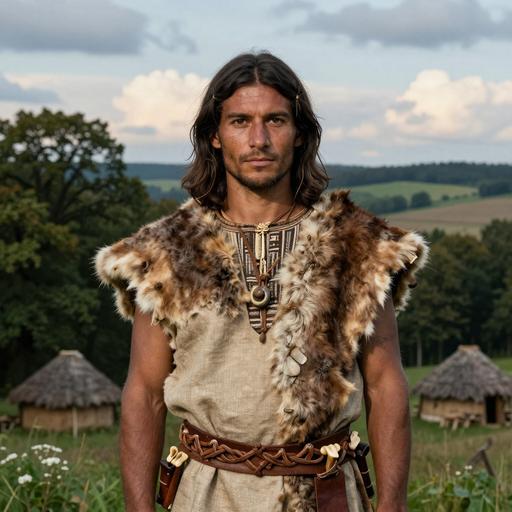
Portrait of ancient individual I6913 from Austria, dated 5604 BCE
I6913
Austria Austria_N_HG_LBK 5604 BCE European Neolithic M CT U5a1
AI Powered

AI Assistant

Ask questions about the Brunn Wolfholz: Neolithic Threshold culture

AI Assistant by DNAGENICS

Unlock this feature
Ask questions about the Brunn Wolfholz: Neolithic Threshold culture. Our AI assistant can explain genetic findings, historical context, archaeological evidence, and modern connections.
Sample AI Analysis

The Brunn Wolfholz: Neolithic Threshold culture represents a fascinating chapter in human history...

Genetic analysis reveals connections to earlier populations while showing evidence of unique adaptations and cultural innovations. The ancient DNA samples provide insights into migration patterns, social structures, and the biological relationships between ancient populations.

This is a preview of the AI analysis. Unlock the full AI Assistant to explore detailed insights about:

  • Genetic composition and ancestry
  • Migration patterns and origins
  • Daily life and cultural practices
  • Modern genetic legacy
Use code for 35% off Expires May 20