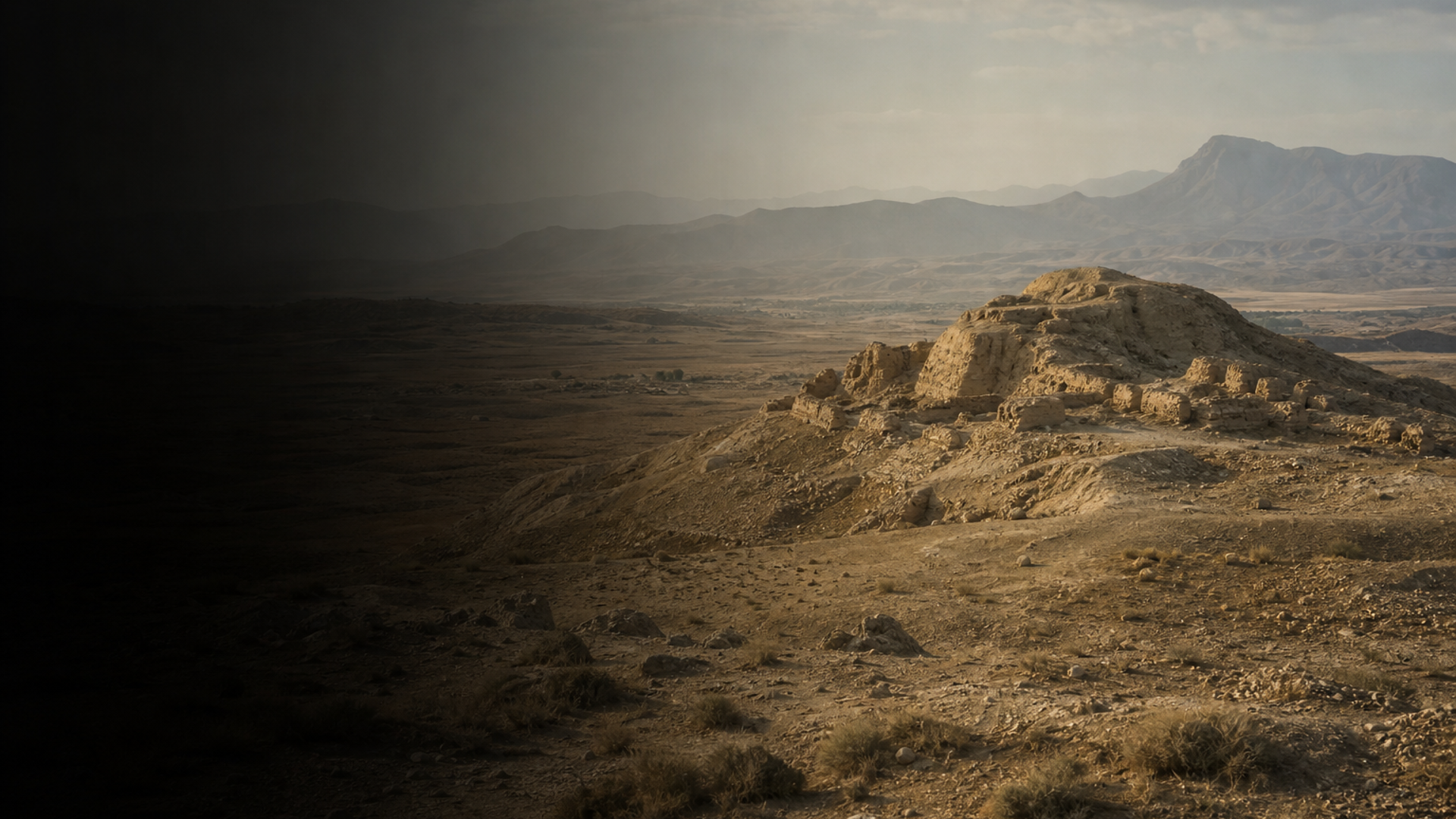
Fourteen individuals sampled from Dinkha Tepe provide a first genetic vista onto a community active between 2012 and 841 BCE. Mitochondrial DNA is reported for most samples and is dominated by West Eurasian maternal lineages: haplogroup U (4 individuals), J (3), T (2), N (1), and the rarer U2d (1). These mtDNA types are common across the Near East and parts of Eurasia and often reflect deep maternal ancestries that predate the historical Bronze–Iron sequence.
Notably, no consistent Y-DNA profile is available in the current dataset (Y-chromosome information is not reported or remains undetermined), so paternal-line inferences must be withheld. Archaeogenetic signals from the mtDNA suggest continuity with broader regional maternal lineages and do not, by themselves, demonstrate major population replacement during the Bronze–Iron transition at this site. However, the presence of J and T alongside U haplogroups points to a mix of local and regionally widespread maternal ancestries that could reflect longstanding Neolithic and Bronze Age genetic substrates plus later contacts.
Because the dataset comprises 14 individuals from a single tell, conclusions about population dynamics must remain cautious. The sample offers strong directional clues—regional affinity and maternal continuity—but resolving finer-scale admixture or sex-biased migration requires larger, geographically broader datasets and any available Y-DNA data. Ancient DNA and archaeological context together provide a complementary narrative: cultural change at Dinkha Tepe was not necessarily accompanied by wholesale demographic turnover, at least on the maternal side.