
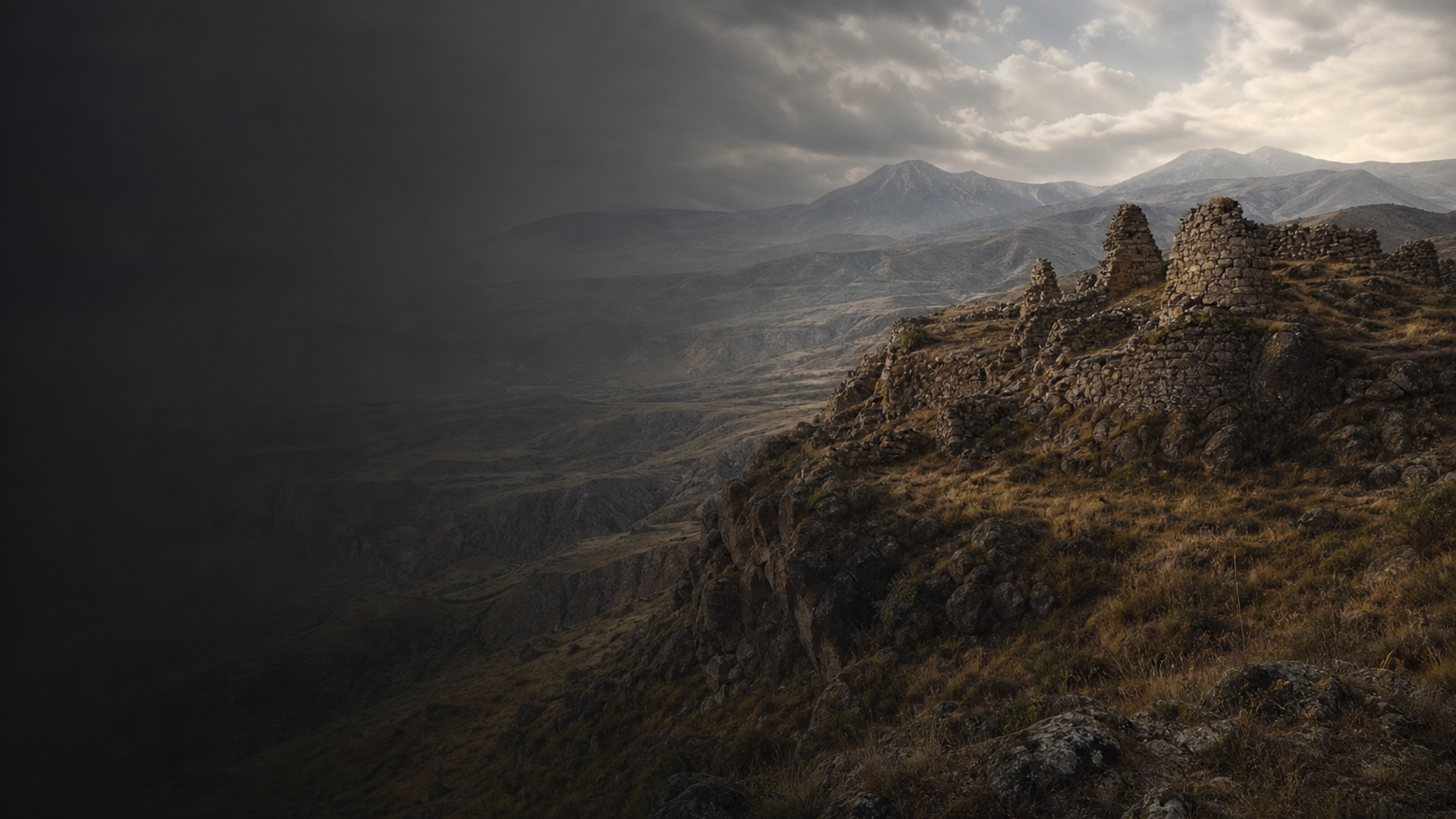
The human landscape of the Armenian highlands between 1500 BCE and 330 CE unfolds like a palimpsest: older Bronze Age traditions persisted even as new networks of exchange and political organization reshaped daily life. Archaeological complexes such as Bardzryal and Bagheri Tchala, along with cemetery sites at Lchashen, Noratus and Lori Berd, preserve stratified layers of settlement, metallurgy and burial practice. Excavated fortifications — the Black Fortress among them — and richly furnished graves indicate communities engaged in long-distance trade, craft specialization, and defensive architecture.
Ancient DNA from 54 individuals provides a regional lens on these processes. Genome-wide patterns in the wider Caucasus suggest a blend of local highland ancestries with episodic inflows from nearby Anatolia, the Iranian plateau, and the Eurasian steppe; Armenia_LBA_EIA samples appear to sit within this regional continuum. Where the archaeological record gives form — ceramics, tomb types, metalwork — genetic data begins to map movement of people and lineage continuity. Limited evidence suggests neither abrupt population replacement nor simple isolation; instead, the picture is one of long-term continuity punctuated by episodes of contact and admixture. Caution is warranted: some site-specific datasets remain small, and many cultural changes can reflect ideas and trade rather than wholesale demographic shifts.





