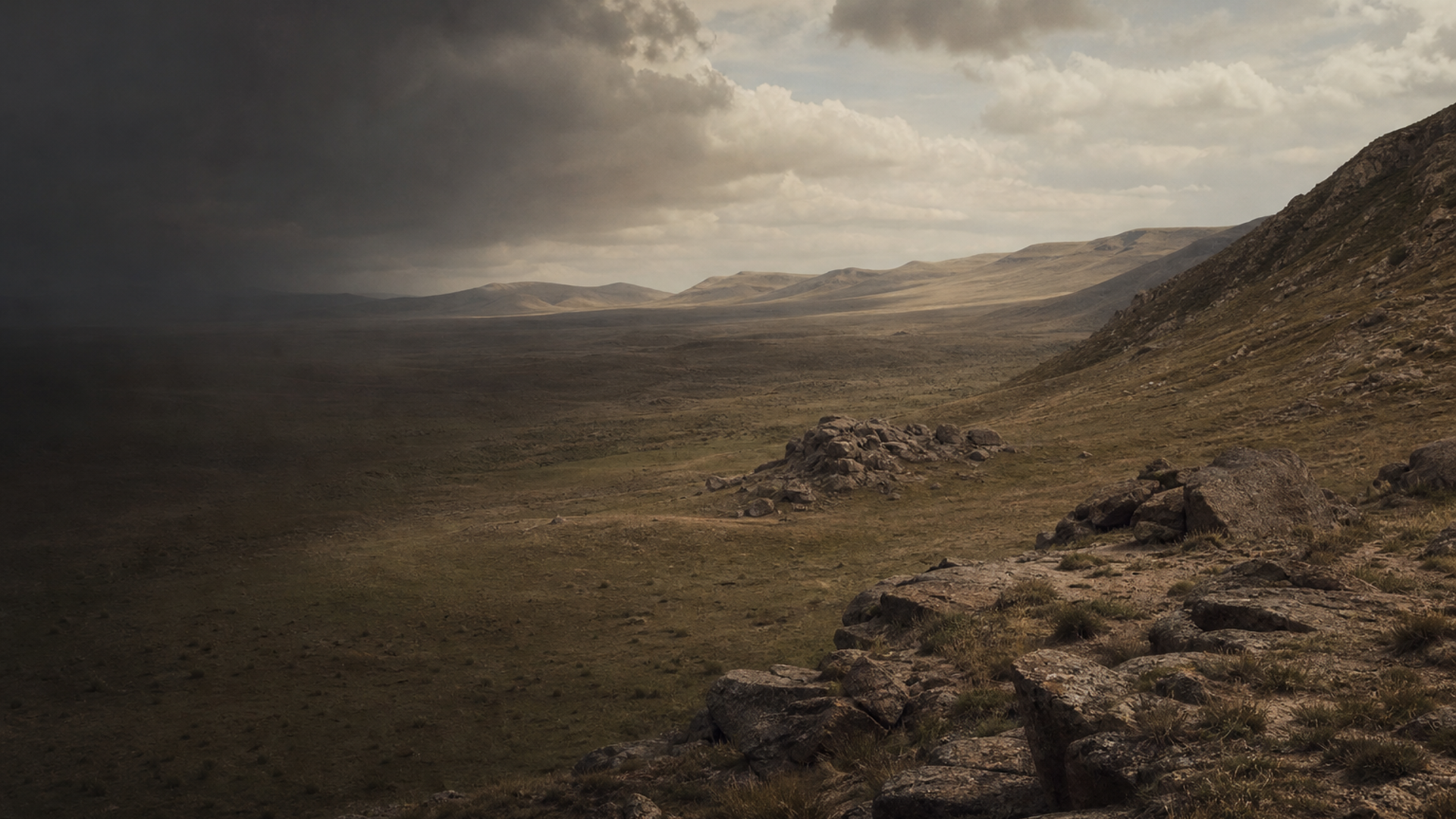
Material remains from Kairan paint a picture of a mobile-herding lifeway set against the broad Central Asian steppe. Archaeological finds — including worked bone, pottery sherds, and occasional metal fragments — suggest seasonal movement with camps and burial loci tied to grazing rounds and water sources. Animal economies were likely primary: sheep, goat, and cattle herding would have structured household labor, mobility, and social rhythms.
Burial variability, where present, hints at social differentiation. Some interments include personal items or differing body positions, which archaeologists interpret as signals of status, gender roles, or kin affiliation. Exchange networks probably connected Kairan to neighboring communities, transmitting goods and ideas across the steppe. Pollen and sedimentary indicators near Kairan suggest a mixed grassland environment that shaped settlement choices and subsistence strategies.
Caution is warranted: the sampled assemblage is limited, and many domestic activities leave ephemeral traces. Archaeological interpretations rely on a combination of artifact distribution, burial contexts, and environmental proxies to reconstruct daily life.