Menu
Store
Blog
Armenia_Achaemenid_Hellenistic Armenia (Karmir Blur, Teishebaini)

Karmir Blur: Achaemenid–Hellenistic Armenia

Single ancient genome from Teishebaini hints at maternal links across imperial networks

399 CE - 231 BCE
1 Ancient Samples
Scroll to begin
Chapter I

The Story

Understanding the Karmir Blur: Achaemenid–Hellenistic Armenia culture

A lone genome from the necropolis of Teishebaini (Karmir Blur), dated 399–231 BCE, reveals mtDNA haplogroup U. Archaeological data places the burial in Achaemenid–Hellenistic Armenia. With only one sample, genetic conclusions are preliminary but illuminating when paired with material culture.

Time Period

399–231 BCE

Region

Armenia (Karmir Blur, Teishebaini)

Common Y-DNA

Not reported / no data

Common mtDNA

U (1 sample)

Chapter II

Timeline

Key moments in the history of this culture

399 BCE

Burial at Teishebaini dated

An individual interred in the necropolis of Karmir Blur (Teishebaini) is radiocarbon-dated to the Achaemenid–Hellenistic period (399–231 BCE); mtDNA haplogroup U recovered from this burial.

Chapter III

Origins & Emergence

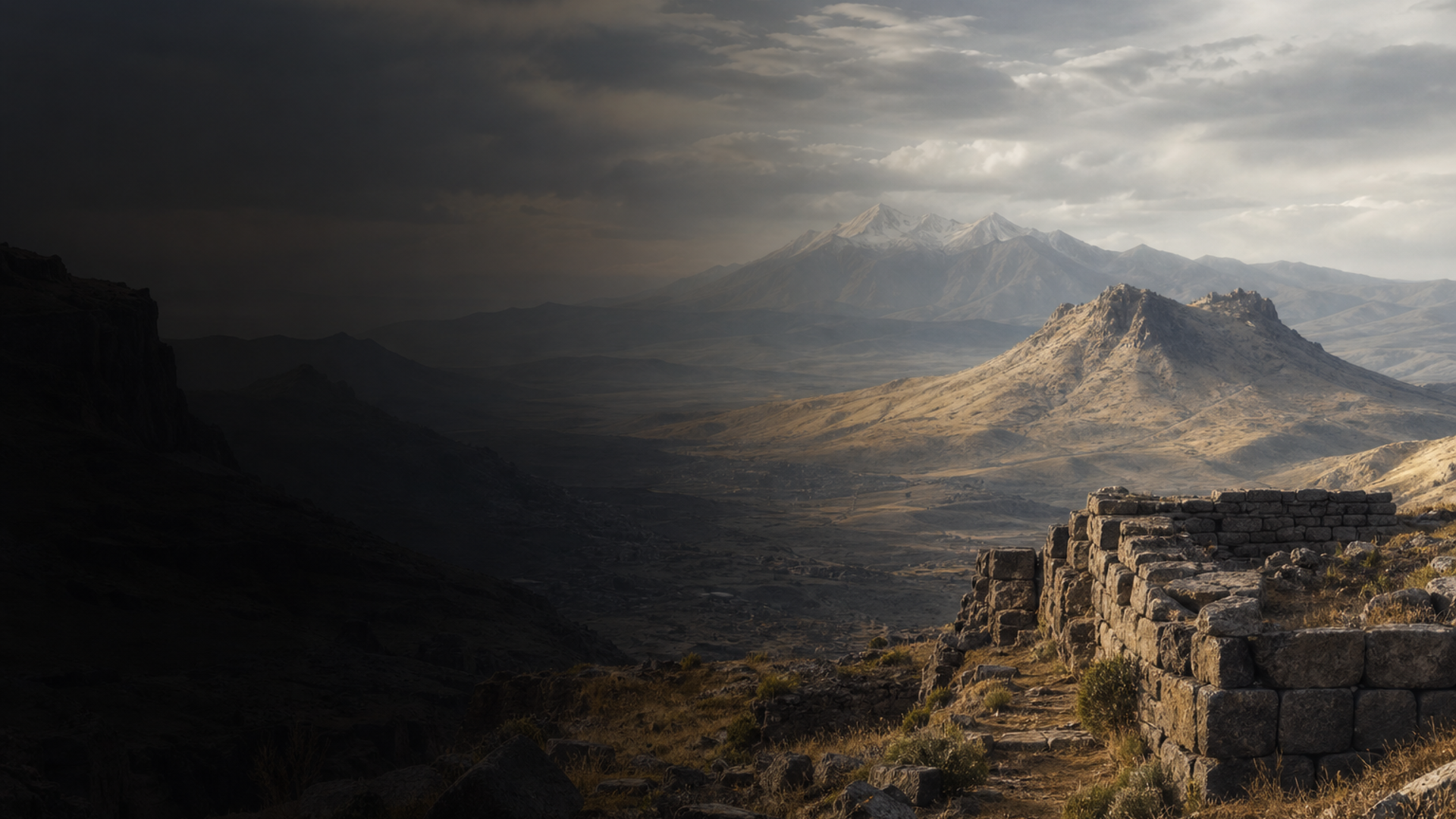
Karmir Blur — the mound that shelters the fortified site known to archaeologists as Teishebaini — occupies a dramatic position in the Armenian highlands. Originally associated with earlier Urartian power, the citadel and its surrounding necropolis preserve layers of activity across centuries. By the Achaemenid and Hellenistic eras (the period encompassed by 399–231 BCE), this landscape lay at a crossroads of imperial administration, local dynastic traditions, and long-distance exchange.

Archaeological data indicates that burials at Teishebaini continued to reflect a blend of local funerary practices and external influences brought by Achaemenid governance and later Hellenistic cultural currents. Pottery styles, architectural fragments, and the spatial organization of necropoleis suggest continuity alongside adaptation: communities maintained ancestral rites even as new elites and artistic vocabularies arrived. Limited evidence suggests that Teishebaini remained an important regional center into the Hellenistic period, serving as a node for trade and political interaction across the South Caucasus.

Because the genetic dataset for this cultural label is currently a single individual, interpretations about population origins must remain cautious. Still, the convergence of stratified material culture and direct-dated genetic material allows a more textured picture: a place rooted in older local traditions yet entangled with the imperial networks of the Achaemenid and Hellenistic worlds.

  • Teishebaini (Karmir Blur) is a layered fortress and necropolis in the Armenian highlands
  • Material culture shows continuity with Urartian roots plus Achaemenid and Hellenistic influences
  • Sample size is tiny—archaeological context informs origin hypotheses more than genetics alone
Chapter IV

Daily Life & Society

The human story at Teishebaini is best read through the objects and architecture left in place. Archaeological excavations of the site and comparable necropoleis in the region reveal a society where household economy, craft specialization, and funerary display intersected. Local families likely practised mixed agriculture adapted to the highland environment, supplemented by pastoralism and participation in regional exchange networks that brought goods, styles, and perhaps people from the Iranian plateau and the Mediterranean zones during the Achaemenid and Hellenistic periods.

Funerary practice is particularly revealing: archaeological data indicates that burials often included personal items—ceramics, beads, metalworks—that speak to identity and status. In a cinematic sense, the necropolis is a place of small, intimate stories: a mother’s jewelry, a pot placed for the afterlife, the layering of earlier grave types with newer interments. Administrative structures imposed by imperial authorities may have altered elite life, but everyday practices tended to carry on localized patterns.

Isotopic and palaeobotanical studies (where available) can illuminate diet and mobility; the single genetic sample from the necropolis adds a maternal perspective but cannot on its own reconstruct household composition or social hierarchy. Archaeology therefore remains essential to contextualize the genetic signal and to imagine the textures of daily life.

  • Economy likely combined agriculture, pastoralism, and regional trade
  • Funerary goods reflect personal identity and long-standing local traditions
Chapter V

Genetic Profile

The genetic contribution for the Armenia_Achaemenid_Hellenistic label currently rests on a single ancient genome from the necropolis of Teishebaini dated between 399 and 231 BCE. This individual carries mitochondrial haplogroup U, a maternal lineage widespread across West Eurasia in both ancient and modern populations. Haplogroup U is diverse and long-standing in the region, and its presence here aligns with broader patterns of maternal continuity observed in parts of the Near East and Caucasus.

Crucially, no Y‑chromosome haplogroup is reported for this sample, and with n=1 it is impossible to infer population structure, sex-biased admixture, or demographic shifts. Limited evidence suggests continuity of maternal lineages through successive cultural horizons, but such a conclusion must be tentative. Genetic data at this scale is best used to complement archaeological inference—confirming that maternal lineages similar to those seen elsewhere in the region persisted into the Achaemenid–Hellenistic period, rather than proving migration or isolation on its own.

Comparative analysis with larger datasets from neighboring regions (Achaemenid Iran, Hellenistic Anatolia, Iron Age Caucasus) would be required to place this genome on a finer genetic map. For now, the genome is a luminous but solitary thread that, when woven into the archaeological tapestry, helps suggest continuity and connection rather than definitive population history.

  • mtDNA haplogroup U detected in the single sampled individual
  • With only one genome, population-level conclusions are preliminary and uncertain
Chapter VI

Legacy & Modern Connections

The echoes of Teishebaini reach into the present through landscape, memory, and genetics. Maternal lineages like mtDNA U remain part of the genetic makeup of many contemporary populations in the Caucasus and Near East, suggesting threads of biological continuity across millennia. Archaeological continuity in burial practice and material culture similarly suggests cultural persistence even amid imperial turnovers.

At the same time, this legacy must be described with care. A single ancient genome cannot map onto modern communities or claim direct ancestry lines; demographic histories are complex, with layers of migration, admixture, and cultural change. Instead, the Teishebaini sample acts as a concrete anchor — a dated, contextualized datapoint that helps calibrate regional genetic models and invites further sampling. As more genomes from Achaemenid and Hellenistic contexts are published, we will better understand how local Armenian communities participated in broader imperial and Mediterranean networks while maintaining distinct local identities.

  • mtDNA continuity suggests possible long-term maternal lineages in the region
  • Single-sample nature means modern connections are suggestive, not conclusive
Chapter VII

Sample Catalog

1 ancient DNA samples associated with the Karmir Blur: Achaemenid–Hellenistic Armenia culture

Ancient DNA samples from this era, providing genetic insights into the people who lived during this period.

1 / 1 samples
Portrait Sample Country Era Date Culture Sex Y-DNA mtDNA
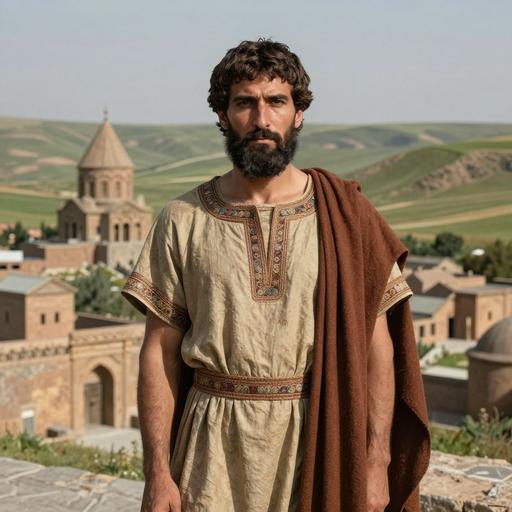
Portrait of ancient individual I16119 from Armenia, dated 399 BCE
I16119
Armenia Armenia_Achaemenid_Hellenistic 399 BCE Hellenic Civilization M - U3b2c
AI Powered

AI Assistant

Ask questions about the Karmir Blur: Achaemenid–Hellenistic Armenia culture

AI Assistant by DNAGENICS

Unlock this feature
Ask questions about the Karmir Blur: Achaemenid–Hellenistic Armenia culture. Our AI assistant can explain genetic findings, historical context, archaeological evidence, and modern connections.
Sample AI Analysis

The Karmir Blur: Achaemenid–Hellenistic Armenia culture represents a fascinating chapter in human history...

Genetic analysis reveals connections to earlier populations while showing evidence of unique adaptations and cultural innovations. The ancient DNA samples provide insights into migration patterns, social structures, and the biological relationships between ancient populations.

This is a preview of the AI analysis. Unlock the full AI Assistant to explore detailed insights about:

  • Genetic composition and ancestry
  • Migration patterns and origins
  • Daily life and cultural practices
  • Modern genetic legacy
Use code for 30% off Expires May 12