Menu
Store
Blog
Pannonia (Klosterneuburg), Austria

Klosterneuburg: Romans on the Danube

A Roman-period community in Pannonia revealing mobility, multicultural ties, and early genetic glimpses

1 CE - 450 CE
Scroll to begin
Chapter I

The Story

Understanding the Klosterneuburg: Romans on the Danube culture

Archaeological remains from Klosterneuburg (Pannonia, Austria; 1–450 CE) reveal a Roman-era community shaped by military, trade, and local traditions. Six ancient DNA samples provide a preliminary genetic window into mobility and admixture in a frontier province.

Time Period

1–450 CE

Region

Pannonia (Klosterneuburg), Austria

Common Y-DNA

Not reported (6 samples — preliminary)

Common mtDNA

Not reported (6 samples — preliminary)

Chapter II

Timeline

Key moments in the history of this culture

1 CE

Early Roman occupation

Archaeological evidence indicates Roman-period settlement activity in Klosterneuburg beginning in the early Imperial era, linked to Pannonia's network of forts and riverine trade.

250 CE

Middle Imperial activity

Material culture and cemetery evidence point to continued occupation and economic exchange during the middle Imperial centuries.

450 CE

Late Roman transition

By the mid-5th century CE the region experienced administrative and demographic shifts associated with the empire's transformations; local communities reoriented in the post-Roman world.

Chapter III

Origins & Emergence

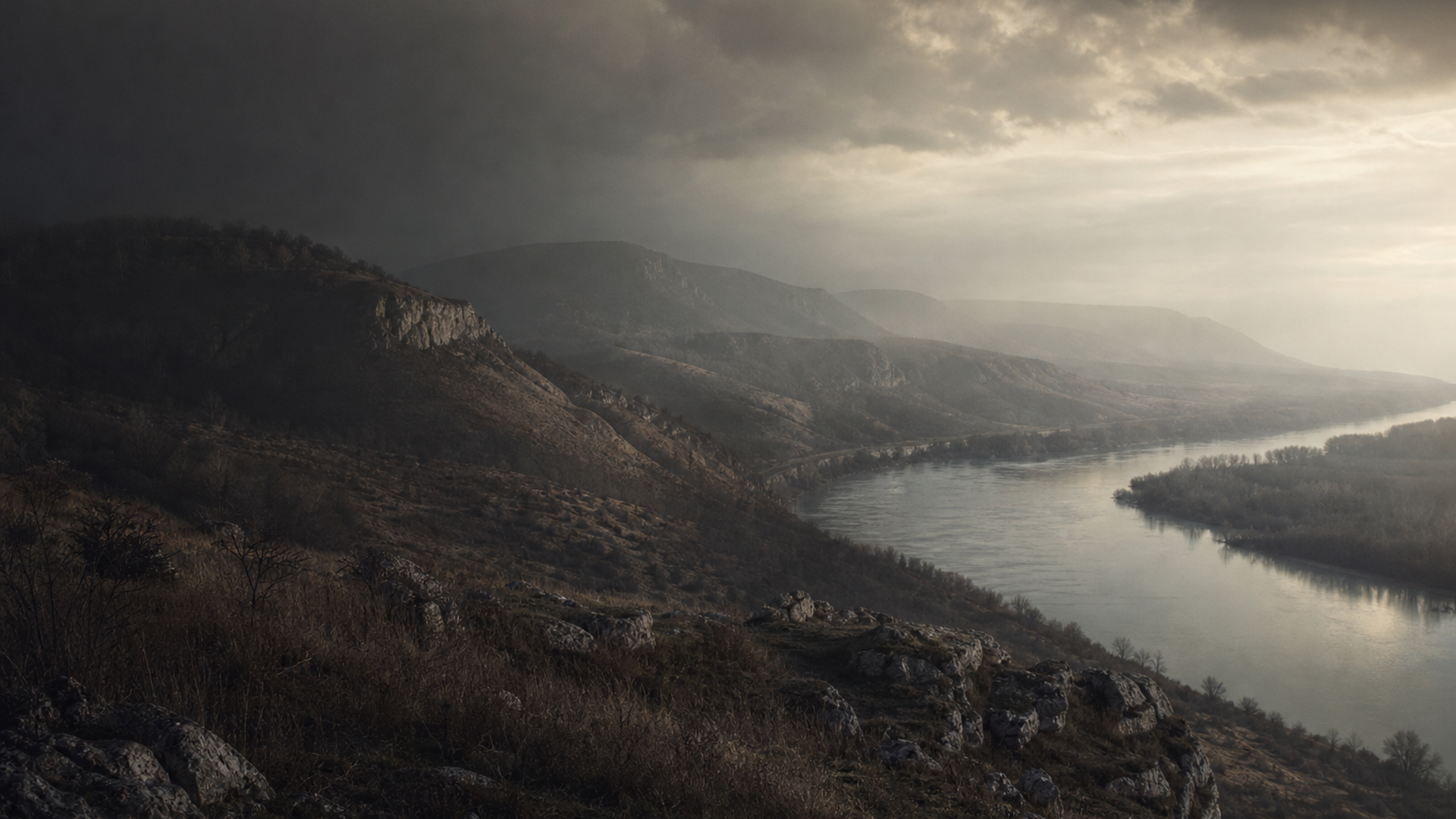
The Roman presence at Klosterneuburg sits like a shard of empire pressed against the great spine of the Danube. Archaeological data indicates occupation of the site during the early Imperial period through late antiquity (1–450 CE). Excavations in and around Klosterneuburg have revealed building foundations, pottery, funerary contexts, and small finds consistent with Pannonian Roman settlements. These remains suggest a community shaped by imperial administration, riverine trade, and the lifeways of local populations who had long occupied the Danubian corridor.

Cinematic reconstructions imagine rowed barges bringing amphorae and soldiers, market stalls trading salted fish and local grain, and workshops where Roman and indigenous crafts fused. Yet the archaeological picture is fragmentary: many features are known only from surface finds and limited trenches. Archaeological data indicates continuity with earlier Iron Age habits in some material culture, combined with clearly Roman architectural and funerary practices.

The broader provincial context matters: Pannonia was a mosaic of military forts, vici (civilian settlements), and rural farms. Klosterneuburg likely functioned as a local node in this network, reflecting both local traditions and the mobility that imbued the Roman frontiers. Limited evidence urges caution: the full story of who lived here, and when, remains a work in progress as more stratified excavations and targeted sampling are needed.

  • Occupation spans early Imperial to late antiquity (1–450 CE)
  • Material culture shows Roman and local Pannonian influences
  • Site function likely linked to river trade, military routes, and local agriculture
Chapter IV

Daily Life & Society

Life at Roman Klosterneuburg would have been stitched from many threads: soldiers’ routines, merchants’ bargaining, craftsmen’s rhythms, and farmers’ seasonal labor. Archaeological traces — pottery sherds, personal items, and burial goods — paint a human tableau of households making do at the imperial edge. Funerary remains reveal varied practices, suggesting a community of mixed origins and social standings: modest inhumations, occasional richer grave goods, and disturbed contexts that hint at long-term reuse of cemetery space.

The economy was both local and connected. The Danube acted as a highway: amphora fragments indicate imported goods flowed alongside locally manufactured tablewares and agricultural produce. Craft specialization likely included metalworking, leatherwork, and simple textile production, while local villas and farms around Klosterneuburg supplied staples. Social life would blend Roman administrative norms — taxation, road maintenance — with indigenous customs, producing hybrid identities expressed in material culture.

Yet archaeology here is often patchwork. Many domestic and public spaces remain poorly documented, and the small number of sampled burials means social reconstructions are tentative. The evocative remains invite us to imagine a bustling riverside community, but also remind us how much remains buried beneath modern landscapes and later medieval building phases.

  • Economy tied to Danube trade and local agriculture
  • Burials and artifacts indicate mixed cultural practices and varying status
Chapter V

Genetic Profile

Genetic sampling from Klosterneuburg is extremely limited: six ancient individuals dated to 1–450 CE provide the only available aDNA window into this community. Because the sample count is under ten, conclusions are preliminary and must be framed as early observations rather than definitive population histories.
Archaeogenetic research across Roman provinces commonly finds increased genetic heterogeneity relative to preceding Iron Age contexts, reflecting mobility of soldiers, merchants, and migrants across imperial networks. For Klosterneuburg, archaeological context suggests similar processes could operate: admixture between local Pannonian-descended groups and incoming individuals with Mediterranean or other continental ancestries is plausible. However, the dataset from Klosterneuburg does not currently report common Y- or mtDNA haplogroups, and publications or repository entries are needed for haplogroup-level statements.


Where genetics and archaeology meet, a cautious narrative emerges: the Roman frontier encouraged movement and gene flow, making small communities genetically diverse in ways that mirror their material hybridity. Future targeted sampling — more individuals, stratified by cemetery, sex, and chronology — would allow tests of mobility (isotopes) and ancestry (genome-wide data) to distinguish long-term local lineages from newcomers. Until then, the six samples are an intriguing but tentative glimpse into a mobile, interconnected frontier population.

  • Only six ancient DNA samples available — conclusions preliminary
  • No reported common Y- or mtDNA haplogroups for these samples
Chapter VI

Legacy & Modern Connections

The Roman footprint at Klosterneuburg is a palimpsest beneath later medieval and modern layers. Archaeology indicates that material practices, roadways, and settlement patterns established in the Roman period shaped subsequent land use in Lower Austria. Genetically, populations in this region today are the result of millennia of admixture; Roman-era mobility contributed a chapter to that longer story but is only one thread among many.

For modern inhabitants the site is a reminder of Pannonia’s role as a corridor of movement and cultural exchange. The small aDNA dataset invites local and comparative studies: expanding sample sizes and integrating isotopic, archaeological, and historical evidence will clarify how Roman-era migrations contributed to genetic landscapes. Until larger datasets are compiled, the legacy of Klosterneuburg remains a compelling, partially lit corridor connecting ancient frontier lives to the genetic mosaic of Europe.

  • Roman-era settlement influenced later land use and settlement patterns
  • Modern genetic landscapes include contributions from Roman-period mobility, but require larger datasets to quantify
AI Powered

AI Assistant

Ask questions about the Klosterneuburg: Romans on the Danube culture

AI Assistant by DNAGENICS

Unlock this feature
Ask questions about the Klosterneuburg: Romans on the Danube culture. Our AI assistant can explain genetic findings, historical context, archaeological evidence, and modern connections.
Sample AI Analysis

The Klosterneuburg: Romans on the Danube culture represents a fascinating chapter in human history...

Genetic analysis reveals connections to earlier populations while showing evidence of unique adaptations and cultural innovations. The ancient DNA samples provide insights into migration patterns, social structures, and the biological relationships between ancient populations.

This is a preview of the AI analysis. Unlock the full AI Assistant to explore detailed insights about:

  • Genetic composition and ancestry
  • Migration patterns and origins
  • Daily life and cultural practices
  • Modern genetic legacy
Use code for 35% off Expires May 20



