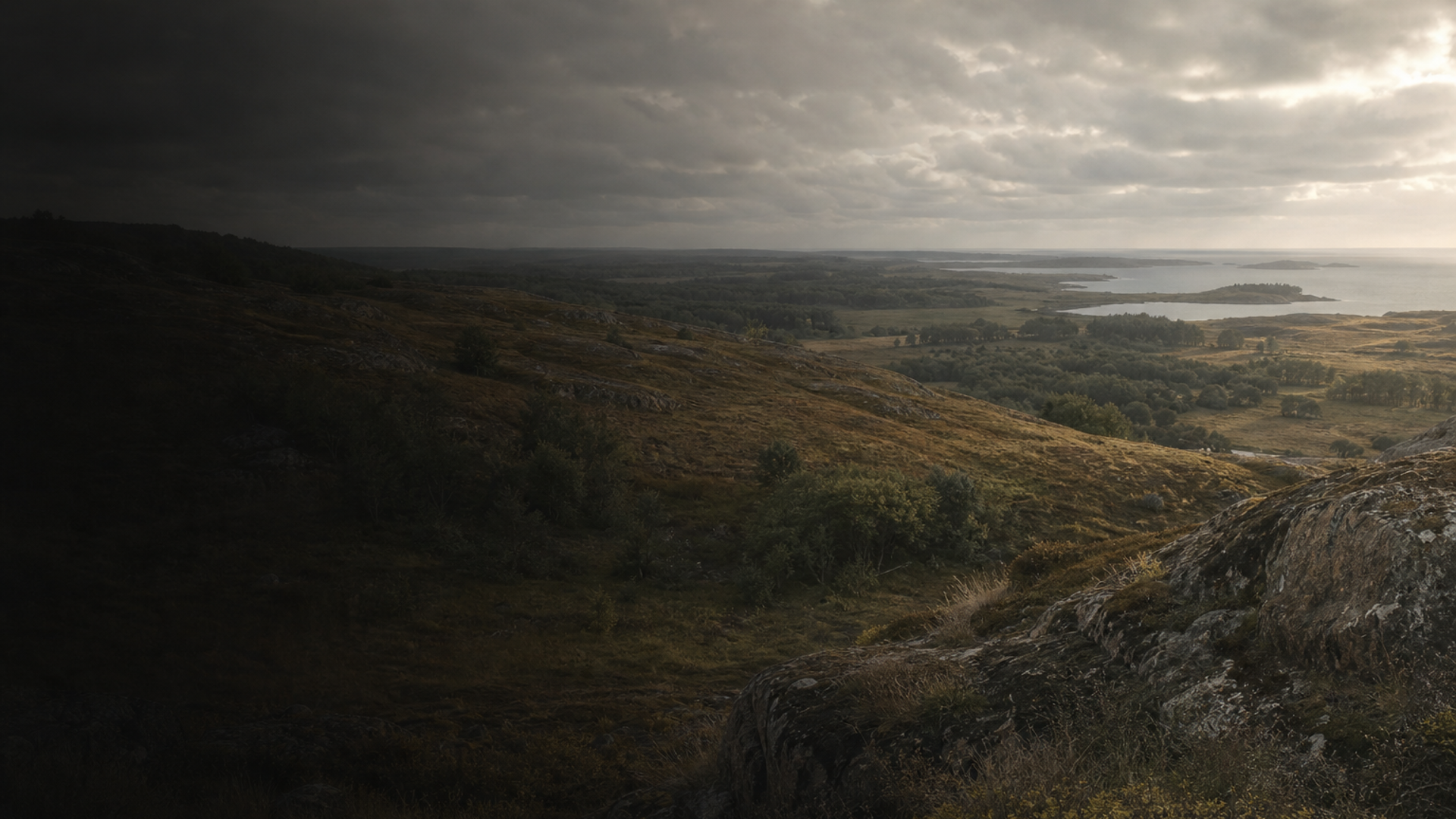
Archaeological remains attributed to the Landbo Farm cultural horizon suggest lives shaped by a harsh, evocative northern landscape: short growing seasons, rich nearshore fisheries, and forests that provided timber and game. Settlement traces in northern Sweden from this period are often modest farmsteads where mixed economies blended cereal cultivation, animal husbandry, hunting and fishing. Seasonal mobility—spring and autumn resource rounds—likely punctuated the agricultural year.
The social world at Landbogården would have been organized around households and kin groups, reflected in clustered domestic features and variable burial practices seen across the region. Craft traditions—ceramics, bone and antler working—bear marks of local expression layered over incoming technological styles. Trade and social ties extended along coastlines and river corridors, moving raw materials and ideas into these northern farm networks.
Osteological data, where preserved, provide insights into diet and health: elevated marine protein signatures are common in northern assemblages, while isotopic contrasts can reveal mobility or exchange. From an archaeological standpoint, Landbogården occupies a liminal world: grounded in farming lifeways yet attuned to maritime and forest resources. Such an economy would have shaped kinship, ritual practice, and resilience in the face of climate variability.