Menu
Store
Blog
Bahrain_LTylos_Sasanian Bahrain (Madinat Hamad, Northern Governorate)

Late Tylos — Sasanian Bahrain (Madinat Hamad)

Archaeology and ancient DNA from coastal Bahrain, 300–647 CE

300 CE - 647 CE
3 Ancient Samples
Scroll to begin
Chapter I

The Story

Understanding the Late Tylos — Sasanian Bahrain (Madinat Hamad) culture

Archaeological remains and three ancient mitochondrial genomes from Madinat Hamad paint a tentative portrait of Late Tylos life under Sasanian influence (c. 300–647 CE). Limited samples suggest mixed west–south Asian maternal ancestries amid Gulf trade networks.

Time Period

c. 300–647 CE

Region

Bahrain (Madinat Hamad, Northern Governorate)

Common Y-DNA

Not reported / limited data

Common mtDNA

R2, T2b, U (1 sample each)

Chapter II

Timeline

Key moments in the history of this culture

300 CE

Late Tylos occupation attested

Archaeological layers at Madinat Hamad indicate active settlement and trade connections around c. 300 CE under growing Sasanian influence.

647 CE

Transition to early Islamic period (approx.)

Historical and archaeological evidence marks the mid-7th century as a time of political and cultural transition in Bahrain, around c. 647 CE.

Chapter III

Origins & Emergence

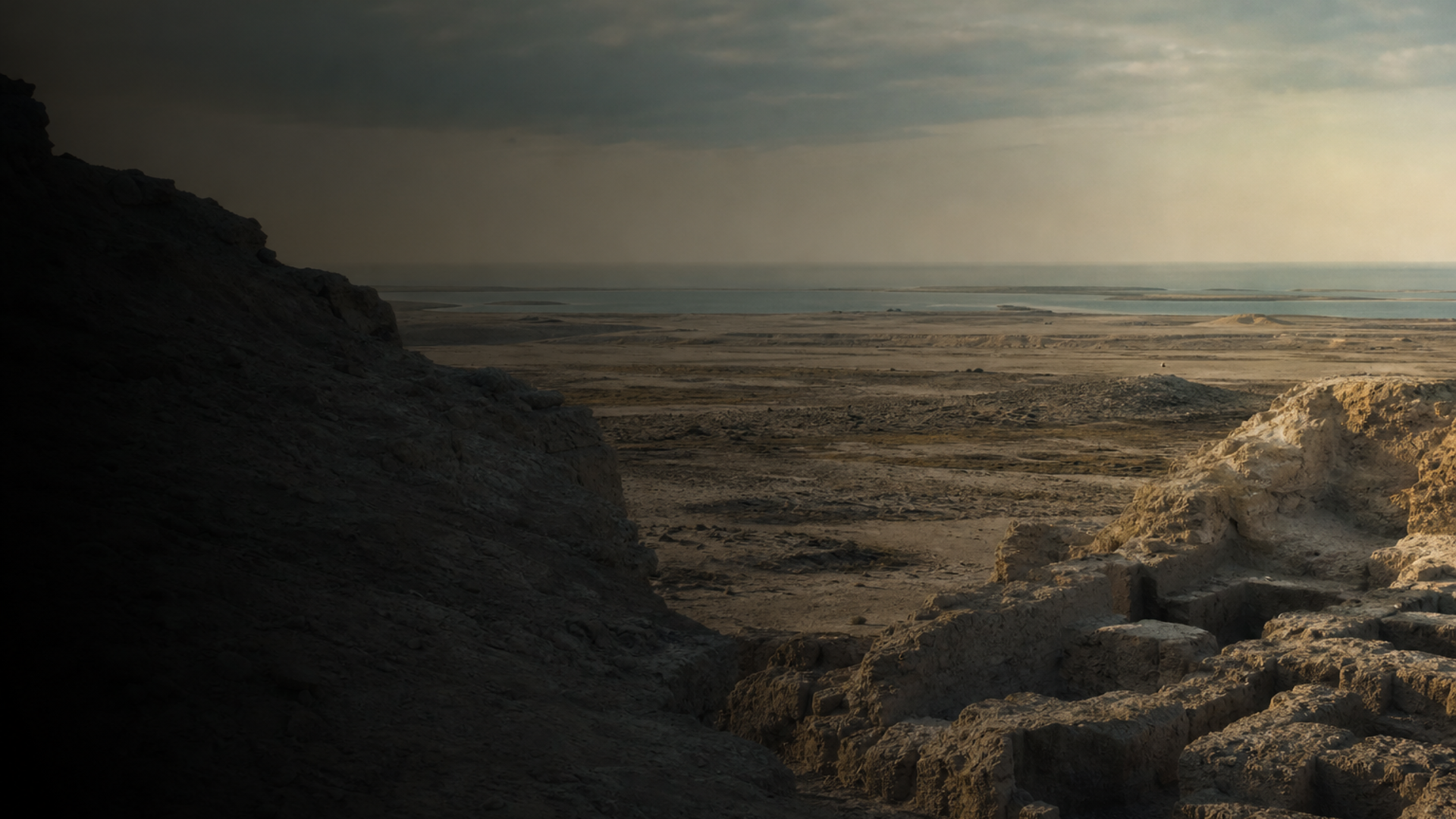
The Late Tylos phase in Bahrain unfolds along a narrow shoreline where the Arabian Gulf becomes a highway of goods and people. Archaeological data indicates continuous occupation through Late Antiquity, with Madinat Hamad (Northern Governorate) yielding domestic remains, cemeteries and imported objects that mark the island as a node in long-distance exchange. By the 3rd–4th centuries CE, Sasanian political and cultural influence across the Gulf is visible in coinage, administrative structures and material culture; these influences did not erase local traditions but layered onto them.

Genetically, the tiny set of three ancient mitochondrial genomes (from Madinat Hamad burials dated c. 300–647 CE) offers a preliminary window into the ancestries present in this maritime community. The identified maternal lineages—R2, T2b and U—each have broad geographic distributions touching South Asia, West Asia and the eastern Mediterranean. Limited evidence suggests that the island population had links to both the Iranian plateau and wider south–central Asian networks, plausible given Bahrain's role in pearling, trade and seasonal migration.

Because the sample count is very small (<10), conclusions about origins and population continuity are tentative. Future, larger genomic series are needed to test whether the patterns seen here reflect coastal mobility, elite connections, or more widespread demographic change during Sasanian rule.

  • Madinat Hamad shows Late Tylos occupation and Sasanian-era material culture
  • Sasanian influence overlaid local Gulf traditions, c. 3rd–7th centuries CE
  • Genetic hints link maternal lines to South and West Asian networks
Chapter IV

Daily Life & Society

Imagine a harbor where reed boats ride low in calm waters, merchants haggle over silver and lamp-glass, and households prepare salted fish and fragrant breads—this is the human backdrop the material record evokes. Excavations at Madinat Hamad reveal domestic courtyards, hearths and burial grounds that speak to coastal livelihoods based on fishing, pearl diving, craft production and trade. Pottery styles and imported amphorae fragments point to consumption of foreign goods alongside locally made wares, indicating participation in regional exchange networks that stretched to the Iranian plateau, Oman and beyond.

Socially, Late Tylos communities appear heterogeneous. The archaeological record suggests a mixture of local Gulf traditions with items associated with Sasanian administrative presence—coins, seals and standardized weights—signaling integration into wider economic systems without necessarily implying complete cultural assimilation. Burial practices observed at Madinat Hamad show variation; this diversity may reflect different kin groups, migrants, or social roles tied to maritime occupations.

Archaeobotanical and faunal remains (where recovered) tend to reflect coastal diets with imported staples supplementing local resources, reinforcing the image of a society adaptable to seafaring life. However, preservation biases and limited excavation area mean that everyday patterns remain only partially visible.

  • Economy centered on fishing, pearling, crafts and maritime trade
  • Material culture mixes local Gulf forms with Sasanian-period objects
Chapter V

Genetic Profile

The genetic dataset from the Late Tylos — Sasanian horizon at Madinat Hamad is extremely small: three mitochondrial genomes recovered from burials dated c. 300–647 CE. Those mtDNA lineages are R2, T2b and a broad U haplogroup. Each lineage carries distinct geographic associations in modern and ancient datasets: R2 appears frequently in South and Central Asia; T2b is often seen in West Eurasia and the eastern Mediterranean; haplogroup U is widespread across West Eurasia and the Near East.

Interpreting these assignments requires caution. With no recovered Y-DNA reported for these individuals, we cannot assess paternal ancestry or sex-biased migration patterns. The mixed maternal signals are consistent with a cosmopolitan coastal population in which women (or maternal ancestors) came from a range of regions—South Asian, Iranian, and wider West Eurasian—reflecting seafaring networks and mobility. Alternatively, the diversity could represent long-standing local heterogeneity predating the Sasanian period.

Because the sample count is under ten, any population-level inference is preliminary. Archaeological context supports mobility—imports, coinage, and administrative artifacts—so the genetics plausibly reflect admixture along trade routes. Larger genomic sampling, inclusive of autosomal data and Y-chromosome markers, will be necessary to resolve questions of ancestry proportions, timing of admixture, and connections to neighboring Gulf and Iranian populations.

  • Three mtDNA haplogroups recovered: R2, T2b, U (one each)
  • No Y-DNA reported; small sample size makes conclusions preliminary
Chapter VI

Legacy & Modern Connections

The archaeological and genetic fragments from Madinat Hamad sketch an island world where currents of trade and movement carved lasting human connections across the Gulf. Modern populations in Bahrain and the wider Arabian Gulf continue to reflect a tapestry woven from Arab, Persian, South Asian and other threads—an expectation consistent with the mixed maternal lineages observed here.
Yet we must avoid deterministic readings: three mitochondrial genomes cannot map the full genetic landscape of Late Tylos society. What they do provide is a cinematic glimpse of mobility—people moving with goods and ideas in an age of Sasanian power and vibrant coastal exchange. For descendants and researchers alike, these findings reinforce the Gulf's role as a crossroads. Future ancient DNA work, integrated with archaeology and historical sources, will be key to connecting these evocative snapshots to longer-term demographic and cultural trajectories.
  • Findings reinforce the Gulf's long history as a mobility and exchange hub
  • Current conclusions are tentative — broader sampling will clarify links to modern populations
Chapter VII

Sample Catalog

3 ancient DNA samples associated with the Late Tylos — Sasanian Bahrain (Madinat Hamad) culture

Ancient DNA samples from this era, providing genetic insights into the people who lived during this period.

3 / 3 samples
Portrait Sample Country Era Date Culture Sex Y-DNA mtDNA
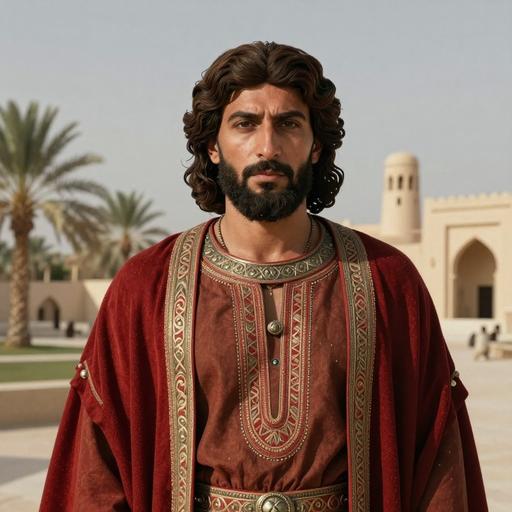
Portrait of ancient individual MH1_LT from Bahrain, dated 432 CE
MH1_LT
Bahrain Bahrain_LTylos_Sasanian 432 CE Tylos M - R2
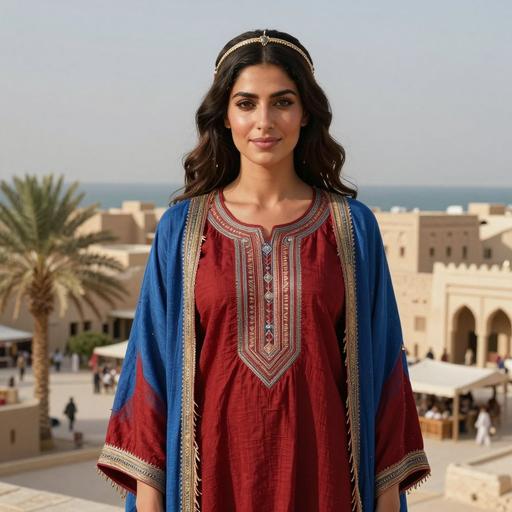
Portrait of ancient individual MH2_LT from Bahrain, dated 300 CE
MH2_LT
Bahrain Bahrain_LTylos_Sasanian 300 CE Tylos F - T2b
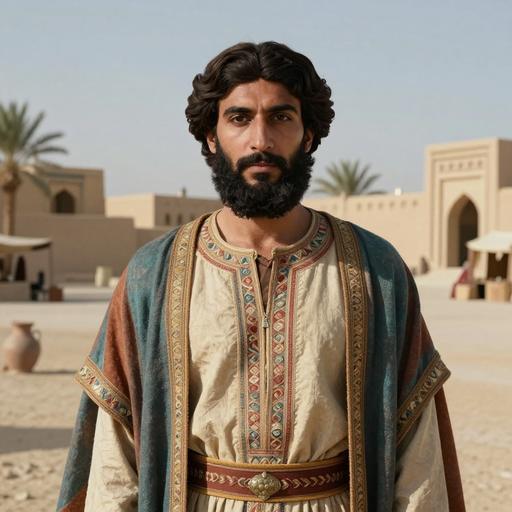
Portrait of ancient individual MH3_LT from Bahrain, dated 577 CE
MH3_LT
Bahrain Bahrain_LTylos_Sasanian 577 CE Tylos M - U8b1a2a
AI Powered

AI Assistant

Ask questions about the Late Tylos — Sasanian Bahrain (Madinat Hamad) culture

AI Assistant by DNAGENICS

Unlock this feature
Ask questions about the Late Tylos — Sasanian Bahrain (Madinat Hamad) culture. Our AI assistant can explain genetic findings, historical context, archaeological evidence, and modern connections.
Sample AI Analysis

The Late Tylos — Sasanian Bahrain (Madinat Hamad) culture represents a fascinating chapter in human history...

Genetic analysis reveals connections to earlier populations while showing evidence of unique adaptations and cultural innovations. The ancient DNA samples provide insights into migration patterns, social structures, and the biological relationships between ancient populations.

This is a preview of the AI analysis. Unlock the full AI Assistant to explore detailed insights about:

  • Genetic composition and ancestry
  • Migration patterns and origins
  • Daily life and cultural practices
  • Modern genetic legacy
Use code for 30% off Expires May 12