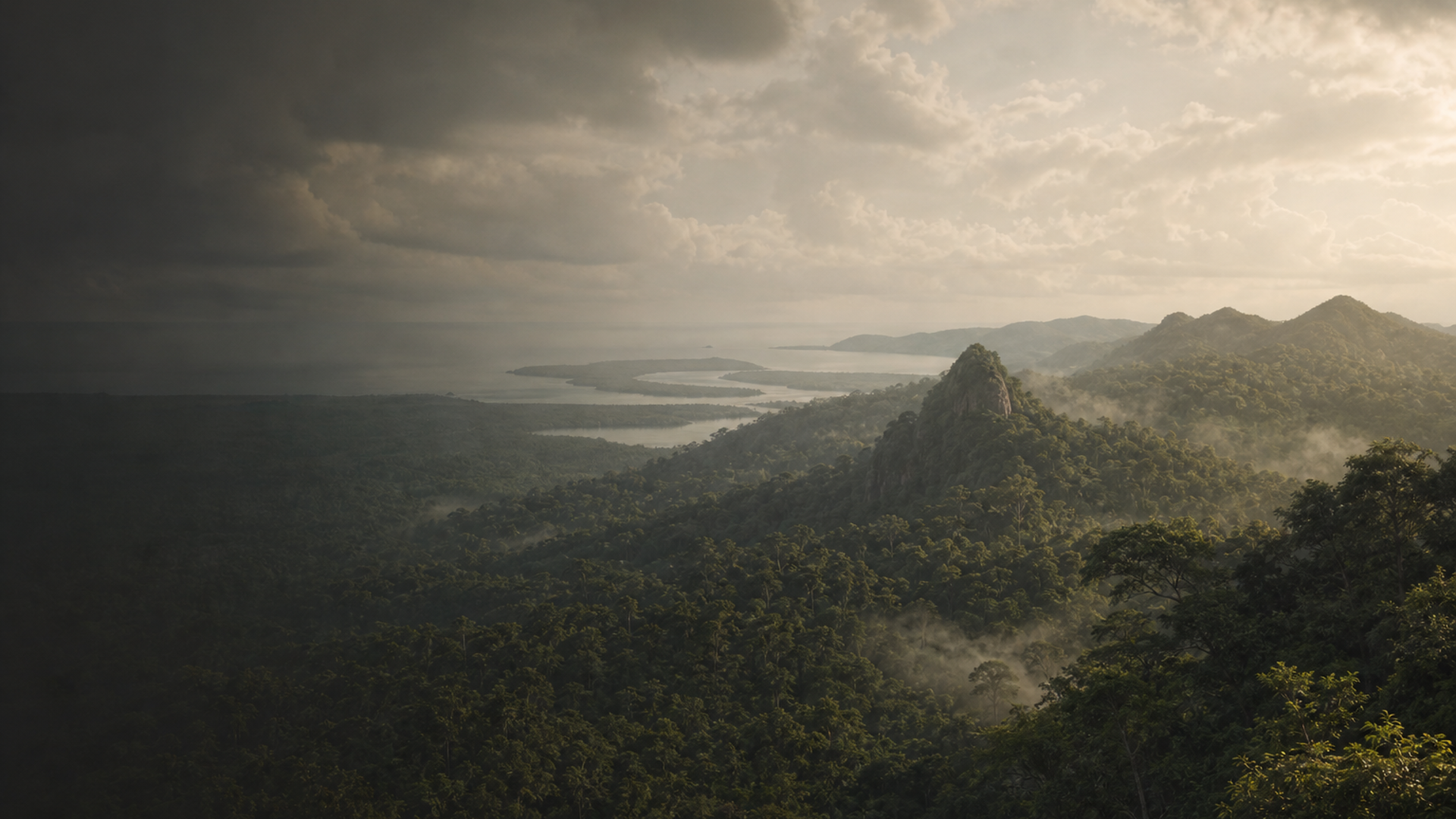
Modern Brunei sits on the edge of an ancient maritime world. Archaeological data indicates long-term settlement along riverine and coastal corridors of northern Borneo, where communities exploited sago, forest resources, and coastal fisheries. The samples in this dataset—collected from Tutong, Lamunin, Bebuloh, Seria, Limbang and Temburong—represent people whose cultural roots trace into a deep palimpsest of Austronesian expansions, indigenous Dayak traditions, and centuries of regional trade.
Limited evidence suggests that the rhetorical ‘‘beginning’’ of inhabitants in this region is far older than modern state boundaries: pottery types, oral histories, and material culture across Borneo point to population movements associated with the Austronesian dispersal (multi-millennial processes beginning ca. 2000–1000 BCE), followed by local adaptation. For the modern era (ca. 2000 CE), archaeological indicators are often subtle—house forms, graves, and portable artifacts overlayed by colonial and industrial landscapes. The cinematic sweep of mangroves, rivers and longhouses that once defined daily life still frames genetic continuity: DNA can capture both recent demographic shifts and echoes of earlier contacts that archaeology records more diffusely.
Where direct archaeological sampling is sparse, genetic data from living people becomes a complementary lens. Together, material culture and modern genomes sketch a narrative of long-standing coastal residency punctuated by trade, migration, and social reconfiguration.