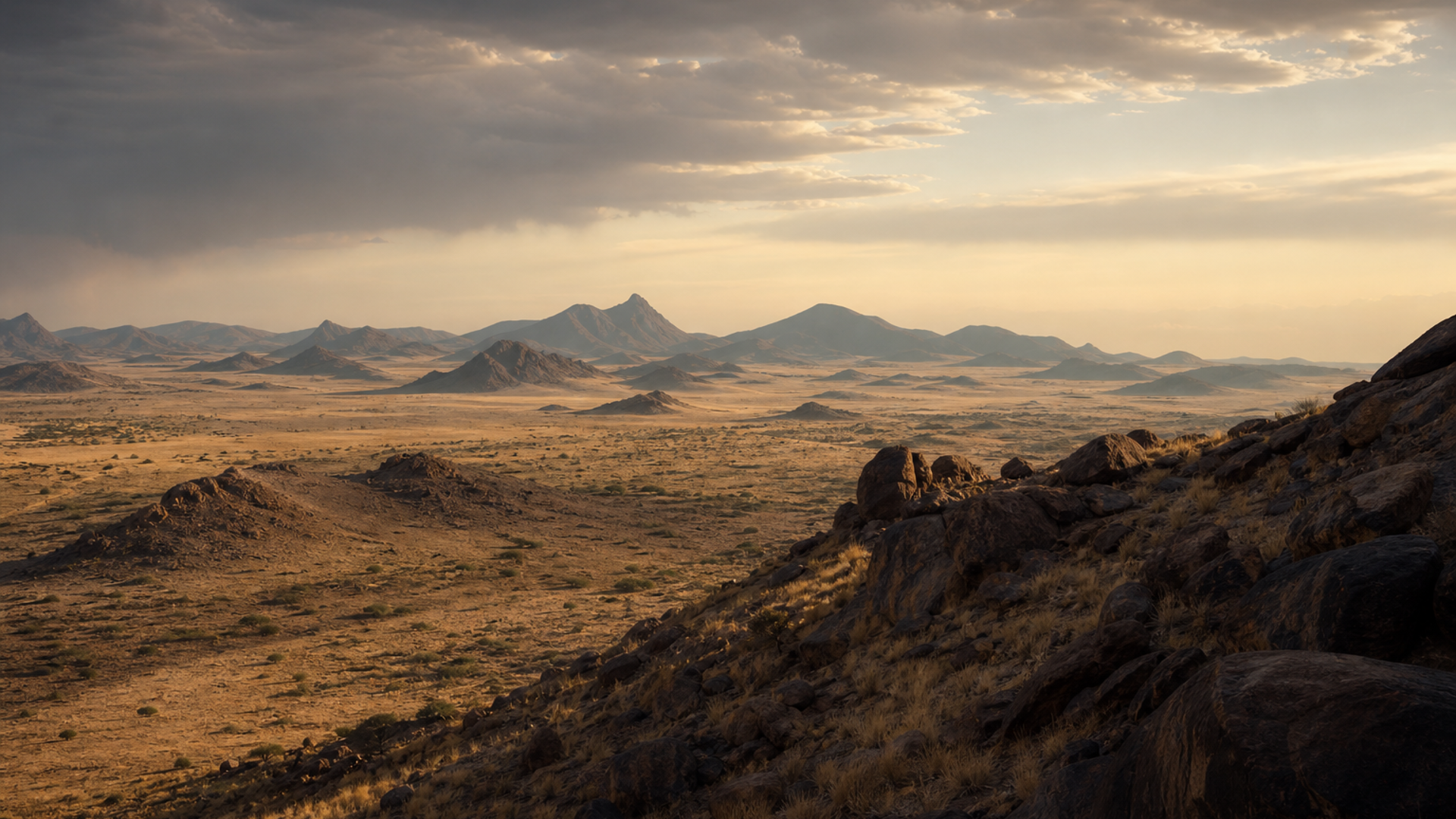
Contemporary daily life in Namibia draws on diverse lifeways visible in the archaeological record. Pastoralism and agro-pastoral economies leave traces in settlement patterns, architecture, and portable material culture; hunter‑gatherer traditions are reflected in persistent hunting and foraging knowledge and in the rich tradition of rock art. Urban centers such as Windhoek and coastal towns arose through colonial-era trade and continue to concentrate economic and cultural interactions.
Archaeological data indicates continuity in craft, ornament, and landscape use alongside innovations introduced through trade and colonialism. Ethnographic observations and modern material culture help interpret how subsistence, kinship, and mobility shape genetic structure: mobile pastoralist groups tend to show different patterns of local kinship and gene flow than sedentary urban populations. For the seven modern samples here, contextual information (occupation, language, self-identified ethnicity) is critical but may be incomplete; therefore, connecting daily life to DNA must be done cautiously.
This living tapestry is cinematic: deserts and coasts bearing ancient engravings, communities that maintain ancestral knowledge, and ports that carried new peoples and genes into the region. Each strand influences the genetic signatures we observe today, but robust inferences require broader, geographically and socially representative sampling.