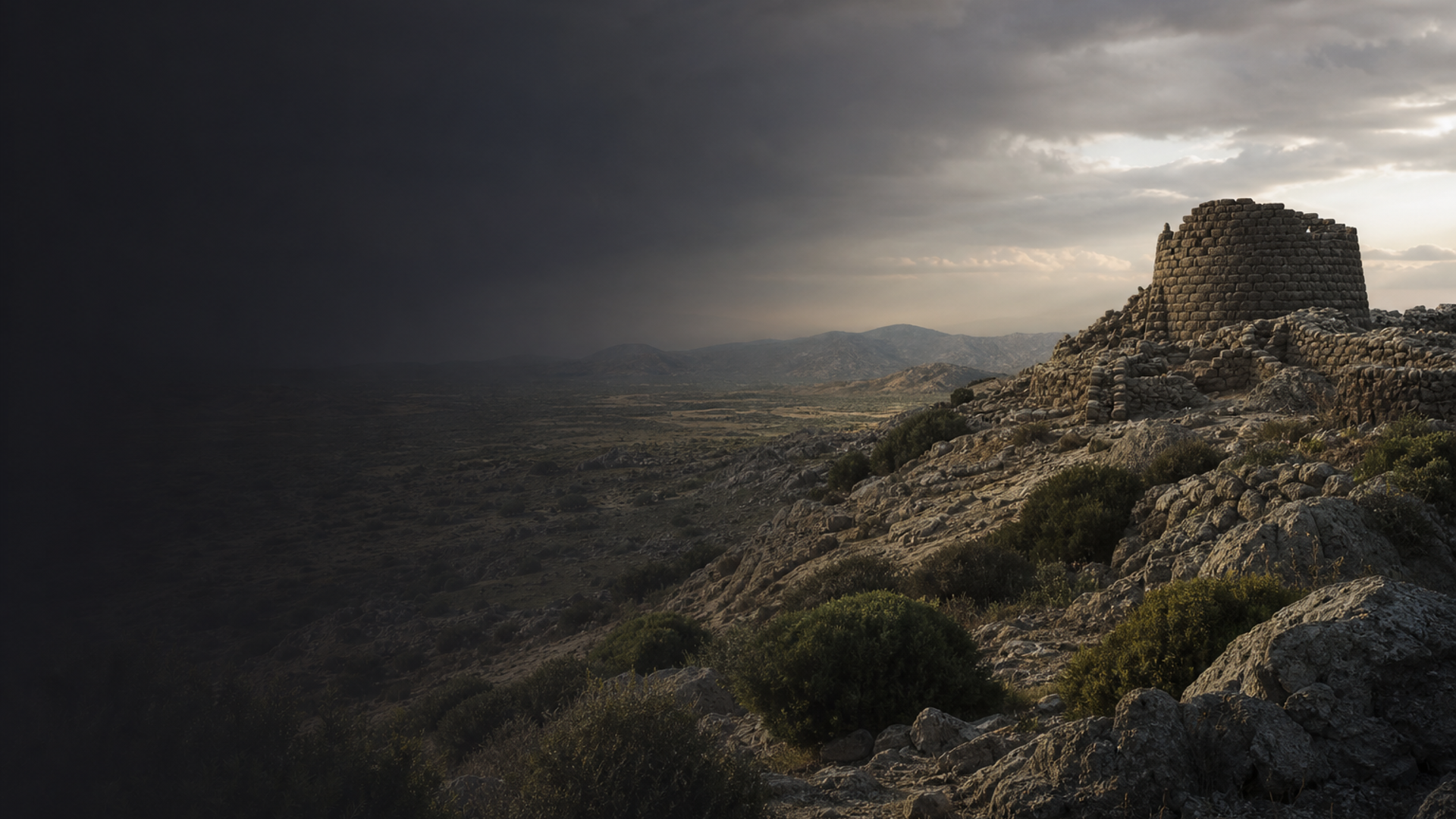
Archaeology paints daily life in cinematic strokes: sheepskin cloaks drying on low stone walls, smoke threading from hearths, and small bronze tools catching Mediterranean light. At Early Bronze Age Nuragic sites like Su Crucifissu Mannu, material remains suggest communities organized around livestock, seasonal pasturing, and localized craft production. Pottery styles, grinding stones, and animal bones together indicate diets of cereal staples and meat or dairy from sheep and goats.
Socially, the seeds of Nuragic complexity were being sown. Communal constructions and burial practices imply collective identities and remembered ancestors, while variation in grave goods hints at status differences. Trade connections are inferred from exotic raw materials and metallurgical techniques reaching the island, suggesting Sardinians were not isolated but participants in wider Mediterranean circuits.
Yet the archaeological record also emphasizes continuity: settlement patterns show enduring use of coastal and inland niches, and burial choices reflect long-term ritual habits. These material threads, when read alongside ancient DNA, help reconstruct how communities balanced local resilience with external influences during the first centuries of the Bronze Age.