Menu
Store
Blog
Veliko Tarnovo area, north-central Bulgaria

Ryahovets & Samovodene: Medieval Bulgaria

Archaeology and ancient mtDNA (3 samples) from 889–1250 CE in the Veliko Tarnovo region.

889 CE - 1250 CE
Scroll to begin
Chapter I

The Story

Understanding the Ryahovets & Samovodene: Medieval Bulgaria culture

Three medieval samples from Ryahovets and Samovodene (Veliko Tarnovo region) dated 889–1250 CE show maternal haplogroup U. Archaeological contexts suggest fortress and settlement life; genetic conclusions are preliminary due to the small sample size.

Time Period

889–1250 CE

Region

Veliko Tarnovo area, north-central Bulgaria

Common Y-DNA

Not reported / undetermined

Common mtDNA

U (3 samples)

Chapter II

Timeline

Key moments in the history of this culture

1185 CE

Uprising of Asen and Peter; rise of the Second Bulgarian Empire

A major political turning point in the region; the Second Bulgarian Empire established power bases in the Veliko Tarnovo area, reshaping medieval Bulgarian society.

Chapter III

Origins & Emergence

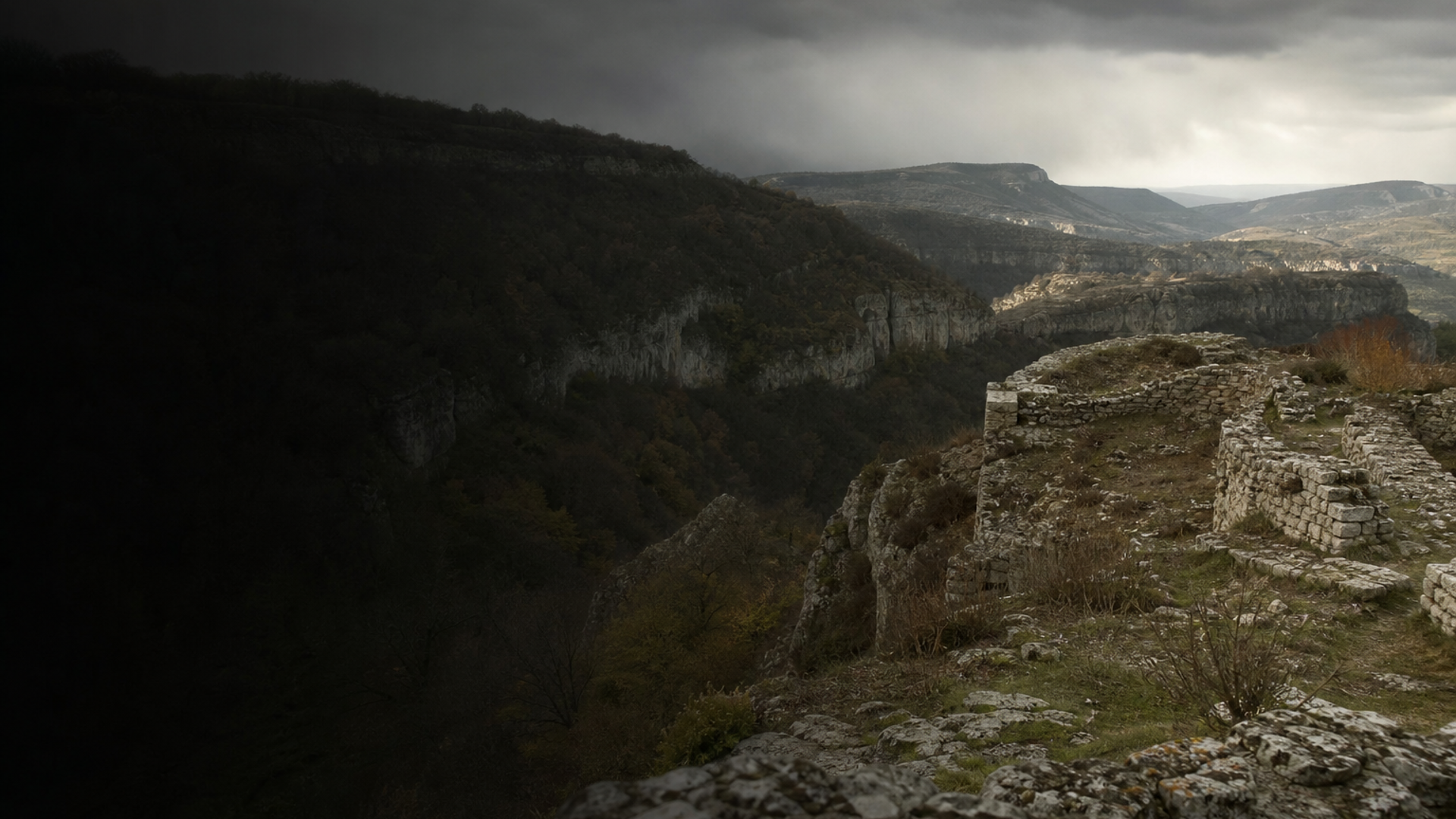
The samples derive from the Veliko Tarnovo hinterland — the fortified hill of Ryahovets near Gorna Oryahovitsa and the settlement area of Samovodene. Archaeological investigation in this corridor documents a long habitational sequence through the early Middle Ages into the high medieval period. Historical processes relevant to these dates include the consolidation of medieval Bulgarian polities and later the rise of the Second Bulgarian Empire after 1185 CE.

Archaeological data indicates that sites like Ryahovets functioned as fortified strongpoints and local centers of control, while villages such as Samovodene anchored market and craft activities along river valleys. Limited evidence suggests reuse of earlier fortifications and continuity of local occupation rather than wholesale replacement. Radiocarbon-calibrated contexts and stratigraphic data place the dated human remains securely in the window 889–1250 CE, but taphonomic disturbance and incomplete excavation records mean specific depositional histories are often fragmentary.

Because only three genetic samples are available, any narrative about population origins must be cautious. These remains give a narrow but valuable snapshot of maternal lineages present in the Veliko Tarnovo region during a period of political realignment and sustained regional connectivity via trade and pilgrimage.

  • Samples from Ryahovets (Gorna Oryahovitsa) and Samovodene (Veliko Tarnovo).
  • Context: fortified site and nearby settlement, 889–1250 CE.
  • Evidence suggests continuity of local occupation; data are fragmentary.
Chapter IV

Daily Life & Society

Archaeological indicators for daily life in the Veliko Tarnovo region during the medieval period point to a mixed economy of agriculture, artisanal craft, and regional trade. Pottery sherds, building remains, and tool fragments (where recorded) suggest households engaged in cereal cultivation, animal husbandry, and localized artisanry — small-scale ironworking, leatherworking, and textile production are commonly inferred in contemporaneous Bulgarian settlements.

Fortified sites like Ryahovets likely served as administrative or defensive centers: a place where agricultural surplus was collected, taxed, or defended. Nearby villages such as Samovodene would have supplied food, labor, and crafts to these nodes. Seasonal rhythms of sowing and harvest, religious calendars, and market cycles structured social life. Mobility was a feature of the era — merchants, pilgrims, soldiers, and itinerant craftsmen all contributed to cultural and material exchange across the Balkans.

Archaeological data indicate a landscape of interdependent settlements, but direct evidence tied to the three sampled individuals is limited. Burial practices, grave goods, and isotopic studies (when available) would refine reconstructions of diet and mobility; for these particular samples, such contextual data are sparse or unpublished.

  • Economy: mixed agriculture, artisanal craft, and regional trade.
  • Fortress-village relationship: administration, defense, and supply.
Chapter V

Genetic Profile

All three individuals analyzed from Ryahovets and Samovodene carry mitochondrial haplogroup U. Haplogroup U is an ancient and diverse maternal lineage found across Europe and parts of West Eurasia; its presence in medieval Bulgaria is consistent with longstanding maternal lineages that trace back into the European Neolithic and earlier Hunter-Gatherer ancestries, though precise subclade resolution is necessary to distinguish deep versus more recent contributions.

No Y-chromosome (paternal) haplogroup is reported for these samples, so statements about male-line ancestry, migrations, or elite continuity cannot be made from this dataset. Archaeogenetic interpretation must also account for the small sample size: with n = 3 (below 10), any frequency-based conclusions are preliminary and potentially biased by the burial contexts sampled.
That said, the detection of mtDNA U in all three samples can be read as a signal of maternal continuity or the survival of pan-European maternal lineages in the Veliko Tarnovo region during 889–1250 CE. This pattern does not exclude genetic influx from Slavic, Balkan, Byzantine, or steppe-associated groups during the medieval period; larger, genome-wide datasets would be required to model admixture, sex-biased migration, and demographic change robustly. Future sampling should aim for broader spatial coverage, Y-DNA recovery, and autosomal data to resolve these questions.

  • All three samples carry mtDNA haplogroup U.
  • No Y-DNA reported; low sample count (n=3) makes conclusions preliminary.
Chapter VI

Legacy & Modern Connections

The Veliko Tarnovo region occupies a central place in Bulgarian historical identity, and genetic snapshots like these hint at continuity in maternal lineages across centuries. Mitochondrial haplogroup U remains common in modern European populations, so its medieval occurrence is not surprising; it aligns with long-term maternal ancestry threads that persist through demographic upheavals.

However, connecting these three medieval individuals directly to modern Bulgarians requires caution. The small sample size and lack of autosomal and paternal data limit inferences about population continuity, replacement, or admixture. Archaeogenetics in the Balkans increasingly shows complex mixing over millennia — local continuity interwoven with episodes of migration, trade, and conquest. These samples are a cinematic but partial window into that tapestry: evocative evidence that maternal lines associated with broader European ancestries were present in medieval Bulgarian strongholds and settlements.

Expanded sampling and genome-wide analyses will be necessary to map how these medieval individuals fit into the genetic landscape that produced contemporary populations.

  • mtDNA U indicates maternal lineages present in medieval and modern Europe.
  • Direct links to modern populations remain tentative until more data are available.
AI Powered

AI Assistant

Ask questions about the Ryahovets & Samovodene: Medieval Bulgaria culture

AI Assistant by DNAGENICS

Unlock this feature
Ask questions about the Ryahovets & Samovodene: Medieval Bulgaria culture. Our AI assistant can explain genetic findings, historical context, archaeological evidence, and modern connections.
Sample AI Analysis

The Ryahovets & Samovodene: Medieval Bulgaria culture represents a fascinating chapter in human history...

Genetic analysis reveals connections to earlier populations while showing evidence of unique adaptations and cultural innovations. The ancient DNA samples provide insights into migration patterns, social structures, and the biological relationships between ancient populations.

This is a preview of the AI analysis. Unlock the full AI Assistant to explore detailed insights about:

  • Genetic composition and ancestry
  • Migration patterns and origins
  • Daily life and cultural practices
  • Modern genetic legacy
Use code for 30% off Expires May 12




