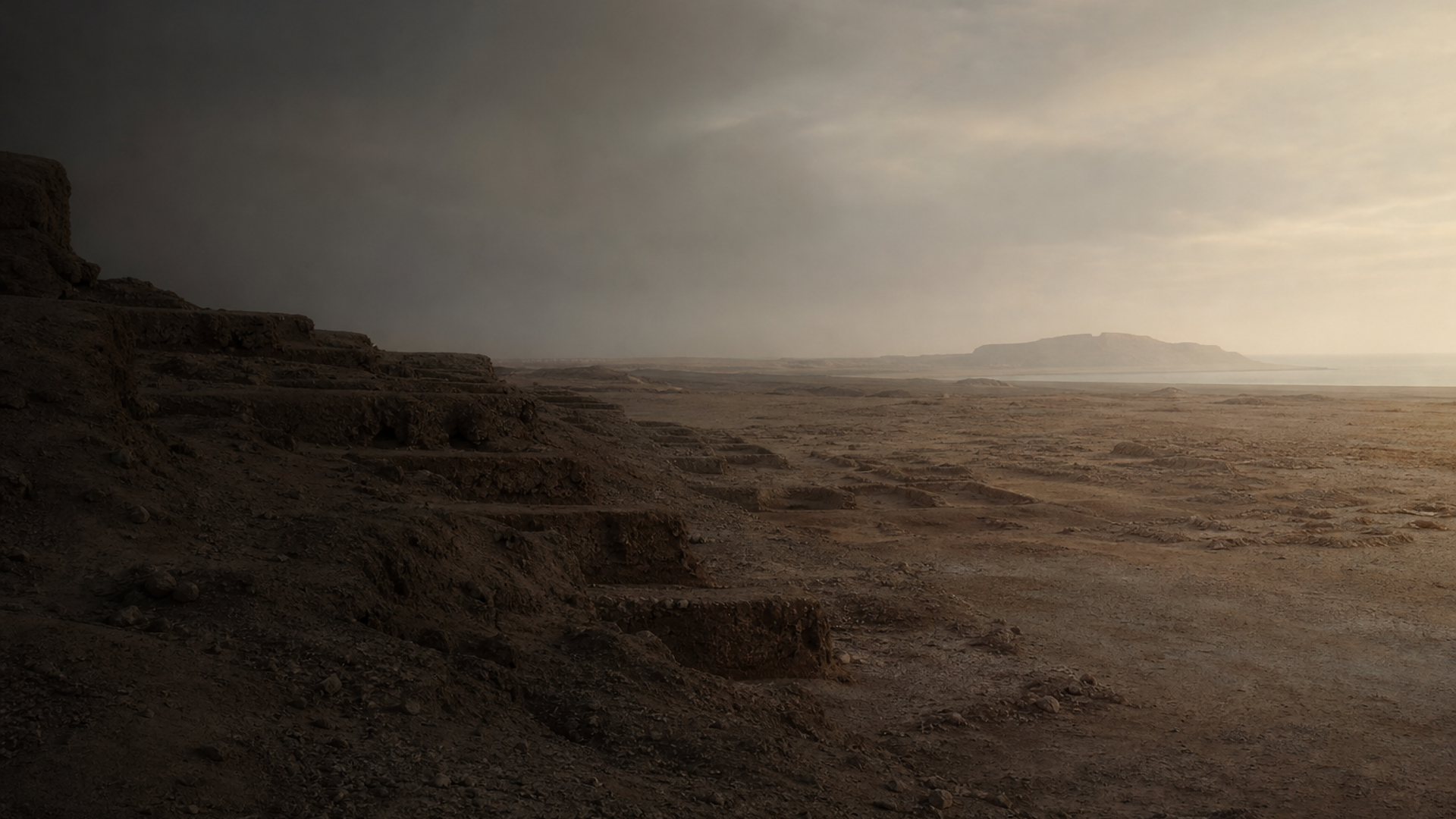
Madinat Hamad sits on the northern edge of Bahrain, an island long known in antiquity as Tylos. By the third century CE the region was woven into the geopolitical tapestry of Late Antiquity: local elites operated in a maritime landscape shaped by trade with the Arabian Peninsula, the Persian mainland, and the wider Indian Ocean world. Archaeological layers dated to the Late Tylos and Sasanian period show imported ceramics, coinage styles aligned with Sasanian administration (c. 224–651 CE), and settlement patterns that emphasize coastal trade hubs rather than large, inland agricultural estates.
The three individuals sampled from Madinat Hamad date between c. 300 and 647 CE, a span that brackets intensified Sasanian influence in the Persian Gulf and the era immediately preceding the early Islamic expansions in the mid‑7th century. Material culture—harbor installations, imported amphorae, and locally produced glazed ware—indicates active long‑distance connections. Limited evidence suggests these people lived in a cosmopolitan maritime community where local Arabian traditions met Persian administrative and mercantile frameworks.
Because the genetic sample is small (n=3), the genetic portrait is necessarily provisional. Archaeological data indicates continuity of coastal occupation and integration into Gulf trade routes, and the ancient DNA provides a first, cautious glimpse of maternal ancestries present in Late Tylos society.