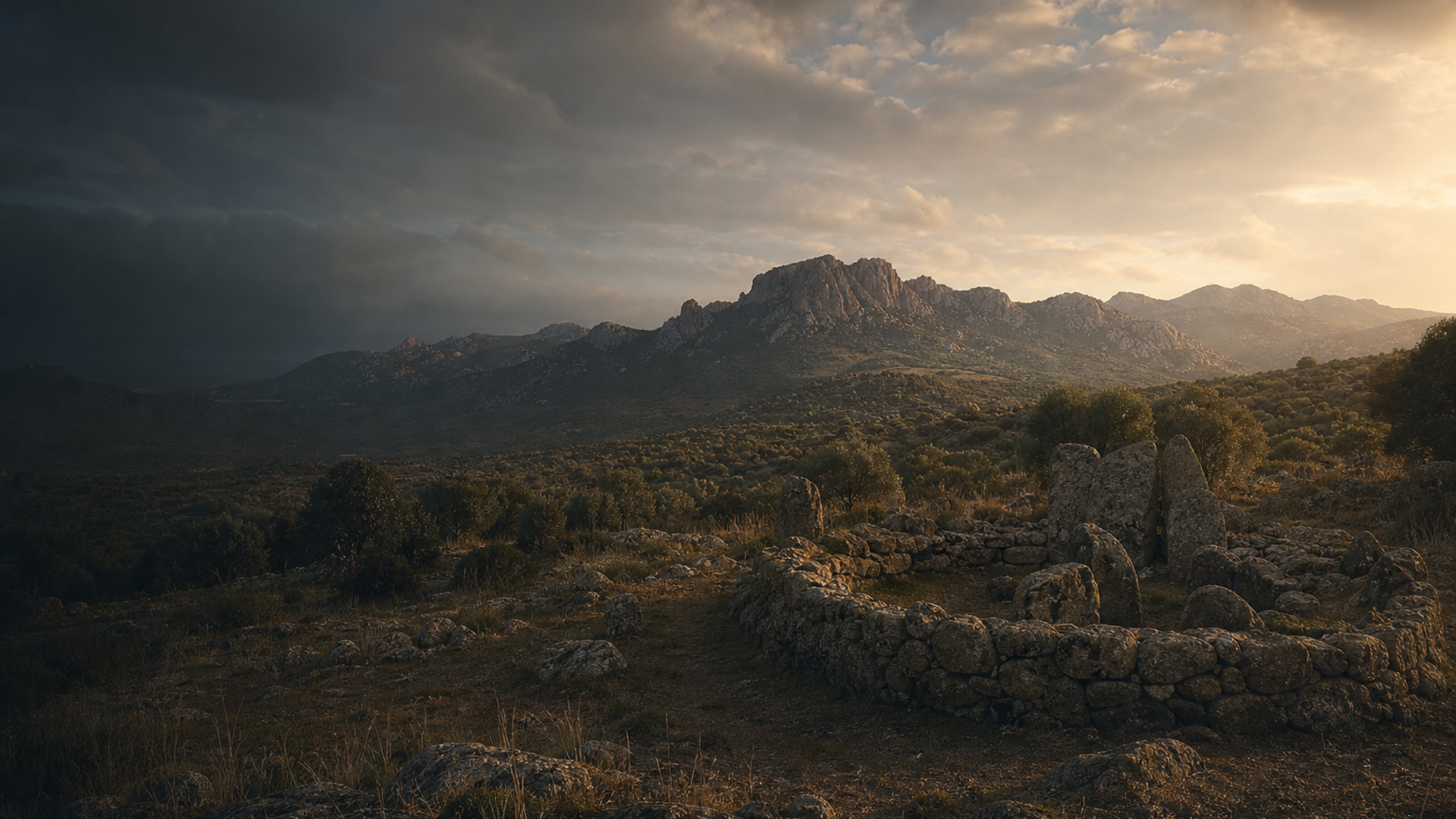
Archaeological remains paint a textured portrait of Late Bronze Age Sardinian lifeways: pastoralism and small-scale agriculture persisted in upland valleys, while coastal settlements engaged in fishing, craft production and exchange. The stone nuraghi — towering, drystone monuments scattered across the island — anchored local communities, acting as ceremonial, defensive and social focal points. Excavations at Ogliastra-region settlements (near Perdasdefogu and Persasdefogu) reveal domestic structures, storage pits and pottery that reflect everyday economies.
Bronze tools, local metallurgical debris and imported styles suggest artisan networks and occasional long-distance trade. Imported Aegean-style sherds and exotic materials at some coastal sites imply maritime connections, though archaeological data indicates such items were selective and localized rather than uniformly widespread. Burial practices vary across sites; tomb contexts associated with the genetic samples include both inhumations and complex depositional sequences, hinting at social differentiation.
Tactile traces — grinding stones, loom weights, and animal bones — evoke a society balancing inside-outside lives: stock, field, forge and harbor. Yet because our genetic window is narrow, linking these artifacts directly to the sampled individuals remains cautious work: skeletal associations and context must be carefully matched to avoid overreach.