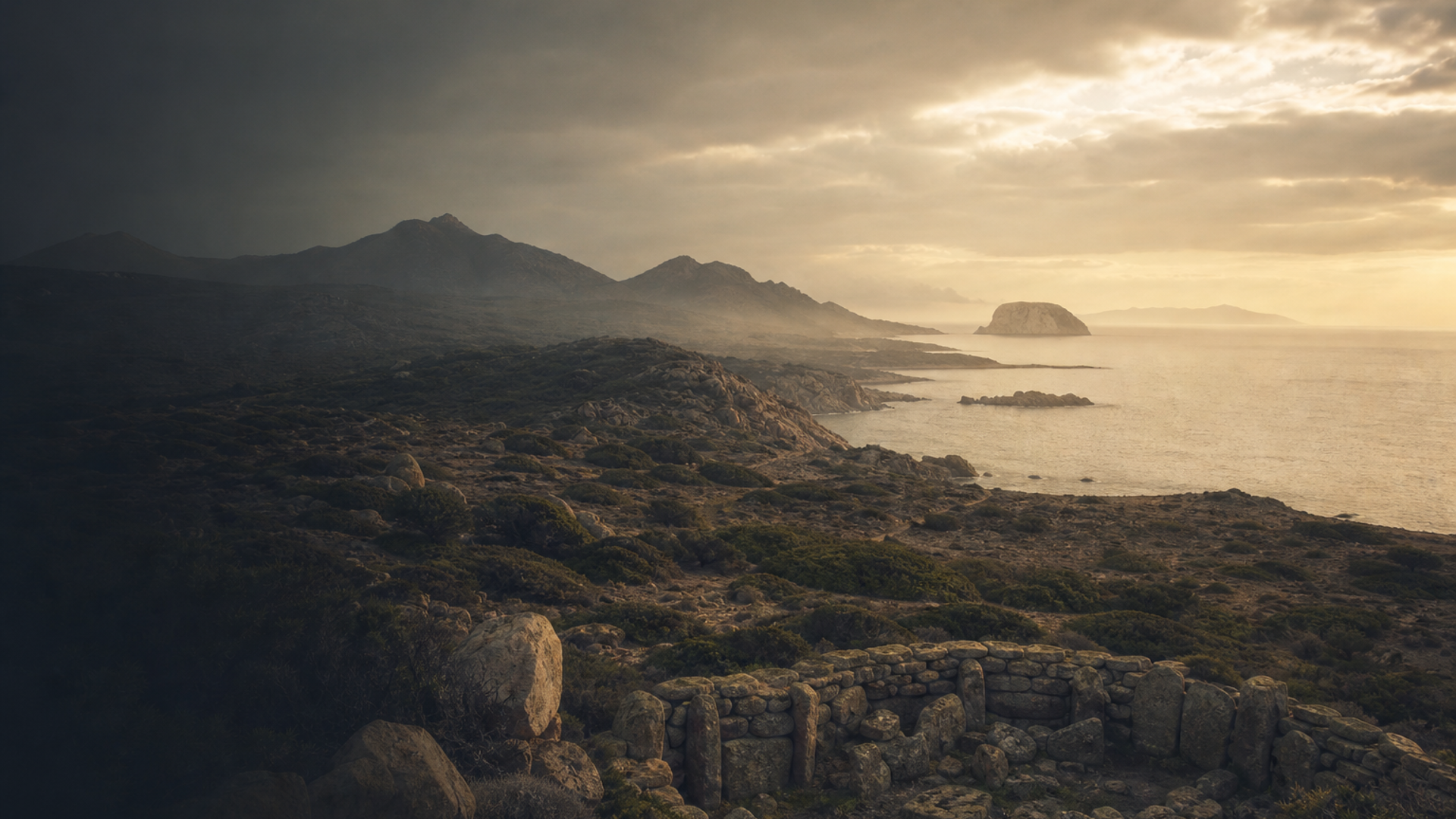
The island landscape shaped ways of life: terraced fields, pastoral circuits, and maritime routes framed daily rhythms. Archaeological finds across Sardinia show mixed subsistence strategies — cereal cultivation, sheep and goat herding, and exploitation of coastal resources — that would have supported relatively dense local populations compared to many other islands. Settlement patterns indicate a mosaic of small village communities with occasional larger aggregations for exchange and ritual.
Material culture during this broad span includes coarse and fine pottery, stone tools, and emerging metal artifacts as bronze technology diffused into the region. Archaeological data indicates that economic ties extended across the western Mediterranean; imports and shared stylistic elements suggest networks of exchange rather than simple isolation. Funerary customs show variety: individual and collective burials, sometimes with grave goods, hinting at social differentiation and identity expression.
At Su Crocefissu, the human remains sampled offer a direct human voice from these lives — osteological data (where available) can reveal age, sex, diet, and disease patterns that complement genetic signals. But with only three samples, interpretations of social structure or mobility remain speculative. The cinematic image remains of island communities balancing long-standing local traditions with the slow arrival of new materials, ideas, and people.