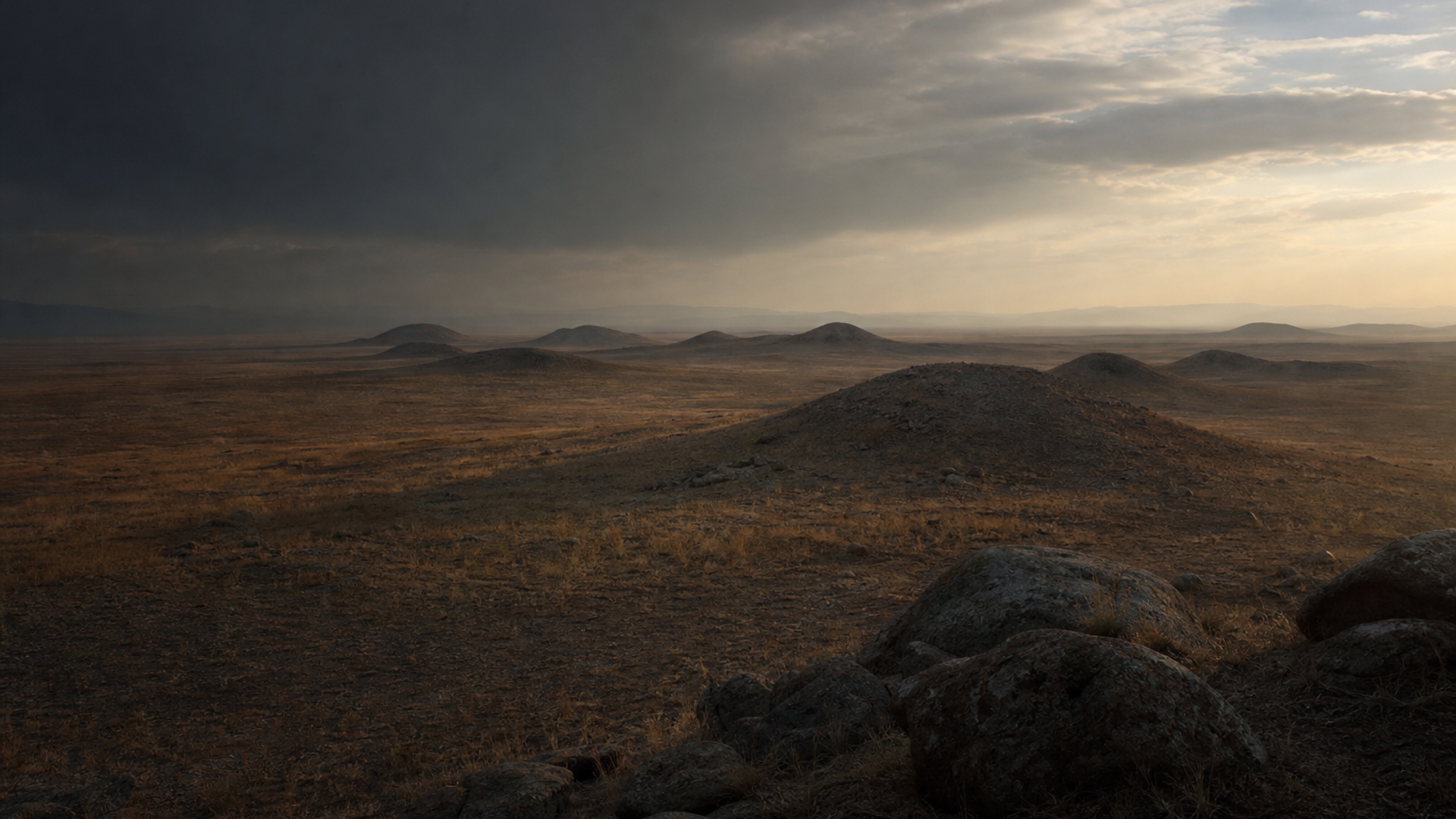
Archaeological contexts for the Tasmola culture convey a world of seasonal movement and ritualized burial. Excavated mounds often reveal central burial pits, isolated grave goods, and traces of perishable structures that once marked family or lineage memory on the landscape. While preservation is uneven, faunal remains and the placement of graves suggest an economy dominated by herding — sheep, goats, cattle and horses — with people moving across a mosaic of steppe pastures.
Social life likely revolved around kin groups whose status was inscribed in mortuary architecture rather than permanent monumental settlements. Metal ornaments, a small range of ceramics, and occasional weaponry recovered from mounds imply craft networks and both local and long‑distance social ties. Archaeological data indicates variability in grave wealth: some mounds contain modest goods, others more elaborate assemblages, which may reflect social differentiation or changing funerary practices through the Early Iron Age.
Environmental reconstructions point to a landscape of grasslands punctuated by river valleys (e.g., Karatal) that would have structured movement and seasonal camping. The cinematic scene — herds silhouetted at dawn, low mounds casting long shadows — fits the archaeological record, but many details of daily organization, belief, and material practice remain tentative because organic materials and many domestic sites are poorly preserved.