Menu
Store
Blog
Botswana_Taukome_EIA Taukome, Botswana (Southern Africa)

Taukome Early Iron Age (Botswana)

A lone genome from Taukome (900–1000 CE) links village life to deep maternal lineages in southern Africa.

900 CE - 1000 CE
1 Ancient Samples
Scroll to begin
Chapter I

The Story

Understanding the Taukome Early Iron Age (Botswana) culture

Archaeological data from Taukome, Botswana (900–1000 CE) and a single ancient mtDNA sample (haplogroup L) provide a preliminary glimpse into Early Iron Age lifeways and maternal ancestry in southern Africa. Limited evidence; conclusions remain tentative.

Time Period

900–1000 CE

Region

Taukome, Botswana (Southern Africa)

Common Y-DNA

Unknown / not recovered

Common mtDNA

L (1 sample)

Chapter II

Timeline

Key moments in the history of this culture

950 CE

Taukome occupation (archaeological horizon)

Settlement activity at Taukome dated to ca. 900–1000 CE, within the southern African Early Iron Age.

Chapter III

Origins & Emergence

The Taukome settlement in eastern Botswana occupies a horizon conventionally assigned to the Early Iron Age (EIA) of southern Africa, here dated ca. 900–1000 CE. Archaeological data indicates a small, settled village with material culture typical of the EIA across the region: decorated ceramics, stock-management remains, and traces interpreted as ironworking debris in comparable sites. Limited evidence from Taukome itself suggests this community participated in regional networks of technology and exchange rather than representing an isolated novelty.

Cinematically, imagine a riverside ring of huts at the turn of the first millennium CE: smoky hearths, pottery drying in the sun, and the glint of iron tools being quenched nearby. These images draw on general patterns of the southern African EIA; at Taukome the precise tempo of settlement and the degree of interaction with neighboring groups remain under study. The single ancient DNA sample recovered dates tightly to this window and provides a maternal genetic snapshot that aligns broadly with sub-Saharan lineages long present in the region.

Because only one genome is available, any reconstruction of population origins must be cautious. Archaeological indicators point to local development of EIA lifeways from earlier Farmer-Pastoralist traditions, with mobility, cattle-based economies, and iron technologies shaping social landscapes across Botswana by the 10th century CE.

  • Taukome occupation dated ca. 900–1000 CE
  • Material culture consistent with southern African Early Iron Age
  • Single-genome evidence offers a preliminary maternal snapshot
Chapter IV

Daily Life & Society

Archaeological traces at EIA sites across Botswana suggest a rhythm of life organized around mixed farming, herding, and craft production; Taukome likely shared these patterns. Household archaeology commonly recovers pottery sherds with cord-impressed or comb-stamped decoration, food residues, and hearth features. Zooarchaeological assemblages in nearby EIA localities show cattle, caprines, and wild game—evidence for a diversified subsistence strategy that combined pastoralism with hunting and cultivation.

In cinematic terms, daily life would have centered on compound-based domestic activities: women and men tending crops and animals, artisans shaping iron into hoes and ornaments, children learning craft and ritual roles. Social space was structured by kin groups and by seasonal movements tied to grazing cycles. Archaeological data indicates specialized tasks—iron smelting and smithing—may have been practiced at or near settlements, producing slag and tuyère fragments that mark metallurgical activity elsewhere in the region. At Taukome specifically, the presence or absence of large-scale iron installations has not been robustly documented in published materials, so interpretations draw on regional parallels.

Ethnographic analogy and archaeological patterning help reconstruct probable household economies, but direct evidence from Taukome remains limited. The single DNA sample does not reveal social status or occupation; it provides only a native maternal thread within this broader tapestry.

  • Mixed economy: pastoralism, cultivation, and hunting inferred regionally
  • Craft production (pottery, ironworking) indicated by EIA assemblages
Chapter V

Genetic Profile

Genetic data from Taukome is extremely limited: one ancient individual dated to 900–1000 CE yielded mitochondrial haplogroup L. Haplogroup L is a broad set of maternal lineages widespread across sub-Saharan Africa and is expected in southern African contexts. The single mtDNA result suggests continuity of local maternal ancestry but cannot speak to population structure, patrilineal lines, or admixture dynamics.

No Y-chromosome haplogroup was reported for the Taukome sample, so paternal ancestry remains undetermined. With a sample count of one, it is impossible to resolve whether this individual was typical of the community, an outlier, or part of a more diverse population. Archaeogenetic comparisons across the region increasingly show mixtures of local hunter-gatherer, pastoralist, and incoming farmer-associated ancestries during the first and second millennia CE; limited evidence suggests Taukome likely participated in these broader demographic processes, but robust claims require many more genomes.

Future sampling at Taukome and neighboring Early Iron Age sites in Botswana could reveal whether maternal haplogroup L here represents a local continuity, demographic influx, or a mosaic of lineages. For now, the genetic profile offers a poignant, solitary thread: a maternal lineage anchoring one life to the long prehistory of southern Africa.

  • Single mtDNA sample: haplogroup L — consistent with sub-Saharan maternal ancestry
  • No Y-DNA recovered; conclusions preliminary due to n=1
Chapter VI

Legacy & Modern Connections

The human story at Taukome connects the archaeological record with living communities across Botswana and southern Africa. Maternal lineages like mtDNA L persist widely today, and while one ancient sample cannot trace direct genealogies, it echoes patterns of continuity in maternal ancestry. Archaeological practices—pottery styles, livestock economies, and iron technology—left material legacies that inform contemporary cultural landscapes and ritual traditions.

Genetically informed archaeology emphasizes cautious, collaborative narratives: modern populations in Botswana share deep connections to ancient inhabitants, but the exact pathways of descent are complex and mediated by centuries of movement, contact, and social change. Taukome's lone genome is a call to expand sampling, to integrate local knowledge, and to let material culture and DNA together tell a richer, more certain story of human resilience and connection.

  • mtDNA L links ancient maternal ancestry to widespread sub-Saharan lineages
  • Calls for expanded sampling and community collaboration to clarify continuity
Chapter VII

Sample Catalog

1 ancient DNA samples associated with the Taukome Early Iron Age (Botswana) culture

Ancient DNA samples from this era, providing genetic insights into the people who lived during this period.

1 / 1 samples
Portrait Sample Country Era Date Culture Sex Y-DNA mtDNA
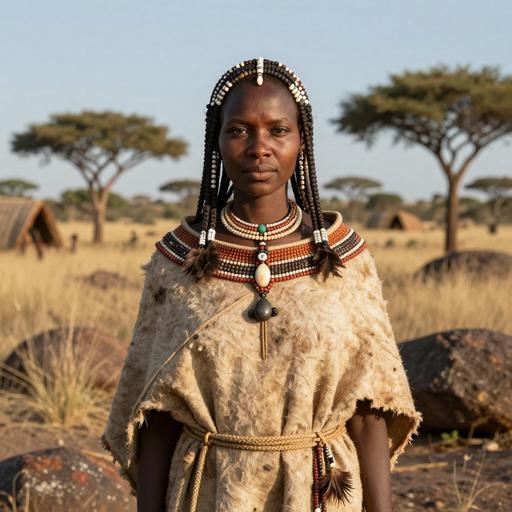
Portrait of ancient individual TAU001 from Botswana, dated 900 CE
TAU001
Botswana Botswana_Taukome_EIA 900 CE Bantu F - L0d3b1
AI Powered

AI Assistant

Ask questions about the Taukome Early Iron Age (Botswana) culture

AI Assistant by DNAGENICS

Unlock this feature
Ask questions about the Taukome Early Iron Age (Botswana) culture. Our AI assistant can explain genetic findings, historical context, archaeological evidence, and modern connections.
Sample AI Analysis

The Taukome Early Iron Age (Botswana) culture represents a fascinating chapter in human history...

Genetic analysis reveals connections to earlier populations while showing evidence of unique adaptations and cultural innovations. The ancient DNA samples provide insights into migration patterns, social structures, and the biological relationships between ancient populations.

This is a preview of the AI analysis. Unlock the full AI Assistant to explore detailed insights about:

  • Genetic composition and ancestry
  • Migration patterns and origins
  • Daily life and cultural practices
  • Modern genetic legacy
Use code for 30% off Expires May 12