Menu
Store
Blog
Armenia (Karmir Blur / Teishebaini)

Teishebaini: Armenia in Transition

A single mitochondrial genome from Karmir Blur links Achaemenid rule to Hellenistic Armenia

399 CE - 231 BCE
Scroll to begin
Chapter I

The Story

Understanding the Teishebaini: Armenia in Transition culture

Archaeological and genetic evidence from a lone burial at Karmir Blur (Teishebaini), dated 399–231 BCE, provides a cautious glimpse into Achaemenid-to-Hellenistic Armenia. The mtDNA U lineage hints at deep West Eurasian maternal ancestry; conclusions remain preliminary due to a single sample.

Time Period

399–231 BCE

Region

Armenia (Karmir Blur / Teishebaini)

Common Y-DNA

Undetermined (no Y data)

Common mtDNA

U (1 individual)

Chapter II

Timeline

Key moments in the history of this culture

399 BCE

Earliest dated sample

Earliest calibrated date for the sampled burial at Karmir Blur (beginning of the site's Achaemenid–Hellenistic interval).

231 BCE

Latest dated sample

Most recent calibrated date for the sampled individual, marking the terminal bound of this dataset's chronology.

Chapter III

Origins & Emergence

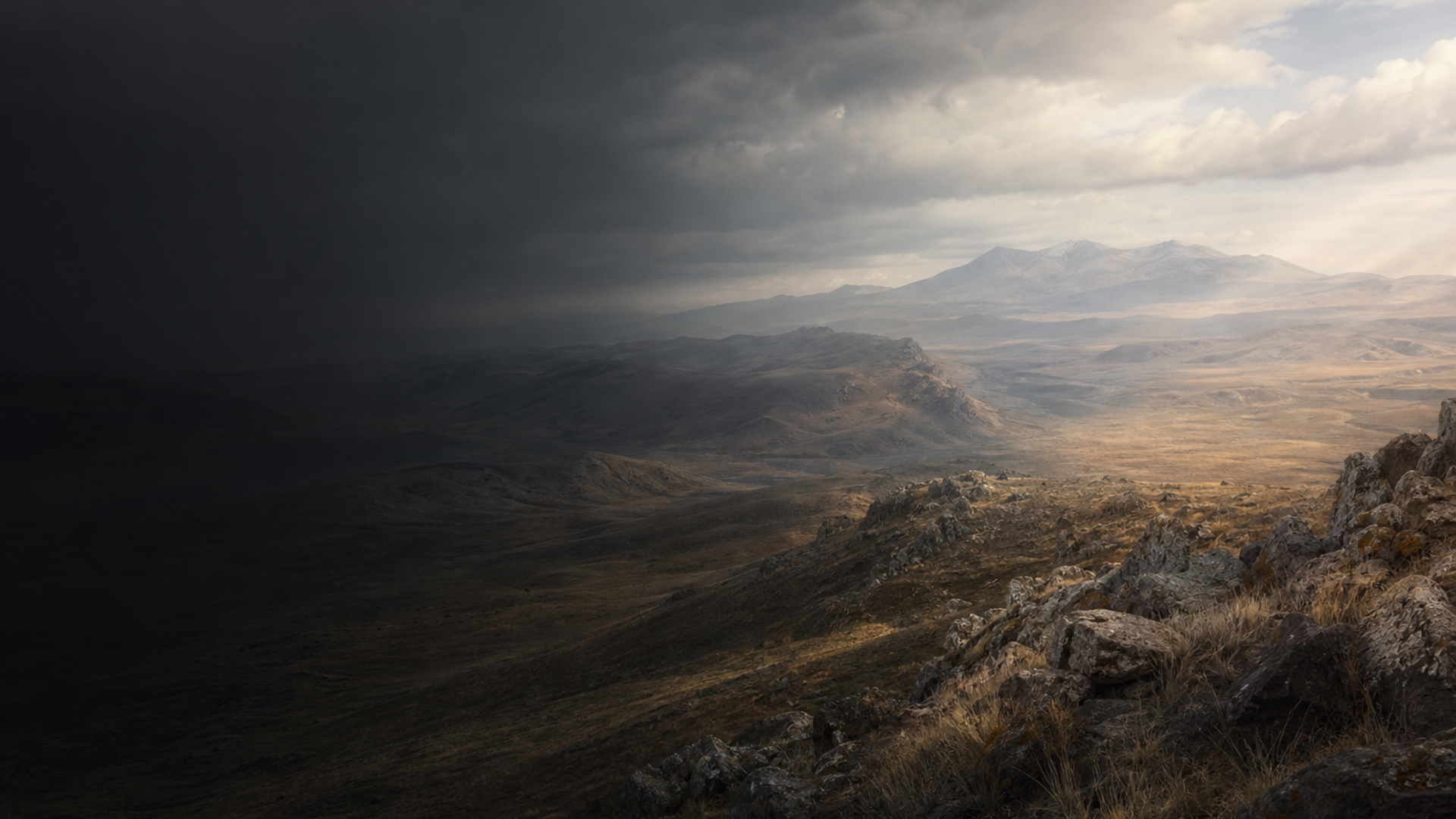
Karmir Blur — the well-known tell associated with the necropolis of Teishebaini near modern Yerevan — occupies a dramatic position in the Armenian highlands where empires and local polities met. Archaeological strata at the site contain material that spans the late Achaemenid period into the early Hellenistic age (roughly the 5th–3rd centuries BCE), a time when imperial networks, local elites, and new trade routes reshaped social landscapes.

Limited evidence suggests that communities here experienced both continuity of local Iron Age traditions and infusion of foreign objects, styles, and personnel connected to Achaemenid administrative systems and later Hellenistic influences. Excavations at the necropolis reveal burial architectures and grave goods that indicate social differentiation — some burials are modest, others richly furnished — pointing to a landscape of hierarchical settlements and interconnected elites.

Because the genetic dataset for this cultural identifier comprises a single sampled individual, archaeological data takes primacy in reconstructing origins. The material culture and funerary practices at Teishebaini suggest a population rooted in the Armenian highlands but participating in broader pan-regional exchange. Any genetic inferences must remain tentative: one genome cannot capture the demographic complexity of the region, but it can illuminate maternal lineages present at a particular place and moment.

  • Karmir Blur (Teishebaini) ties local traditions to imperial networks
  • Site spans late Achaemenid to Hellenistic timeframe (5th–3rd c. BCE)
  • Single genetic sample limits broad population conclusions
Chapter IV

Daily Life & Society

Archaeological layers from Teishebaini's necropolis and nearby habitations paint a cinematic picture of life on the highland frontier: caravans bringing pottery and metalwork, workshops turning raw materials into ornaments, and household networks anchored by kinship and craft.

Burial assemblages at Karmir Blur include ceramics, metal pins, and personal adornments. These objects imply domestic economies where weaving, metallurgy, and pastoral practices intersected. Trade connections—suggested by imported wares and stylistic echoes of Achaemenid and Hellenistic art—indicate that inhabitants engaged with regional markets and imperial supply lines. Funerary diversity at the necropolis suggests social stratification; some burials are accompanied by costly goods while others show modest deposition.

Archaeological data indicates that religious and funerary practices blended older local customs with external motifs. The necropolis offers snapshots rather than continuous narrative: tombs provide individual life histories without fully revealing demographic patterns. When aligned with genetic data, even single burials can offer personal stories of ancestry and mobility within a richly textured society.

  • Material culture shows local crafts and long-distance connections
  • Burial variability suggests social hierarchy and diverse life histories
Chapter V

Genetic Profile

The genetic evidence for the Armenia_Achaemenid_Hellenistic identifier is extremely limited: one individual from the Karmir Blur necropolis yielded mitochondrial haplogroup U. Haplogroup U is an ancient West Eurasian maternal lineage with deep roots in Europe and the Near East, persisting through the Paleolithic, Bronze Age, and into historic times.

This single mtDNA result offers a cautious, individual-level signal rather than a population-wide portrait. Archaeogenetic studies across the Armenian Highland and neighboring regions generally reveal mixtures of local highland ancestry, Anatolian/Levantine components, and varying inputs related to steppe and Iranian plateau populations at different times. Against this backdrop, an mtDNA U lineage is consistent with long-term maternal continuity in West Eurasia but cannot specify the proportions or timing of admixture events.

No Y-chromosome haplogroup is reported for this sample, so paternal lineages remain unknown. Because the sample count is one (<10), any comparisons to broader regional genetic patterns must be framed as preliminary. The value of this genome is as a data point that anchors a maternal lineage to a named place and time (Karmir Blur, 399–231 BCE), helping to link archaeological context with the biological histories that shaped it.

  • mtDNA U indicates deep West Eurasian maternal ancestry
  • Single-sample dataset prevents robust population-level inferences
Chapter VI

Legacy & Modern Connections

Teishebaini's graves and their lone sequenced genome illuminate how individual life stories resonate through millennia. Archaeological continuity in the Armenian Highlands — combined with genetic signals from multiple studies across the Caucasus — suggests degrees of population continuity alongside episodic migrations and cultural change. For modern populations, this means that some maternal lineages found in ancient burials may persist today, even as the overall genetic tapestry has been woven by many threads.

However, with only one sampled individual, claims of direct ancestry to contemporary Armenians would be speculative. Instead, the primary legacy is methodological: integrating archaeology and genetics at named sites like Karmir Blur refines our temporal and spatial understanding of human mobility, social complexity, and the lived consequences of imperial encounters in the Achaemenid and Hellenistic centuries.

  • Material and genetic traces suggest partial continuity in the Armenian Highlands
  • Single-sample results emphasize the need for more ancient genomes to clarify modern links
AI Powered

AI Assistant

Ask questions about the Teishebaini: Armenia in Transition culture

AI Assistant by DNAGENICS

Unlock this feature
Ask questions about the Teishebaini: Armenia in Transition culture. Our AI assistant can explain genetic findings, historical context, archaeological evidence, and modern connections.
Sample AI Analysis

The Teishebaini: Armenia in Transition culture represents a fascinating chapter in human history...

Genetic analysis reveals connections to earlier populations while showing evidence of unique adaptations and cultural innovations. The ancient DNA samples provide insights into migration patterns, social structures, and the biological relationships between ancient populations.

This is a preview of the AI analysis. Unlock the full AI Assistant to explore detailed insights about:

  • Genetic composition and ancestry
  • Migration patterns and origins
  • Daily life and cultural practices
  • Modern genetic legacy
Use code for 30% off Expires May 12