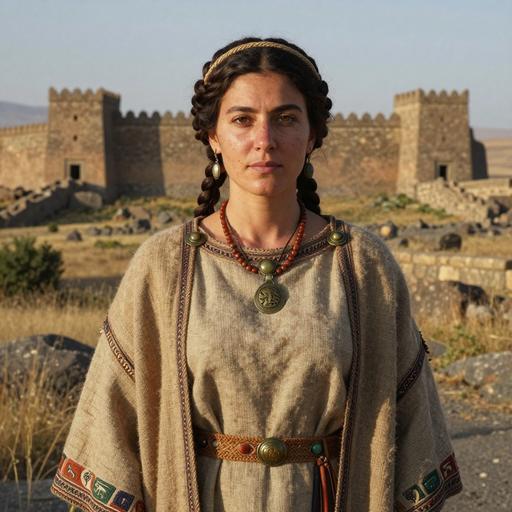
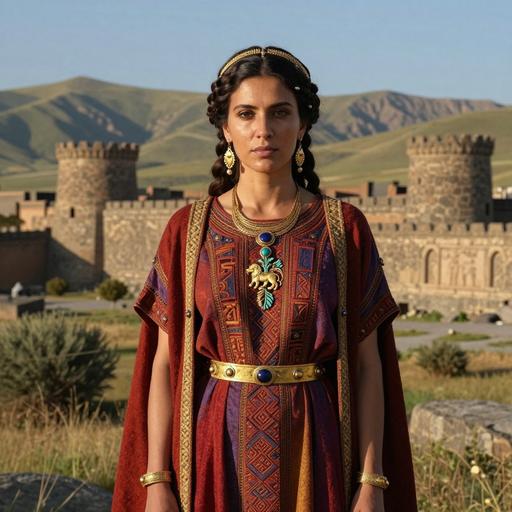
Ancient DNA retrieved from the necropolis at Karmir Blur presents a preliminary maternal portrait: among nine sequenced individuals, mitochondrial haplogroups include J1b (2 individuals), T (1), I (1), U (1), and K (1). These haplogroups are broadly distributed across West Eurasia and are found in diverse ancient and modern populations from the Near East, the Caucasus, and parts of Europe. Archaeological data indicates the site was a political center within the Urartian sphere; the mtDNA signals we see are consistent with a population bearing regional West Eurasian maternal ancestry during the Iron Age.
Important caveats stand beside these findings. The sample count is small (n=9): when sample sizes are below ten, genetic inferences are inherently preliminary and may not capture the full population diversity. Notably, Y-chromosome data for these individuals is not reported or is limited, so paternal lineages and male-mediated mobility remain unresolved. Combined with isotope and archaeological evidence, however, the mtDNA results hint at a tapestry of local continuity and long-distance contacts — trade, marriages, and population movements that left genetic traces in maternal lines. Future, larger-scale sequencing and comparative studies with neighboring sites will be necessary to test patterns of continuity, admixture, and demographic change.