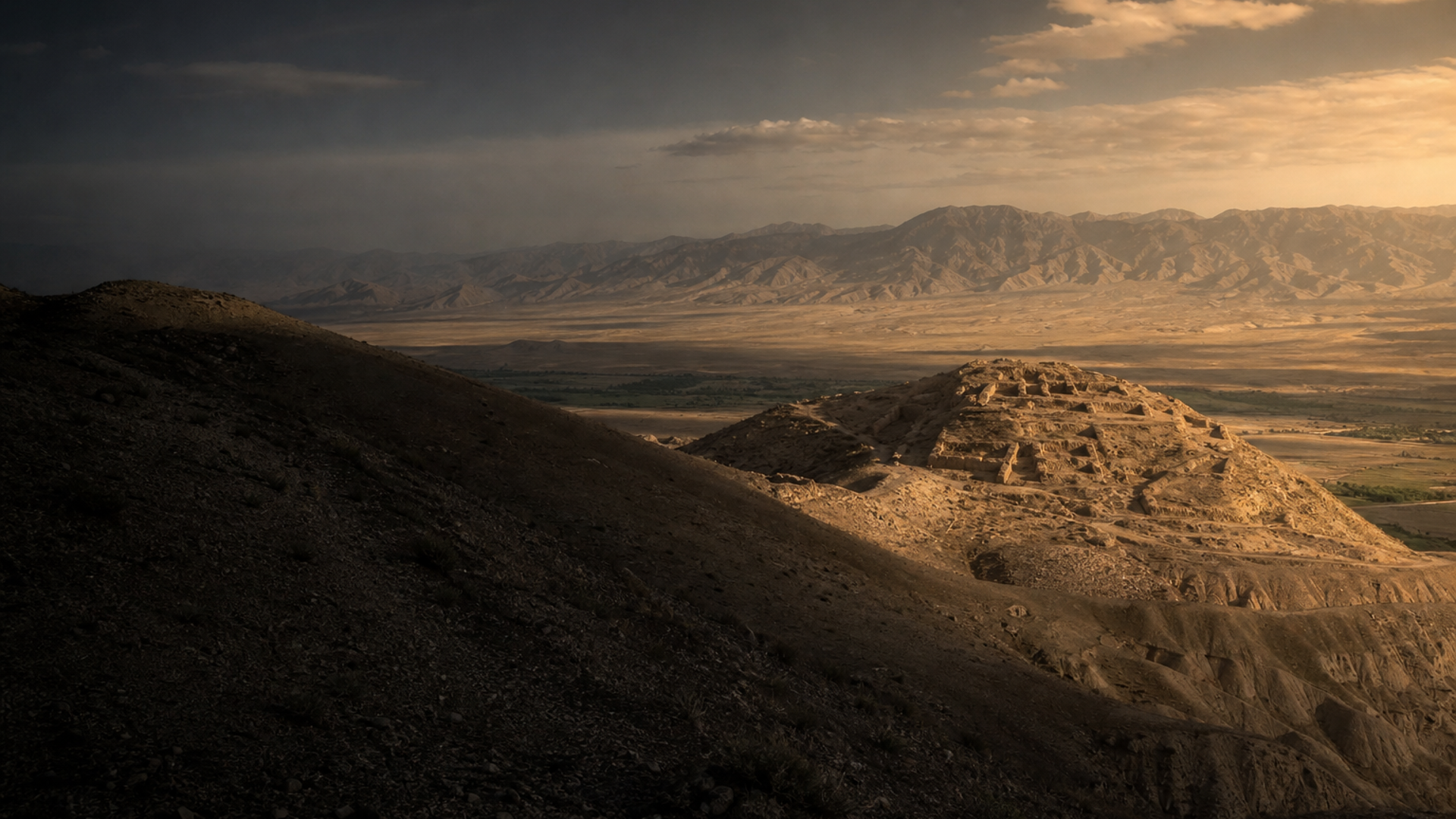
Twelve ancient genomes from Tepe Hissar provide a preliminary but revealing genetic portrait of a Bronze-Age Iranian community. Uniparental markers detected among the samples include Y-chromosome haplogroups J (2 individuals), T (2), and L (1), and mitochondrial lineages dominated by W3b (3), with single instances of T, U7a, W, and U. These haplogroups are broadly consistent with Near Eastern and west Eurasian maternal and paternal lineages known from the Iranian Plateau and adjacent regions.
Haplogroup J and T are commonly observed in the Near East and can reflect long-standing paternal lineages on the plateau. The presence of haplogroup L, less frequent in western Iran but more common in South Asia, may indicate low-frequency connections or gene flow along south-north corridors, but with only a single L sample its significance is tentative. On the maternal side, W3b and U7a are lineages with deep West Eurasian and Near Eastern distributions, while W and T reflect broader west Eurasian maternal ancestry.
Genomic analyses (autosomal data) indicate a continuity with regional gene pools typical of the Iranian Plateau and the Near East during the 4th–2nd millennia BCE, with no strong, universal signal of abrupt replacement in this sample set. However, because the dataset is modest (12 individuals sampled from a single site and interval), conclusions about wider population dynamics are provisional. Archaeogenetics here is a tool for hypothesis: the patterns at Tepe Hissar suggest persistent local ancestry with episodic contacts rather than wholesale demographic turnovers, but broader regional sampling is required to test models of migration and admixture.