Menu
Store
Blog
Bahrain_EMTylos_SeleucidCharacene Bahrain (Abu Saiba, Northern Governorate)

Tylos Shores: Abu Saiba in the Hellenistic Gulf

A single ancient genome hints at maternal ties across the Persian Gulf during 200 BCE–300 CE

200 BCE - 300 CE
1 Ancient Samples
Scroll to begin
Chapter I

The Story

Understanding the Tylos Shores: Abu Saiba in the Hellenistic Gulf culture

Archaeological remains from Abu Saiba, Bahrain (200 BCE–300 CE) place this site within the Early Tylos (Seleucid–Characene) world. One ancient mtDNA J sample suggests Near Eastern maternal ancestry; conclusions are preliminary due to n=1.

Time Period

200 BCE–300 CE

Region

Bahrain (Abu Saiba, Northern Governorate)

Common Y-DNA

Not reported / unknown (sample size 1)

Common mtDNA

J (1)

Chapter II

Timeline

Key moments in the history of this culture

200 BCE

Early Tylos maritime connections intensify

Archaeological evidence at Abu Saiba and nearby Qal'at al-Bahrain points to heightened trade with Mesopotamia and Characene during the Hellenistic era.

Chapter III

Origins & Emergence

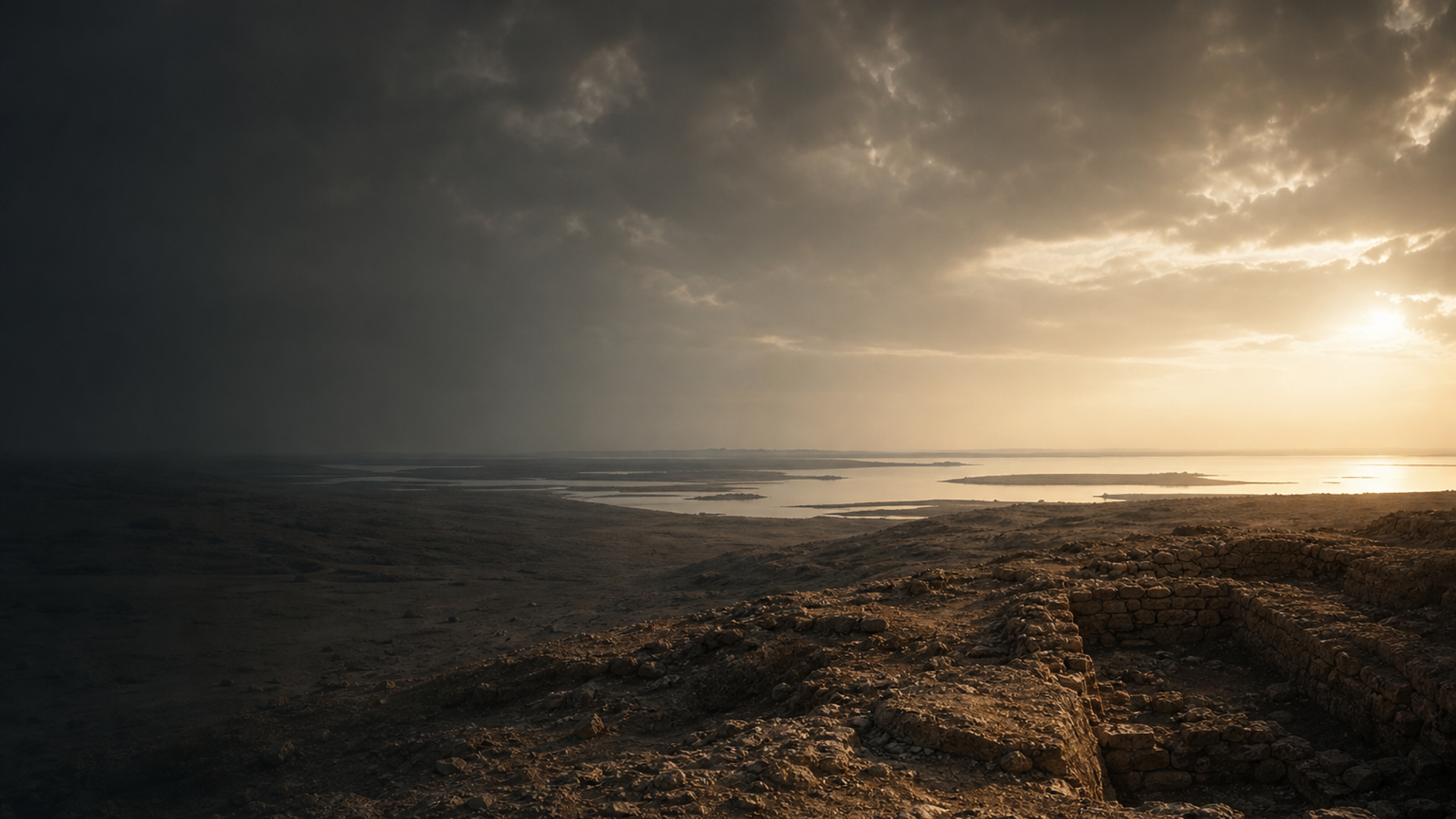
Along Bahrain's salt-scarred coast, the Early Tylos period (Seleucid–Characene era) unfolds as a story of maritime crossroads. Archaeological layers at Abu Saiba (Northern Governorate) date to roughly 200 BCE–300 CE and sit within a wider landscape of fortified towns, burial mounds, and trade entrepôts — the most famous nearby being Qal'at al-Bahrain. Excavations and material culture indicate active exchange with Mesopotamia, the Persian Gulf polities of Characene, and Hellenistic networks across the Gulf. Pottery types, glass beads, and imported goods attest to these contacts, while local settlement patterns show continuity of islander lifeways adapted to intensified trade.

Limited evidence suggests that the cultural horizon labeled “Tylos” in Bahrain represents a blend of indigenous Gulf traditions and incoming influences mediated by seafaring trade and political ties. Archaeological data indicate localized developments in craft, burial rites, and urban responses to long-distance commerce. The Abu Saiba contexts contribute a valuable, if small, window into this interaction sphere: they record the human presence on the island at a moment when power in the Gulf shifted between Hellenistic, Parthian, and local authorities.

  • Abu Saiba dates to Early Tylos (Seleucid–Characene) era, ca. 200 BCE–300 CE
  • Material culture shows Mesopotamian and Hellenistic trade links
  • Tylos reflects fusion of local Gulf traditions with external influences
Chapter IV

Daily Life & Society

The island communities of Tylos lived at the interface of sea and shore. Fishing, pearl-gathering, and small-scale agriculture underpinned daily subsistence, while craft specialists produced beads, pottery, and worked shell and metal for both local use and export. Urban centers like Qal'at al-Bahrain, together with smaller sites such as Abu Saiba, show layers of habitation with domestic structures, refuse deposits, and burial grounds that speak to dense, connected living.

Archaeological finds — from amphora fragments and imported finewares to local beadwork — paint a picture of households participating in regional exchange. Social organization likely ranged from family-based kin groups to urban elites who brokered trade with Characene merchants and Hellenistic agents. Funerary evidence in the region suggests varied mortuary practices; however, detailed reconstructions of social hierarchy at Abu Saiba remain tentative because excavated contexts are limited. Climatic and maritime conditions shaped seasonal rhythms, with seafaring calendars and trade winds structuring contact across the Gulf.

  • Economy centered on maritime resources, craft production, and trade
  • Material culture reflects both local lifeways and long-distance exchange
Chapter V

Genetic Profile

Genetic data from Abu Saiba are extremely limited: the assemblage includes a single sampled individual dated to the 200 BCE–300 CE range whose mitochondrial DNA falls within haplogroup J. Haplogroup J is broadly distributed across the Near East and parts of the Mediterranean and has deep Neolithic and later continuities in the region. Archaeogenetic interpretation therefore suggests a maternal lineage connected to wider Near Eastern maternal pools that circulated along trade and migration routes during the Hellenistic and Parthian periods.

Because only one genome is available, any population-level inference is highly provisional. No Y‑chromosome markers are reported for this sample, so paternal lineages and sex-biased mobility remain unknown. Archaeological context — port-related exchange, imported goods, and close connections to Mesopotamian Characene and Hellenistic networks — provides a plausible framework by which maternal lineages like J could arrive via seafaring marriage, servitude, mercantile migration, or longer-term gene flow. Future sampling across Abu Saiba, Qal'at al-Bahrain, and regional coastal sites is required to test whether this mtDNA J individual reflects a local norm, a transient visitor, or part of a patterned demographic signal across the ancient Gulf.

  • mtDNA haplogroup J detected (n=1); suggests Near Eastern maternal affinities
  • No Y-DNA reported; conclusions are preliminary due to sample size
Chapter VI

Legacy & Modern Connections

The archaeological and genetic imprint of Early Tylos on Bahrain resonates into the present as part of a long history of maritime exchange that shaped population and cultural landscapes across the Persian Gulf. Material traces at Abu Saiba connect to broader narratives of movement: goods, people, and ideas flowed along routes that linked Mesopotamia, the Iranian littoral, Arabia, and the Hellenistic world. The single mtDNA J result aligns with expectations of Near Eastern maternal lineages in this corridor but must be treated cautiously.

Ongoing genetic studies, when combined with targeted excavation and careful stratigraphic analysis, can reveal how island communities absorbed and transmitted genetic diversity. For now, Abu Saiba offers a poetic and provisional glimpse — a human voice from the Tylos shore — reminding us that every ancient genome is a thread in a wider fabric that we are only beginning to reconstruct.

  • Tylos period marks long-standing Persian Gulf connections affecting modern genetic landscapes
  • Current genetic signal is provisional; more sampling needed to clarify continuity
Chapter VII

Sample Catalog

1 ancient DNA samples associated with the Tylos Shores: Abu Saiba in the Hellenistic Gulf culture

Ancient DNA samples from this era, providing genetic insights into the people who lived during this period.

1 / 1 samples
Portrait Sample Country Era Date Culture Sex Y-DNA mtDNA
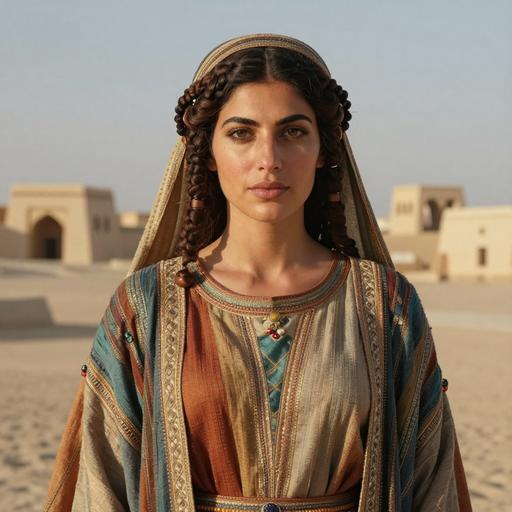
Portrait of ancient individual AS_EMT from Bahrain, dated 200 BCE
AS_EMT
Bahrain Bahrain_EMTylos_SeleucidCharacene 200 BCE Tylos F - J1c15a1
AI Powered

AI Assistant

Ask questions about the Tylos Shores: Abu Saiba in the Hellenistic Gulf culture

AI Assistant by DNAGENICS

Unlock this feature
Ask questions about the Tylos Shores: Abu Saiba in the Hellenistic Gulf culture. Our AI assistant can explain genetic findings, historical context, archaeological evidence, and modern connections.
Sample AI Analysis

The Tylos Shores: Abu Saiba in the Hellenistic Gulf culture represents a fascinating chapter in human history...

Genetic analysis reveals connections to earlier populations while showing evidence of unique adaptations and cultural innovations. The ancient DNA samples provide insights into migration patterns, social structures, and the biological relationships between ancient populations.

This is a preview of the AI analysis. Unlock the full AI Assistant to explore detailed insights about:

  • Genetic composition and ancestry
  • Migration patterns and origins
  • Daily life and cultural practices
  • Modern genetic legacy
Use code for 30% off Expires May 12