Menu
Store
Blog
Southeastern Romania (Urziceni)

Urziceni Echoes: Bodrogkeresztur Romania

A Chalcolithic community at the crossroads of farmers and foragers, glimpsed in bones and genomes.

4500 CE - 3500 BCE
Scroll to begin
Chapter I

The Story

Understanding the Urziceni Echoes: Bodrogkeresztur Romania culture

Archaeological and genomic evidence from 45 Chalcolithic individuals (4500–3500 BCE) at Urziceni, Romania illuminates the Bodrogkeresztur presence in southeastern Europe. Mitochondrial diversity points to farmer-derived maternal lines with mixed local ancestry; Y-DNA is sparse and heterogeneous.

Time Period

4500–3500 BCE

Region

Southeastern Romania (Urziceni)

Common Y-DNA

C (rare; 1/45 in this dataset)

Common mtDNA

J (8), H (3), N (3), T2b (3), U (3)

Chapter II

Timeline

Key moments in the history of this culture

2500 BCE

Community Flourishes near Urziceni

Around 2500 BCE Bodrogkeresztur settlements in the Urziceni area show intensified agriculture, craft production, and regional exchange networks.

Chapter III

Origins & Emergence

The Bodrogkeresztur presence in what is now Urziceni (Ialomița County, Romania) unfolds across the late Neolithic into the early Chalcolithic, roughly 4500–3500 BCE. Archaeological data indicates communities anchored to enriched loess soils and riverine corridors; pottery, polished stone tools and simple copper items mark a culture negotiating new technologies and enduring regional traditions.

Limited evidence suggests the Bodrogkeresztur horizon represents a local elaboration on earlier Neolithic farmer societies rather than an abrupt population replacement. Settlement patterns indicate compact villages with long-lived domestic loci, often near arable land and seasonal pastures. Regional interactions with neighboring groups—Cucuteni-related communities to the northeast and other Carpathian Basin groups—are visible in ceramic motifs and exchange goods, implying networks of contact more than mass migration.

From a genomic perspective, the Urziceni assemblage sits within the broader story of Anatolian-derived farmers who settled southeast Europe, carrying agricultural lifeways inland. Archaeological stratigraphy and radiocarbon dates from nearby Bodrogkeresztur contexts align with the 4500–3500 BCE window, but caution is warranted: while material culture is distinctive, the degree of demographic continuity versus admixture can only be inferred with moderate confidence given regional sampling gaps.

  • Distinct local ceramic and copper use, circa 4500–3500 BCE
  • Settlement continuity with Neolithic farmer traditions
  • Cultural exchange with adjacent Chalcolithic communities
Chapter IV

Daily Life & Society

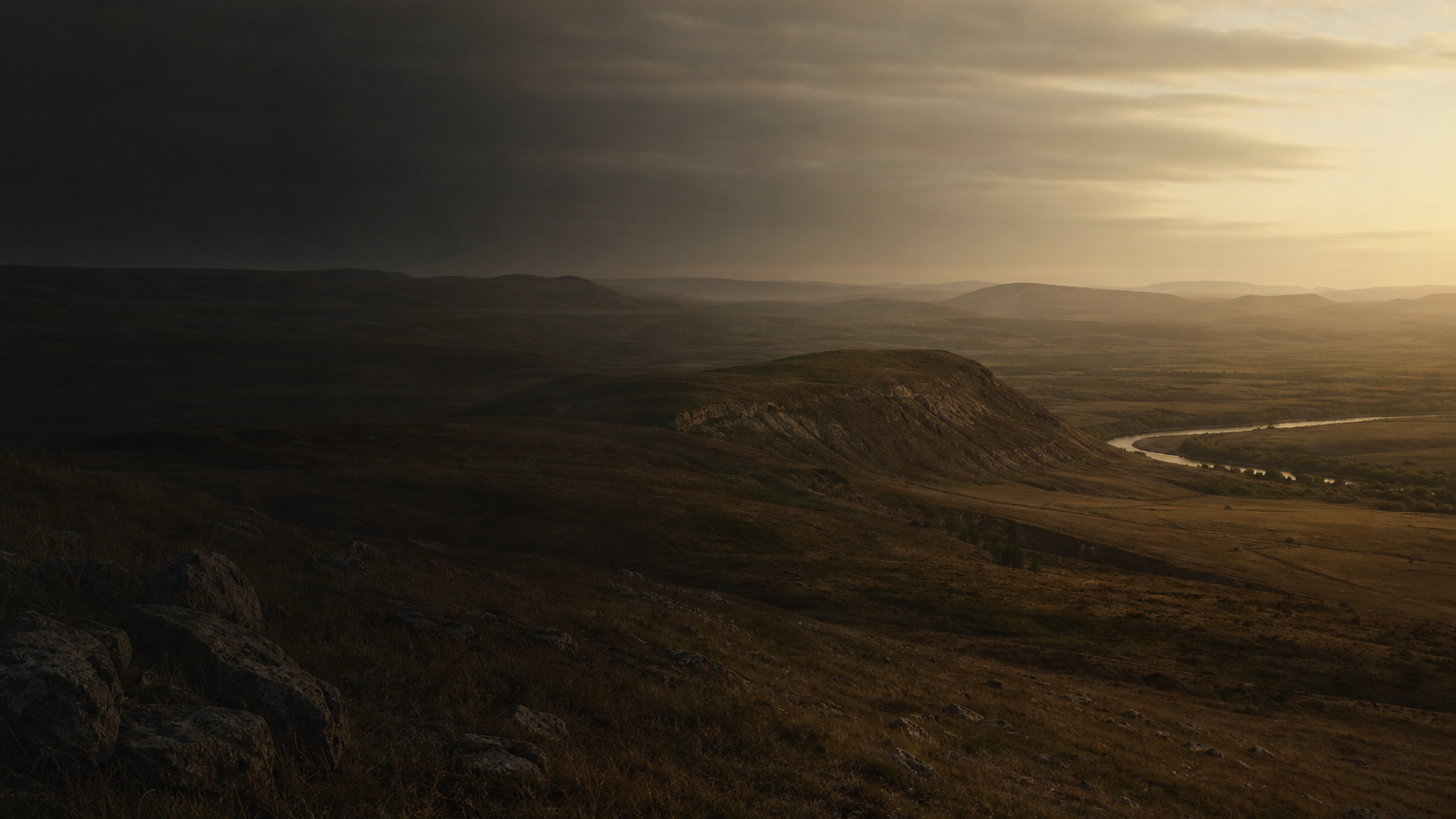
In the cinematic sweep of fields and river fog, Bodrogkeresztur households at Urziceni practiced mixed farming: cereals, pulses, and managed herds. Archaeobotanical remains from the region indicate wheat and barley cultivation, while zooarchaeological traces point to cattle, sheep and pig husbandry. Craft specializations—pottery production, bone working, and occasional copper toolmaking—suggest a community balancing household self-sufficiency with participation in wider exchange networks.

Burial practices in nearby Bodrogkeresztur cemeteries reveal social differentiation expressed through grave goods and body position, but evidence for rigid stratification is limited. Children, adults and elders interred together indicate kin-based sites where social memory centered on place. Architectural traces—post-built houses with storage pits—portray a rhythm of seasonal labor and domestic craft. Archaeological data indicates mobility at multiple scales: local transhumance, regional trade in prestige goods, and the movement of ideas such as metallurgical skills.

Environmental reconstructions suggest communities adapted to shifting climatic conditions, with fluctuating resource availability shaping diet and settlement intensity. While the material record is rich in gesture, direct evidence for social institutions (e.g., chiefs, councils) remains elusive and should be treated as interpretive rather than definitive.

  • Mixed farming and animal husbandry supported village life
  • Household crafts and emerging copper use, with regional trade
Chapter V

Genetic Profile

The Urziceni genetic assemblage (n=45) offers a rare genomic window into a southeastern European Chalcolithic community. Mitochondrial diversity is notable: haplogroup J appears most frequently (8 individuals), with H, N, T2b and U also represented. These maternal lineages are commonly associated with early European farmers and reflect a strong Anatolian-derived female ancestry component in the population.

On the paternal side, Y-DNA data are sparse in this set; haplogroup C appears in one individual (1/45). Haplogroup C is uncommon in later European contexts and its presence here may indicate long-distance ancestry or local retention of an older lineage. Beyond that single count, the dataset does not show a dominant male lineage, suggesting either a heterogeneous paternal pool or limited reporting of Y-chromosome calls for all males.


Genome-wide analyses of comparable regional Chalcolithic groups indicate primary Anatolian Neolithic farmer ancestry combined with varying degrees of local Western Hunter-Gatherer admixture. For Urziceni, archaeological and genetic signals together imply a community largely descended from Neolithic farming populations with admixture from local foragers; evidence for significant Steppe-associated ancestry is limited in this time frame but cannot be ruled out in later phases. With 45 samples the conclusions are reasonably robust for the site, yet regional gaps mean broader demographic narratives remain provisional.

  • mtDNA dominated by J (8) with H, N, T2b, U present
  • Y-DNA shows C in one individual; paternal lineages appear heterogeneous
Chapter VI

Legacy & Modern Connections

The Bodrogkeresztur imprint at Urziceni is both archaeological and genetic: material traces tell of daily rhythms and exchange, while genomes preserve echoes of migration and mixture. The maternal lineages common here—especially haplogroup J—continue to appear in modern European and Near Eastern populations, linking present-day ancestry to these early farming communities.

Archaeogenetic work bridges deep-time and living heritage, showing how Anatolian farmer ancestry propagated across Europe and blended with local lineages. While it is tempting to draw direct lines from Chalcolithic villagers to modern groups, caution is essential: populations have continued to move and mix for millennia. The Urziceni samples contribute a tangible chapter to the human story in Romania, offering a measurable connection between pottery, plowshares, and present-day genomes. Future, denser sampling across the Carpathian Basin will sharpen these connections and refine the story of continuity and change.

  • mtDNA links to widespread farmer-derived maternal ancestry in Europe
  • Genomes anchor local Chalcolithic communities within long-term population dynamics
AI Powered

AI Assistant

Ask questions about the Urziceni Echoes: Bodrogkeresztur Romania culture

AI Assistant by DNAGENICS

Unlock this feature
Ask questions about the Urziceni Echoes: Bodrogkeresztur Romania culture. Our AI assistant can explain genetic findings, historical context, archaeological evidence, and modern connections.
Sample AI Analysis

The Urziceni Echoes: Bodrogkeresztur Romania culture represents a fascinating chapter in human history...

Genetic analysis reveals connections to earlier populations while showing evidence of unique adaptations and cultural innovations. The ancient DNA samples provide insights into migration patterns, social structures, and the biological relationships between ancient populations.

This is a preview of the AI analysis. Unlock the full AI Assistant to explore detailed insights about:

  • Genetic composition and ancestry
  • Migration patterns and origins
  • Daily life and cultural practices
  • Modern genetic legacy