


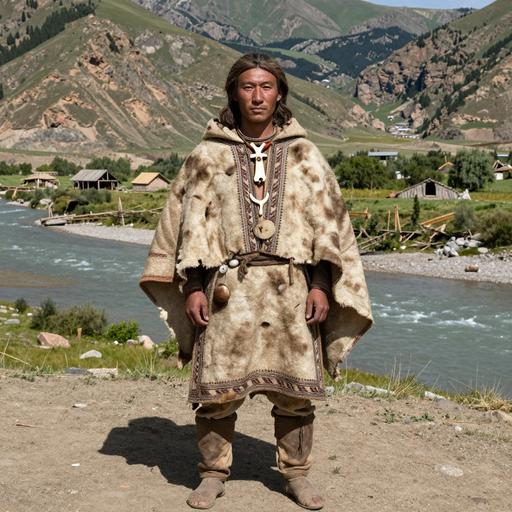
| Individual | Culture/Period | Date | Location | Action |
|---|---|---|---|---|
| Indo-European individual, Russia | Afanasievo Culture | 2800 BCE | Altai Mountains. Yenisey River. left bank of Karasuk tributary. Karasuk III, Russia | View |
| Indo-European individual, Russia | Afanasievo Culture | 2844 BCE | Altai Mountains. Yenisey River. left bank of Karasuk tributary. Karasuk III, Russia | View |
| Indo-European individual, Russia | Afanasievo Culture | 2879 BCE | Altai Mountains. Yenisey River. left bank of Karasuk tributary. Karasuk III, Russia | View |
| Indo-European individual, Russia | Afanasievo Culture | 2618 BCE | Altai Mountains. Yenisey River. left bank of Karasuk tributary. Karasuk III, Russia | View |
| Afanasievo individual, Russia | 2800 BCE | Altai Mountains. Yenisey River. left bank of Karasuk tributary. Karasuk III, Russia | View | |
| Afanasievo individual, Russia | 2844 BCE | Altai Mountains. Yenisey River. left bank of Karasuk tributary. Karasuk III, Russia | View | |
| Afanasievo individual, Russia | 2879 BCE | Altai Mountains. Yenisey River. left bank of Karasuk tributary. Karasuk III, Russia | View | |
| Afanasievo individual, Russia | 2618 BCE | Altai Mountains. Yenisey River. left bank of Karasuk tributary. Karasuk III, Russia | View |
Page 1
| Individual | Culture/Period | Date | Location | Action |
|---|---|---|---|---|
| Khakassia Afanasievo individual, Russia | Afanasievo Culture | 2857 BCE | Middle Yenisei region. Afanasieva Gora, Russia | View |
| Khakassia Afanasievo individual, Russia | Afanasievo Culture | 2950 BCE | Middle Yenisei region. Afanasieva Gora, Russia | View |
| Khakassia Afanasievo individual, Russia | Afanasievo Culture | 3000 BCE | Middle Yenisei region. Afanasieva Gora, Russia | View |
| Khakassia Afanasievo individual, Russia | Afanasievo Culture | 3300 BCE | Altai Mountains. Yenisey River. left bank of Karasuk tributary. Karasuk III, Russia | View |
| Altai EIA Afanasievo individual, Russia | Afanasievo Culture | 3331 BCE | Altai Autonomous Republic. Ust-Kanski. Altai Mountains. Kaminnaya Cave, Russia | View |
| Altai Afanasievo individual, Russia | Afanasievo Culture | 3088 BCE | Altai Mountains. Ust'-Kuyum, Russia | View |
| Khakassia Afanasievo individual, Russia | Afanasievo Culture | 2881 BCE | Altai Mountains. Yenisey River. left bank of Karasuk tributary. Karasuk III, Russia | View |
| Khakassia Afanasievo individual, Russia | Afanasievo Culture | 2874 BCE | Altai Mountains. Yenisey River. left bank of Karasuk tributary. Karasuk III, Russia | View |
| Altai Afanasievo individual, Russia | Afanasievo Culture | 3011 BCE | Altai Mountains. Saldyar-1 cemetery, Russia | View |
| Indo-European individual, Russia | Afanasievo Culture | 2868 BCE | Altai Mountains. Yenisey River. left bank of Karasuk tributary. Karasuk III, Russia | View |
| Indo-European individual, Russia | Afanasievo Culture | 3016 BCE | Elo 1, Russia | View |
| Altai Afanasievo individual, Russia | Afanasievo Culture | 3323 BCE | Elo 1, Russia | View |
| Altai Afanasievo individual, Russia | Afanasievo Culture | 3011 BCE | Elo 1, Russia | View |
| Altai Afanasievo individual, Russia | Afanasievo Culture | 3006 BCE | Elo Bashi, Russia | View |
| Indo-European individual, Russia | Afanasievo Culture | 3011 BCE | Lower Tyumechin 1, Russia | View |
| Indo-European individual, Russia | Afanasievo Culture | 3092 BCE | Elo Bashi, Russia | View |
| Altai Afanasievo individual, Russia | Afanasievo Culture | 3082 BCE | Lower Tyumechin 1, Russia | View |
| Indo-European individual, Russia | Afanasievo Culture | 3011 BCE | Lower Tyumechin 1, Russia | View |
| Khakassia Afanasievo individual, Russia | Afanasievo Culture | 2950 BCE | Middle Yenisei region. Afanasieva Gora, Russia | View |
| Indo-European individual, Russia | Afanasievo Culture | 2889 BCE | Middle Yenisei region. Afanasieva Gora, Russia | View |
| Khakassia Afanasievo individual, Russia | Afanasievo Culture | 3300 BCE | Middle Yenisei region. Afanasieva Gora, Russia | View |
| Krasnoyarsk Krai Afanasievo individual, Russia | Afanasievo Culture | 3050 BCE | Krasnoyarsk Krai. Minusinsk Rayon. Podsukhanika II, Russia | View |
| Altai Krai Afanasievo individual, Russia | Afanasievo Culture | 2900 BCE | Inskoy Dol, Russia | View |
| Indo-European individual, Russia | Afanasievo Culture | 2800 BCE | Altai Mountains. Yenisey River. left bank of Karasuk tributary. Karasuk III, Russia | View |
| Indo-European individual, Russia | Afanasievo Culture | 2844 BCE | Altai Mountains. Yenisey River. left bank of Karasuk tributary. Karasuk III, Russia | View |
| Indo-European individual, Russia | Afanasievo Culture | 2879 BCE | Altai Mountains. Yenisey River. left bank of Karasuk tributary. Karasuk III, Russia | View |
| Indo-European individual, Russia | Afanasievo Culture | 2618 BCE | Altai Mountains. Yenisey River. left bank of Karasuk tributary. Karasuk III, Russia | View |
| Indo-European individual, Russia | Afanasievo Culture | 2909 BCE | Bateni, Russia | View |
| Indo-European individual, Russia | Afanasievo Culture | 3323 BCE | River Kuyum, Russia | View |
| Indo-European individual, Russia | Afanasievo Culture | 2848 BCE | Bateni, Russia | View |
Page 1