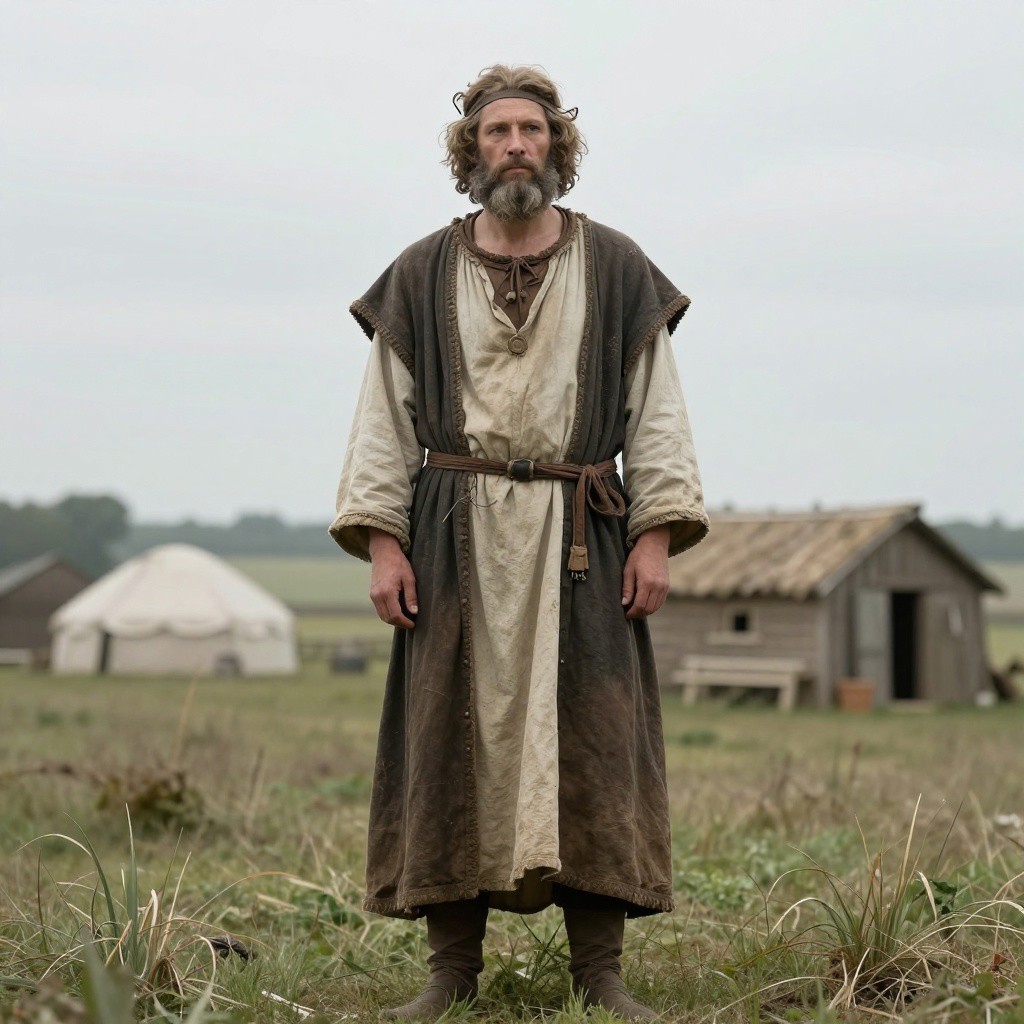
An individual buried in Netherlands in the era

Download PDF creates a visual, rasterized copy. Use Print for selectable text and better assistive-technology support.

Loading Report

Preparing your ancestry journey

Preparing the available report content...

Your report will open automatically.

Skip to main content
Reference library / Sample profile

An individual buried in Netherlands in the era

Explore the recorded context, genetic comparisons and research behind this reference sample.

NetherlandsNetherlands EMN Swifterbant

A reference profile describes this sample. It does not establish a personal or family relationship.

AI portrait reconstruction for An individual buried in Netherlands in the  era
AI-generated artistic reconstruction, not a photograph of the individual.
Record

Sample details

Recorded details and available lineage markers.

Individual

EMN Swifterbant individual, Netherlands

Sample ID: SWA004

Date Range

4216 BCE - 3984 BCE

Cultural Period

Netherlands EMN Swifterbant

Biological Sex

Not known

mtDNA Haplogroup

Not available

Y-DNA Haplogroup

Not available

Geography

Location

Where this individual was discovered

Country Netherlands
Locality Swifterbant S2 (Flevoland, Dronten, Swifterbant)
Coordinates 52.5839, 5.5817
Chronology

Date range

When this individual lived in the broader context of human history

EMN Swifterbant individual, Netherlands 4216 BCE - 3984 BCE
Context

Historical context

Background information associated with the reference record.

The Netherlands EMN Swifterbant era belongs to the broader Swifterbant tradition of northeastern parts of the European coastal plain, where rivers, lakes, and low-lying wetlands shaped settlement and subsistence. Although often discussed alongside Late Mesolithic and early Neolithic developments, this phase is characterized by its own patterned assemblages and regional continuity.

Region & Environment

This area largely corresponds to the low, water-rich landscapes of the Netherlands and adjacent regions—flat terrain with river systems and wetlands. Such environments offered fish and water resources while also supporting agriculture in suitable patches. Settlement choices and day-to-day routines were necessarily influenced by changing water levels and soil conditions.

Historical Context

The Swifterbant tradition is typically placed within the long transition from hunter-gatherer lifeways toward more farming-based economies in northwest Europe. EMN Swifterbant reflects a stage in which Neolithic-oriented practices were present, alongside older ecological knowledge and strategies for coping with wetland conditions. Chronological placement here is based on the supplied era label rather than a specific absolute date.

Populations & Lifeways

Populations were likely communities of mixed subsistence. In addition to cultivation and husbandry associated with Neolithic economies, hunting, fishing, and gathering would have remained important in wetlands. Lifeways would have included building and maintaining near-water settlements, using durable tools for daily tasks, and managing seasonal activities related to landscape and water conditions.

Archaeology & Material Culture

Archaeological deposits for this phase commonly feature pottery and lithic technologies associated with Swifterbant contexts. Pottery styles and technological choices provide key evidence for distinguishing phases and linking communities through shared traditions. Toolkits would reflect both farming and general domestic activities—items suited to woodworking, processing resources, and tasks related to subsistence in a wetland setting.

Culture & Society

Swifterbant societies are generally understood as locally organized communities with networks that extended beyond individual sites. Shared material styles (especially ceramics) point to repeated interactions and learned traditions transmitted through households and communities rather than through a single centralized system. Social life likely involved cooperative work around settlement maintenance, food production, and the use of shared landscape resources.

Legacy & Transition

The EMN Swifterbant phase sits within a longer sequence leading to later Neolithic developments in the region. Archaeological transitions are typically recognized through changing ceramic styles, tool frequencies, and settlement distributions, reflecting evolving farming practices, mobility patterns, and regional connections over time.

Analysis

Genetic comparisons

These comparisons show genetic similarity, not identity or origin. The populations listed are those whose genomes show statistical alignment to this ancient individual.

Similarity reflects shared history, not shared identity. These are analytical comparisons, not claims about who this person was.

Modern Genetic Admixture

This analysis compares the DNA profile with present-day reference populations, showing statistical similarity to modern reference populations from different regions. The excavation site records where this individual was found, not a fixed modern genetic identity.

Europe 96.9%
Southern European 80.3%
Iberian 60.6%
Sardinian 19.7%
Northwestern European 16.6%
Finnish 16.6%
Asia 3.1%
Chinese & Southeast Asian 3.1%
Chinese 3.1%

Closest Modern Populations

These are the modern populations showing the closest statistical alignment to An individual buried in Netherlands in the era, ranked by genetic distance. Lower distance values indicate closer statistical similarity. Cross-region similarity can reflect shared ancestry, population movement, continuity, or later admixture.

1
Basque French
1.9556
2
Basque Soule
2.0999
3
Spanish Pais Vasco
2.3594
4
Basque Lower Navarre
2.3774
5
Basque Spanish
2.5737
6
Basque Baztan
2.5920
7
French Bearn
2.6042
8
Basque Navarre North
2.6127
9
French Chalosse
2.6600
10
Basque Biscay
2.6711
Context

Related Samples

This individual exists within a broader network of ancient samples. No ancient genome stands alone.

Individual Culture/Period Date Location Action
Baltrum MN individual, Germany 3749 BCE Baltrum (Lower Saxony, Aurich), Germany View
EN Late Mesolithic Swifterbant-o individual, Netherlands 4802 BCE Het Klooster (Utrecht, Nieuwegein), Netherlands View
EN Late Mesolithic Swifterbant individual, Netherlands 4867 BCE Het Klooster (Utrecht, Nieuwegein), Netherlands View
EN Late Mesolithic Swifterbant individual, Netherlands 4916 BCE Het Klooster (Utrecht, Nieuwegein), Netherlands View
LNA Corded Ware Vlaardingen individual, Netherlands 2875 BCE Molenaarsgraaf (Zuid-Holland, Molenlanden), Netherlands View
Mesolithic Swifterbant individual, Netherlands 5799 BCE Polderweg (Zuid-Holland, Hardinxveld-Giessendam), Netherlands View
N individual, Belgium 3383 BCE Trou Al'Wesse (Liège Province, Modave), Belgium View
N individual, Belgium 2977 BCE Grotte du Mont Falise (Wallonne Gewest, de Huy Arrondissement, Wanze), Belgium View
LN individual, Belgium 2946 BCE Abri Sandron (Wallonne Gewest, Luik, Huccorgne), Belgium View
LN individual, Belgium 2664 BCE Abri Sandron (Wallonne Gewest, Luik, Huccorgne), Belgium View
LN individual, Belgium 2898 BCE Grotte du Mont Falise (Wallonne Gewest, de Huy Arrondissement, Wanze), Belgium View
N individual, Belgium 3085 BCE Grotte du Mont Falise (Wallonne Gewest, de Huy Arrondissement, Wanze), Belgium View
N-o individual, Belgium 3085 BCE Grotte du Mont Falise (Wallonne Gewest, de Huy Arrondissement, Wanze), Belgium View
N individual, Belgium 2974 BCE Abri Sandron (Wallonne Gewest, Luik, Huccorgne), Belgium View
LN individual, Belgium 2988 BCE Abri Sandron (Wallonne Gewest, Luik, Huccorgne), Belgium View
N individual, Belgium 2974 BCE Abri Sandron (Wallonne Gewest, Luik, Huccorgne), Belgium View
LN individual, Belgium 2940 BCE Abri Sandron (Wallonne Gewest, Luik, Huccorgne), Belgium View
LN individual, Belgium 2877 BCE Abri Sandron (Wallonne Gewest, Luik, Huccorgne), Belgium View
EN Late Mesolithic Swifterbant individual, Netherlands 4974 BCE Het Klooster (Utrecht, Nieuwegein), Netherlands View
EN Late Mesolithic individual, Netherlands 4266 BCE Zoelen de Beldert (Gelderland, Zoelen), Netherlands View
EN Late Mesolithic individual, Netherlands 4285 BCE Zoelen de Beldert (Gelderland, Zoelen), Netherlands View
LNA Corded Ware Vlaardingen individual, Netherlands 2585 BCE Sijbekarspel de Veken (Noord-Holland, Medemblik), Netherlands View
MN individual, Netherlands 3814 BCE Tiel-Medel (Gelderland), Netherlands View
MN Hazendonk individual, Netherlands 3553 BCE Schipluiden-Harnaschpolder (Zuid-Holland, Schipluiden), Netherlands View
EN LN Swifterbant individual, Netherlands 4578 BCE Angeren Via 2170 (Gelderland, Angeren), Netherlands View
MN Hazendonk individual, Netherlands 508 BCE Schipluiden-Harnaschpolder (Zuid-Holland, Schipluiden), Netherlands View
MN Hazendonk individual, Netherlands 3554 BCE Schipluiden-Harnaschpolder (Zuid-Holland, Schipluiden), Netherlands View
Late Mesolithic individual, Netherlands 5538 BCE Polderweg (Zuid-Holland, Hardinxveld-Giessendam), Netherlands View
LNB Bell Beaker individual, Netherlands 2066 BCE De-Tuithoorn (Noord-Holland, Medemblik), Netherlands View
LN EBA Bell Beaker individual, Netherlands 1987 BCE De-Tuithoorn (Noord-Holland, Medemblik), Netherlands View
N individual, Belgium 5408 BCE Grotte de la Faille du Burin (Wallonne Gewest, Namen), Belgium View
LN individual, Belgium 2603 BCE Grotte Rousseau (Lustin), Belgium View
LN individual, Belgium 2688 BCE Weris II (Spy), Belgium View
Mesolithic individual, Belgium 12542 BCE Calamin Forge (Wallonne Gewest, Luik), Belgium View
Spiekeroog Mesolithic individual, Germany 5567 BCE Spiekeroog (Lower Saxony, Wittmund, East Frisian Islands), Germany View
EMN Swifterbant individual, Netherlands 4216 BCE Swifterbant S2 (Flevoland, Dronten, Swifterbant), Netherlands View
Page 1
Individual Culture/Period Date Location Action
EMN Swifterbant individual, Netherlands 4216 BCE Swifterbant S2 (Flevoland, Dronten, Swifterbant), Netherlands View
Page 1
Sources

References

Scientific publications and genetic data that inform this profile.

G25 Coordinates

These coordinates represent a position in genetic space, a tool for comparison, not a conclusion. You can use these to perform custom admixture analysis in G25 Studio.

SWA004,0.12179,0.15741,0.05242,0.00614,0.0554,0.00028,-0.00071,0.00785,0.03047,0.04283,-0.00974,0.01349,-0.02319,-0.00729,0.01194,0.00093,-0.01852,-0.00266,-0.00214,-0.001,0.00786,0.00779,-0.01146,-0.0135,0.003592
Continue in G25 Studio
Use code for 30% off • Expires Nov 16