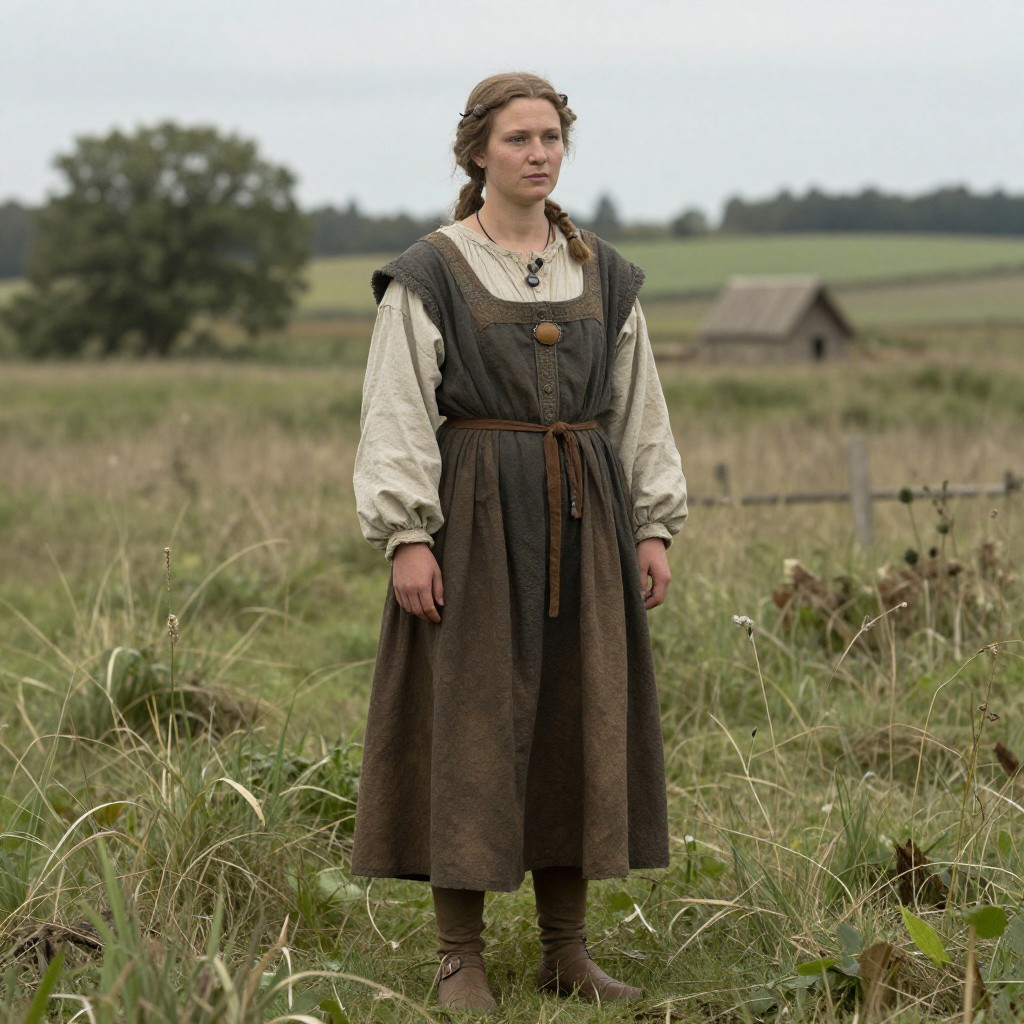
A woman buried in Netherlands in the era

Download PDF creates a visual, rasterized copy. Use Print for selectable text and better assistive-technology support.

Loading Report

Preparing your ancestry journey

Preparing the available report content...

Your report will open automatically.

Skip to main content
Reference library / Sample profile

A woman buried in Netherlands in the era

Explore the recorded context, genetic comparisons and research behind this reference sample.

NetherlandsNetherlands EN LateMesolithic Swifterbant

A reference profile describes this sample. It does not establish a personal or family relationship.

AI portrait reconstruction for A woman buried in Netherlands in the  era
AI-generated artistic reconstruction, not a photograph of the individual.
Record

Sample details

Recorded details and available lineage markers.

Individual

EN Late Mesolithic Swifterbant individual, Netherlands

Sample ID: I17968

Date Range

4974 BCE - 4626 BCE

Cultural Period

Netherlands EN LateMesolithic Swifterbant

Biological Sex

Female

mtDNA Haplogroup

H+152

Y-DNA Haplogroup

Not available

Geography

Location

Where this individual was discovered

Country Netherlands
Locality Het Klooster (Utrecht, Nieuwegein)
Coordinates 52.0200, 5.1240
Chronology

Date range

When this individual lived in the broader context of human history

EN Late Mesolithic Swifterbant individual, Netherlands 4974 BCE - 4626 BCE
Context

Historical context

Background information associated with the reference record.

Region & Environment

Swifterbant-linked communities occupied the lowland environments of what is now the Netherlands, where rivers, channels, and wetlands created productive zones for aquatic and terrestrial resources. The landscape was shaped by post-glacial processes, producing shifting shorelines, waterlogged areas, and woodland mosaics. Such conditions supported year-round access to varied foods, even as specific locations offered different seasonal advantages.

Historical Context

In the Late Mesolithic of northwest Europe, economies remained primarily based on hunting, fishing, and gathering. The Swifterbant horizon is often discussed as a regional tradition within these Late Mesolithic lifeways, marked by recurring patterns in settlement and artifact use. Across the broader landscape, communities appear to have built a knowledge of reliable resource zones without yet relying on farming in the way that characterizes later Neolithic phases.

Populations & Lifeways

Populations likely practiced a seasonal round centered on wetland exploitation. Fishing and associated processing activities would have been prominent where waterways and wetlands provided fish stocks. Hunting game in nearby ecosystems and gathering wild plant foods complemented fishing. Settlement evidence generally suggests repeated occupations by small groups, consistent with mobility tempered by repeated returns to favorable places.

Archaeology & Material Culture

Archaeological finds from Swifterbant contexts commonly include lithic tool traditions associated with foraging and woodworking needs. Site assemblages reflect everyday work such as tool production and maintenance, as well as processing of animal and plant resources. In some wetland contexts, preservation can enable the study of site formation and the kinds of activities carried out on particular occasions, supporting interpretations of how places were repeatedly used.

Culture & Society

Cultural identity in this horizon is inferred from patterned material choices and recurring settlement strategies rather than from written evidence. Shared technological practices may indicate communication and social learning across wider areas. Social organization would have needed to coordinate labor for tasks such as fishing, processing, hunting, and group travel, with flexibility in response to changing conditions and resource availability.

Legacy & Transition

The Swifterbant Late Mesolithic horizon is important for understanding how long-term landscape use evolved in the Netherlands. While these communities remained primarily foragers, their repeated engagement with wetland zones set the stage for later developments in subsistence and settlement. Subsequent archaeological phases in the region show broader shifts toward more settled and diversified practices, including the later appearance of Neolithic lifeways.

Analysis

Genetic comparisons

These comparisons show genetic similarity, not identity or origin. The populations listed are those whose genomes show statistical alignment to this ancient individual.

Similarity reflects shared history, not shared identity. These are analytical comparisons, not claims about who this person was.

Modern Genetic Admixture

This analysis compares the DNA profile with present-day reference populations, showing statistical similarity to modern reference populations from different regions. The excavation site records where this individual was found, not a fixed modern genetic identity.

Europe 94.7%
Northwestern European 66.0%
Northwestern European 32.0%
Finnish 26.9%
English 7.2%
Southern European 28.7%
Iberian 20.6%
Sardinian 8.1%
Oceania 4.9%
Melanesian 4.9%
Papuan 4.9%
Asia 0.5%
Chinese & Southeast Asian 0.5%

Closest Modern Populations

These are the modern populations showing the closest statistical alignment to A woman buried in Netherlands in the era, ranked by genetic distance. Lower distance values indicate closer statistical similarity. Cross-region similarity can reflect shared ancestry, population movement, continuity, or later admixture.

1
German Erlangen
2.8616
2
Austrian
2.8777
3
Afrikaner
2.8862
4
German
2.9980
5
Hungarian
3.1965
6
French Alsace
3.2440
7
French Nord
3.3509
8
Belgianb
3.4683
9
Belgiana
3.4893
10
German Hamburg
3.5179
Context

Related Samples

This individual exists within a broader network of ancient samples. No ancient genome stands alone.

Individual Culture/Period Date Location Action
Baltrum MN individual, Germany 3749 BCE Baltrum (Lower Saxony, Aurich), Germany View
EN Late Mesolithic Swifterbant-o individual, Netherlands 4802 BCE Het Klooster (Utrecht, Nieuwegein), Netherlands View
EN Late Mesolithic Swifterbant individual, Netherlands 4867 BCE Het Klooster (Utrecht, Nieuwegein), Netherlands View
EN Late Mesolithic Swifterbant individual, Netherlands 4916 BCE Het Klooster (Utrecht, Nieuwegein), Netherlands View
LNA Corded Ware Vlaardingen individual, Netherlands 2875 BCE Molenaarsgraaf (Zuid-Holland, Molenlanden), Netherlands View
Mesolithic Swifterbant individual, Netherlands 5799 BCE Polderweg (Zuid-Holland, Hardinxveld-Giessendam), Netherlands View
N individual, Belgium 3383 BCE Trou Al'Wesse (Liège Province, Modave), Belgium View
N individual, Belgium 2977 BCE Grotte du Mont Falise (Wallonne Gewest, de Huy Arrondissement, Wanze), Belgium View
LN individual, Belgium 2946 BCE Abri Sandron (Wallonne Gewest, Luik, Huccorgne), Belgium View
LN individual, Belgium 2664 BCE Abri Sandron (Wallonne Gewest, Luik, Huccorgne), Belgium View
LN individual, Belgium 2898 BCE Grotte du Mont Falise (Wallonne Gewest, de Huy Arrondissement, Wanze), Belgium View
N individual, Belgium 3085 BCE Grotte du Mont Falise (Wallonne Gewest, de Huy Arrondissement, Wanze), Belgium View
N-o individual, Belgium 3085 BCE Grotte du Mont Falise (Wallonne Gewest, de Huy Arrondissement, Wanze), Belgium View
N individual, Belgium 2974 BCE Abri Sandron (Wallonne Gewest, Luik, Huccorgne), Belgium View
LN individual, Belgium 2988 BCE Abri Sandron (Wallonne Gewest, Luik, Huccorgne), Belgium View
N individual, Belgium 2974 BCE Abri Sandron (Wallonne Gewest, Luik, Huccorgne), Belgium View
LN individual, Belgium 2940 BCE Abri Sandron (Wallonne Gewest, Luik, Huccorgne), Belgium View
LN individual, Belgium 2877 BCE Abri Sandron (Wallonne Gewest, Luik, Huccorgne), Belgium View
EN Late Mesolithic Swifterbant individual, Netherlands 4974 BCE Het Klooster (Utrecht, Nieuwegein), Netherlands View
EN Late Mesolithic individual, Netherlands 4266 BCE Zoelen de Beldert (Gelderland, Zoelen), Netherlands View
EN Late Mesolithic individual, Netherlands 4285 BCE Zoelen de Beldert (Gelderland, Zoelen), Netherlands View
LNA Corded Ware Vlaardingen individual, Netherlands 2585 BCE Sijbekarspel de Veken (Noord-Holland, Medemblik), Netherlands View
MN individual, Netherlands 3814 BCE Tiel-Medel (Gelderland), Netherlands View
MN Hazendonk individual, Netherlands 3553 BCE Schipluiden-Harnaschpolder (Zuid-Holland, Schipluiden), Netherlands View
EN LN Swifterbant individual, Netherlands 4578 BCE Angeren Via 2170 (Gelderland, Angeren), Netherlands View
MN Hazendonk individual, Netherlands 508 BCE Schipluiden-Harnaschpolder (Zuid-Holland, Schipluiden), Netherlands View
MN Hazendonk individual, Netherlands 3554 BCE Schipluiden-Harnaschpolder (Zuid-Holland, Schipluiden), Netherlands View
Late Mesolithic individual, Netherlands 5538 BCE Polderweg (Zuid-Holland, Hardinxveld-Giessendam), Netherlands View
LNB Bell Beaker individual, Netherlands 2066 BCE De-Tuithoorn (Noord-Holland, Medemblik), Netherlands View
LN EBA Bell Beaker individual, Netherlands 1987 BCE De-Tuithoorn (Noord-Holland, Medemblik), Netherlands View
N individual, Belgium 5408 BCE Grotte de la Faille du Burin (Wallonne Gewest, Namen), Belgium View
LN individual, Belgium 2603 BCE Grotte Rousseau (Lustin), Belgium View
LN individual, Belgium 2688 BCE Weris II (Spy), Belgium View
Mesolithic individual, Belgium 12542 BCE Calamin Forge (Wallonne Gewest, Luik), Belgium View
Spiekeroog Mesolithic individual, Germany 5567 BCE Spiekeroog (Lower Saxony, Wittmund, East Frisian Islands), Germany View
EMN Swifterbant individual, Netherlands 4216 BCE Swifterbant S2 (Flevoland, Dronten, Swifterbant), Netherlands View
Page 1
Individual Culture/Period Date Location Action
EN Late Mesolithic Swifterbant individual, Netherlands 4867 BCE Het Klooster (Utrecht, Nieuwegein), Netherlands View
EN Late Mesolithic Swifterbant individual, Netherlands 4916 BCE Het Klooster (Utrecht, Nieuwegein), Netherlands View
EN Late Mesolithic Swifterbant individual, Netherlands 4974 BCE Het Klooster (Utrecht, Nieuwegein), Netherlands View
Page 1
Sources

References

Scientific publications and genetic data that inform this profile.

G25 Coordinates

These coordinates represent a position in genetic space, a tool for comparison, not a conclusion. You can use these to perform custom admixture analysis in G25 Studio.

I17968,0.11629272,0.12908576,0.05059466,0.04052668,0.04896526,0.00423514,0.00324002,0.00971582,0.01151736,0.00921132,-0.0081113,0.0049581,-0.00114954,0.00169258,0.00151802,0.0035275,-0.00295938,-0.000329,0.00080228,-0.00022694,0.00353366,0.0022946,-0.00035488,-0.00272136,4.436E-05
Continue in G25 Studio
Use code for 30% off • Expires Nov 16