A man buried in Portugal in the era

Download PDF creates a visual, rasterized copy. Use Print for selectable text and better assistive-technology support.

Loading Report

Preparing your ancestry journey

Preparing the available report content...

Your report will open automatically.

Skip to main content
Reference library / Sample profile

A man buried in Portugal in the era

Explore the recorded context, genetic comparisons and research behind this reference sample.

PortugalPortugal Roman

A reference profile describes this sample. It does not establish a personal or family relationship.

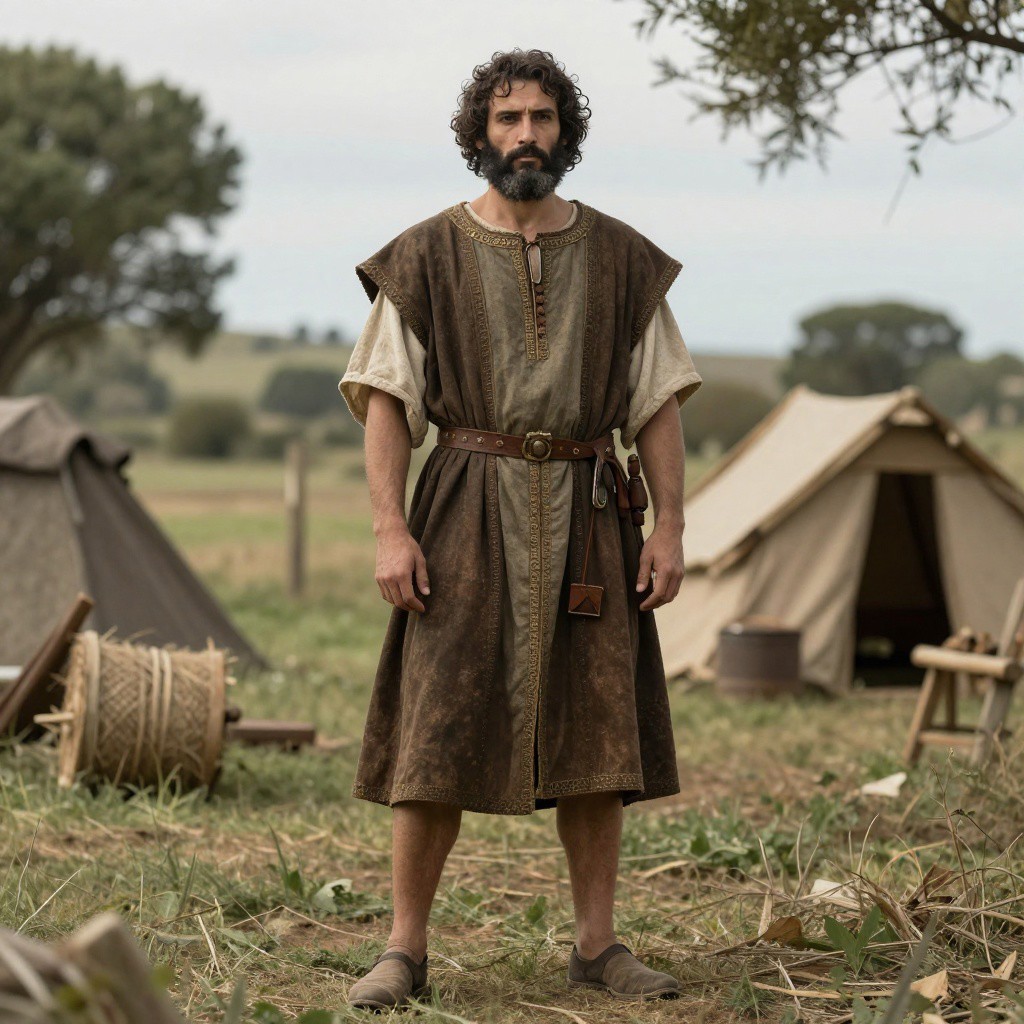
AI portrait reconstruction for A man buried in Portugal in the  era
AI-generated artistic reconstruction, not a photograph of the individual.
Record

Sample details

Recorded details and available lineage markers.

Individual

Roman individual, Portugal

Sample ID: LP115_2

Date Range

239 CE - 411 CE

Cultural Period

Portugal Roman

Biological Sex

Male

mtDNA Haplogroup

Not available

Y-DNA Haplogroup

R-BY39291

Geography

Location

Where this individual was discovered

Country Portugal
Locality Idanha-a-Velha - Espírito Santo Muralha (Centro Region, Castelo Branco District, Idanha-a-Nova Municipality, Idanha-a-Velha Village)
Coordinates 39.9970, -7.1440
Chronology

Date range

When this individual lived in the broader context of human history

Roman individual, Portugal 239 CE - 411 CE
Context

Historical context

Background information associated with the reference record.

Region & Environment

The Roman period in Portugal covers a range of environments: Atlantic-facing coasts, river valleys, and inland areas where agriculture depended on workable soils and water. These settings supported mixed farming and pastoral activities that could feed towns and military installations. The landscape also preserved earlier settlement patterns, which Romans often incorporated rather than fully replacing.

Historical Context

Roman conquest and consolidation in Iberia unfolded over earlier centuries, with the early Roman Empire administering the region through provincial frameworks. In Portugal, Roman governance is commonly discussed through the lens of Lusitania and its integration into imperial systems of law, taxation, and communication. Over time, stability enabled broader participation in trade and public building, though local responses varied across the region.

Populations & Lifeways

Populations included local Iberian communities, provincials living under Roman administration, soldiers stationed in strategic areas, and urban residents in towns. Lifeways ranged from rural farming and craft production to urban employment tied to markets, services, and civic life. Material remains suggest that many communities continued local agricultural routines while adapting to Roman norms in settlement planning and public institutions.

Archaeology & Material Culture

Roman archaeology in Portugal often highlights urban and monumental remains such as town plans, civic architecture, and buildings linked to administration or religious practice. Everyday material culture includes ceramics, small finds, personal items, and construction materials, reflecting both local production and Roman-style consumption. Where available, inscriptions and coinage provide clearer chronological anchors, while cemeteries and rural sites help document changing settlement and mobility.

Culture & Society

Romanization was not uniform; it is best understood as a set of gradual, region-specific shifts in language use, civic participation, and access to Roman goods and institutions. Towns could host public spaces and religious practices that aligned with imperial culture, yet local traditions could persist, especially in rural settings. Social organization included landholding elites, administrators, artisans, and dependent rural populations connected to estates and market supply.

Legacy & Transition

Roman infrastructure and urban networks influenced later historical development in Portugal, even as imperial authority changed in the late empire. Architectural reuse, continuing occupation of some urban cores, and the persistence of roads and regional ties contributed to a long transition from Roman provincial life to post-Roman regional arrangements.

Analysis

Genetic comparisons

These comparisons show genetic similarity, not identity or origin. The populations listed are those whose genomes show statistical alignment to this ancient individual.

Similarity reflects shared history, not shared identity. These are analytical comparisons, not claims about who this person was.

Modern Genetic Admixture

This analysis compares the DNA profile with present-day reference populations, showing statistical similarity to modern reference populations from different regions. The excavation site records where this individual was found, not a fixed modern genetic identity.

Africa 52.1%
North African 37.0%
North African 34.5%
Egyptian 2.4%
West African 9.1%
Ghanaian, Liberian, Sierra Leonean 7.4%
Senegambian & Guinean 1.6%
Northern East African 6.0%
Ethiopian 6.0%
Europe 42.6%
Southern European 27.7%
Iberian 11.8%
Balkan 8.5%
Sardinian 7.3%
Northwestern European 15.0%
English 8.4%
Scandinavian 4.7%
Finnish 1.9%
Asia 5.3%
Northern West Asian 2.4%
Cypriot 2.1%
Arab, Egyptian & Levantine 2.2%
Arabian 2.2%
Chinese & Southeast Asian 0.8%
Indonesian Khmer Thai Myanma 0.6%

Closest Modern Populations

These are the modern populations showing the closest statistical alignment to A man buried in Portugal in the era, ranked by genetic distance. Lower distance values indicate closer statistical similarity. Cross-region similarity can reflect shared ancestry, population movement, continuity, or later admixture.

1
Tunisia
6.0728
2
Spanish Canarias
8.3771
3
Moroccan North
8.4220
4
Moroccan Jew
9.0106
5
Belmonte Jew
9.0834
6
Algerian Jew
9.1583
7
Libyan Jew
9.2030
8
Tunisian
9.2264
9
Berber Tunisia Sen
9.2475
10
Tunisian Berber Zraoua
9.2754
Context

Related Samples

This individual exists within a broader network of ancient samples. No ancient genome stands alone.

Individual Culture/Period Date Location Action
Early Medieval individual, Portugal 484 CE Castro de Avelãs - Torre Velha, Portugal View
Kingdom Of Portugal individual, Portugal 1184 CE Santarém - Rua dos Barcos (Oeste e Vale do Tejo), Portugal View
Early Medieval individual, Portugal 370 CE Idanha-a-Velha - Espírito Santo (Idanha-a-Nova), Portugal View
Early Medieval individual, Portugal 576 CE Castro de Avelãs - Torre Velha, Portugal View
Kingdom Of Portugal individual, Portugal 1184 CE Santarém - Rua dos Barcos (Oeste e Vale do Tejo), Portugal View
Islamic individual, Portugal 676 CE Santarém - Islamic Necropolis (Oeste e Vale do Tejo), Portugal View
Islamic individual, Portugal 970 CE Loulé - Hospital da Misericordia, Portugal View
N individual, Portugal 3277 BCE Leiria - Cova das Lapas (Largo das Catacumbas), Portugal View
Islamic individual, Portugal 1184 CE Loulé - Quinta da Boavista, Portugal View
Kingdom Of Portugal individual, Portugal 1184 CE Santarém - Rua dos Barcos (Oeste e Vale do Tejo), Portugal View
Roman individual, Portugal 239 CE Idanha-a-Velha - Espírito Santo Muralha (Centro Region, Castelo Branco District, Idanha-a-Nova Municipality, Idanha-a-Velha Village), Portugal View
Islamic individual, Portugal 970 CE Loulé - Hospital da Misericordia, Portugal View
Islamic individual, Portugal 1192 CE Loulé - Quinta da Boavista, Portugal View
Islamic individual, Portugal 970 CE Loulé - Quinta da Boavista, Portugal View
N individual, Portugal 3277 BCE Leiria - Cova das Lapas (Largo das Catacumbas), Portugal View
Kingdom Of Portugal individual, Portugal 1184 CE Santarém - Rua dos Barcos (Oeste e Vale do Tejo), Portugal View
Kingdom Of Portugal individual, Portugal 1092 CE Santarém - Rua dos Barcos (Oeste e Vale do Tejo), Portugal View
Reconquista individual, Portugal 984 CE Castro de Avelãs - Torre Velha, Portugal View
Kingdom Of Portugal individual, Portugal 1192 CE Santarém - Rua dos Barcos (Oeste e Vale do Tejo), Portugal View
Reconquista individual, Portugal 1092 CE Castro de Avelãs - Torre Velha, Portugal View
Early Medieval individual, Portugal 586 CE Castro de Avelãs - Torre Velha, Portugal View
Reconquista individual, Portugal 770 CE Guarda - Prazo (Freixo de Numão) (Chota), Portugal View
Reconquista individual, Portugal 776 CE Guarda - Prazo (Freixo de Numão) (Chota), Portugal View
Reconquista individual, Portugal 1076 CE Guarda - Prazo (Freixo de Numão) (Chota), Portugal View
Early Medieval individual, Portugal 576 CE Guarda - Prazo (Freixo de Numão) (Chota), Portugal View
N individual, Portugal 3277 BCE Leiria - Cova das Lapas (Largo das Catacumbas), Portugal View
Islamic individual, Portugal 676 CE Santarém - Islamic Necropolis (Oeste e Vale do Tejo), Portugal View
Roman individual, Portugal 226 CE Idanha-a-Velha - Porta Sul (Idanha-a-Nova), Portugal View
Roman individual, Portugal 239 CE Idanha-a-Velha - Porta Sul (Idanha-a-Nova), Portugal View
Roman individual, Portugal 226 CE Idanha-a-Velha - Porta Norte (Idanha-a-Nova), Portugal View
N individual, Portugal 3277 BCE Leiria - Cova das Lapas (Largo das Catacumbas), Portugal View
Portugal C individual, Portugal 3277 BCE Leiria - Cova das Lapas (Largo das Catacumbas), Portugal View
N individual, Portugal 3277 BCE Leiria - Cova das Lapas (Largo das Catacumbas), Portugal View
Roman individual, Portugal 239 CE Idanha-a-Velha - Porta Norte (Idanha-a-Nova), Portugal View
Page 1
Individual Culture/Period Date Location Action
Roman individual, Portugal 239 CE Idanha-a-Velha - Espírito Santo Muralha (Centro Region, Castelo Branco District, Idanha-a-Nova Municipality, Idanha-a-Velha Village), Portugal View
Roman individual, Portugal 226 CE Idanha-a-Velha - Porta Sul (Idanha-a-Nova), Portugal View
Roman individual, Portugal 239 CE Idanha-a-Velha - Porta Sul (Idanha-a-Nova), Portugal View
Roman individual, Portugal 226 CE Idanha-a-Velha - Porta Norte (Idanha-a-Nova), Portugal View
Roman individual, Portugal 239 CE Idanha-a-Velha - Porta Norte (Idanha-a-Nova), Portugal View
Page 1
Sources

References

Scientific publications and genetic data that inform this profile.

G25 Coordinates

These coordinates represent a position in genetic space, a tool for comparison, not a conclusion. You can use these to perform custom admixture analysis in G25 Studio.

LP115_2,0.00506966,0.13855744,0.0157862,-0.02954828,0.02605136,-0.01474378,-0.00890314,0.00393466,0.03121852,0.0206072,0.00093258,0.00208514,0.0030894,-0.00886032,0.00557386,-0.00159814,0.00570552,-0.00762606,-0.01178372,0.00389946,-0.00412516,-0.00949658,0.00761508,0.00255088,0.00177961
Continue in G25 Studio
Use code for 30% off • Expires Nov 16