A woman buried in Portugal in the era

Download PDF creates a visual, rasterized copy. Use Print for selectable text and better assistive-technology support.

Loading Report

Preparing your ancestry journey

Preparing the available report content...

Your report will open automatically.

Skip to main content
Reference library / Sample profile

A woman buried in Portugal in the era

Explore the recorded context, genetic comparisons and research behind this reference sample.

PortugalPortugal Islamic

A reference profile describes this sample. It does not establish a personal or family relationship.

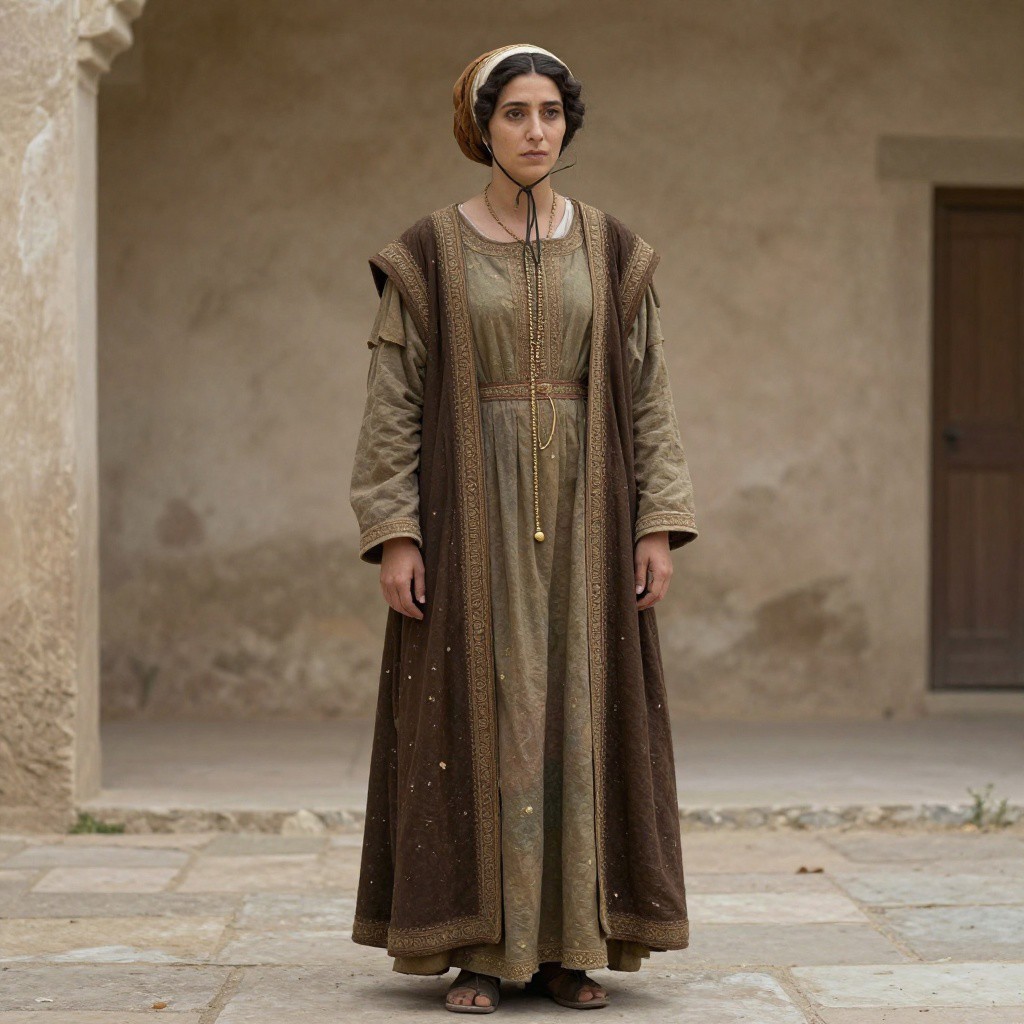
AI portrait reconstruction for A woman buried in Portugal in the  era
AI-generated artistic reconstruction, not a photograph of the individual.
Record

Sample details

Recorded details and available lineage markers.

Individual

Islamic individual, Portugal

Sample ID: LP115_7

Date Range

970 CE - 1430 CE

Cultural Period

Portugal Islamic

Biological Sex

Female

mtDNA Haplogroup

Not available

Y-DNA Haplogroup

Not available

Geography

Location

Where this individual was discovered

Country Portugal
Locality Loulé - Quinta da Boavista
Coordinates 37.1400, -8.0200
Chronology

Date range

When this individual lived in the broader context of human history

Islamic individual, Portugal 970 CE - 1430 CE
Context

Historical context

Background information associated with the reference record.

Overview

“Portugal Islamic” covers the period when Islamic rule and institutions were established and then sustained (with regional variation) in parts of Portugal. The archaeological record focuses on how households and communities organized daily life in a transformed political and cultural landscape.

Region & Environment

Portugal’s setting combined Atlantic coastal access, river valleys, and interior uplands. Such environments supported mixed agriculture, pastoral activities, and the movement of goods along local routes. Sites associated with Islamic-era Portugal often involve settlement spaces that integrate practical construction materials and use of local landscapes—farmland edges, water sources, and sheltered zones.

Historical Context

Islamic expansion into Iberia began in the early 8th century, after which the political map of the peninsula changed markedly. Over the following centuries, authority and territorial control were reconfigured through conflict and negotiation, but many communities continued to live in established patterns of subsistence and local production. The period ending around 1200 CE corresponds to the broader reshaping of Iberia’s medieval frontiers.

Populations & Lifeways

Populations included diverse groups living under Islamic governance and associated institutions, alongside communities whose livelihoods persisted through local traditions. Lifeways would have revolved around farming and food preparation, craft production, and domestic routines, with exchange linking households to regional markets when possible. Daily life is best understood through household-scale evidence—activity areas, durable goods, and storage or cooking wares.

Archaeology & Material Culture

Archaeology for Islamic-era contexts in Iberia frequently emphasizes ceramics, construction remains, and small artifacts that reflect everyday needs. Changes in pottery styles, manufacturing techniques, or decorative conventions can indicate shifting cultural contacts and consumer preferences, while long-lived practical vessel forms may show continuity. Because the archaeological visibility of identity can be limited, interpretations typically focus on material practices and site functions.

Culture & Society

Islamic rule introduced and sustained administrative, religious, and legal frameworks across varying degrees of local implementation. At the community level, social life expressed itself through domestic organization, patterns of consumption, and work practices tied to agriculture and craft. Material culture helps track these everyday expressions—how people stored food, cooked meals, dressed, and managed household space.

Legacy & Transition

As medieval Iberia continued to change toward the late 12th and 13th centuries, political boundaries shifted and new power structures emerged. Yet the period’s legacy remained in local infrastructure and knowledge of land use, along with accumulated traditions in craft and material consumption that could persist even as governance changed.

Analysis

Genetic comparisons

These comparisons show genetic similarity, not identity or origin. The populations listed are those whose genomes show statistical alignment to this ancient individual.

Similarity reflects shared history, not shared identity. These are analytical comparisons, not claims about who this person was.

Modern Genetic Admixture

This analysis compares the DNA profile with present-day reference populations, showing statistical similarity to modern reference populations from different regions. The excavation site records where this individual was found, not a fixed modern genetic identity.

Europe 67.8%
Southern European 41.8%
Iberian 23.4%
Sardinian 10.4%
Balkan 8.0%
Northwestern European 26.1%
Northwestern European 13.3%
Finnish 12.8%
Africa 23.9%
North African 23.9%
North African 13.6%
Egyptian 10.3%
Asia 8.2%
Northern West Asian 4.2%
Anatolian 4.2%
Arab, Egyptian & Levantine 2.9%
Arabian 2.9%
Central Asian, Northern Indian & Pakistani 0.9%
Central Asian 0.9%

Closest Modern Populations

These are the modern populations showing the closest statistical alignment to A woman buried in Portugal in the era, ranked by genetic distance. Lower distance values indicate closer statistical similarity. Cross-region similarity can reflect shared ancestry, population movement, continuity, or later admixture.

1
Spanish Canarias
2.8728
2
Belmonte Jew
3.7577
3
Sicilian West
4.3248
4
Portuguese
4.4916
5
Spanish Extremadura
4.4943
6
Spanish Andalucia
4.6795
7
Spanish Murcia
4.7812
8
Maltese
4.9618
9
Spanish Castilla Y Leon
5.0139
10
Spanish Galicia
5.0310
Context

Related Samples

This individual exists within a broader network of ancient samples. No ancient genome stands alone.

Individual Culture/Period Date Location Action
Early Medieval individual, Portugal 484 CE Castro de Avelãs - Torre Velha, Portugal View
Kingdom Of Portugal individual, Portugal 1184 CE Santarém - Rua dos Barcos (Oeste e Vale do Tejo), Portugal View
Early Medieval individual, Portugal 370 CE Idanha-a-Velha - Espírito Santo (Idanha-a-Nova), Portugal View
Early Medieval individual, Portugal 576 CE Castro de Avelãs - Torre Velha, Portugal View
Kingdom Of Portugal individual, Portugal 1184 CE Santarém - Rua dos Barcos (Oeste e Vale do Tejo), Portugal View
Islamic individual, Portugal 676 CE Santarém - Islamic Necropolis (Oeste e Vale do Tejo), Portugal View
Islamic individual, Portugal 970 CE Loulé - Hospital da Misericordia, Portugal View
N individual, Portugal 3277 BCE Leiria - Cova das Lapas (Largo das Catacumbas), Portugal View
Islamic individual, Portugal 1184 CE Loulé - Quinta da Boavista, Portugal View
Kingdom Of Portugal individual, Portugal 1184 CE Santarém - Rua dos Barcos (Oeste e Vale do Tejo), Portugal View
Roman individual, Portugal 239 CE Idanha-a-Velha - Espírito Santo Muralha (Centro Region, Castelo Branco District, Idanha-a-Nova Municipality, Idanha-a-Velha Village), Portugal View
Islamic individual, Portugal 970 CE Loulé - Hospital da Misericordia, Portugal View
Islamic individual, Portugal 1192 CE Loulé - Quinta da Boavista, Portugal View
Islamic individual, Portugal 970 CE Loulé - Quinta da Boavista, Portugal View
N individual, Portugal 3277 BCE Leiria - Cova das Lapas (Largo das Catacumbas), Portugal View
Kingdom Of Portugal individual, Portugal 1184 CE Santarém - Rua dos Barcos (Oeste e Vale do Tejo), Portugal View
Kingdom Of Portugal individual, Portugal 1092 CE Santarém - Rua dos Barcos (Oeste e Vale do Tejo), Portugal View
Reconquista individual, Portugal 984 CE Castro de Avelãs - Torre Velha, Portugal View
Kingdom Of Portugal individual, Portugal 1192 CE Santarém - Rua dos Barcos (Oeste e Vale do Tejo), Portugal View
Reconquista individual, Portugal 1092 CE Castro de Avelãs - Torre Velha, Portugal View
Early Medieval individual, Portugal 586 CE Castro de Avelãs - Torre Velha, Portugal View
Reconquista individual, Portugal 770 CE Guarda - Prazo (Freixo de Numão) (Chota), Portugal View
Reconquista individual, Portugal 776 CE Guarda - Prazo (Freixo de Numão) (Chota), Portugal View
Reconquista individual, Portugal 1076 CE Guarda - Prazo (Freixo de Numão) (Chota), Portugal View
Early Medieval individual, Portugal 576 CE Guarda - Prazo (Freixo de Numão) (Chota), Portugal View
N individual, Portugal 3277 BCE Leiria - Cova das Lapas (Largo das Catacumbas), Portugal View
Islamic individual, Portugal 676 CE Santarém - Islamic Necropolis (Oeste e Vale do Tejo), Portugal View
Roman individual, Portugal 226 CE Idanha-a-Velha - Porta Sul (Idanha-a-Nova), Portugal View
Roman individual, Portugal 239 CE Idanha-a-Velha - Porta Sul (Idanha-a-Nova), Portugal View
Roman individual, Portugal 226 CE Idanha-a-Velha - Porta Norte (Idanha-a-Nova), Portugal View
N individual, Portugal 3277 BCE Leiria - Cova das Lapas (Largo das Catacumbas), Portugal View
Portugal C individual, Portugal 3277 BCE Leiria - Cova das Lapas (Largo das Catacumbas), Portugal View
N individual, Portugal 3277 BCE Leiria - Cova das Lapas (Largo das Catacumbas), Portugal View
Roman individual, Portugal 239 CE Idanha-a-Velha - Porta Norte (Idanha-a-Nova), Portugal View
Page 1
Individual Culture/Period Date Location Action
Islamic individual, Portugal 676 CE Santarém - Islamic Necropolis (Oeste e Vale do Tejo), Portugal View
Islamic individual, Portugal 970 CE Loulé - Hospital da Misericordia, Portugal View
Islamic individual, Portugal 1184 CE Loulé - Quinta da Boavista, Portugal View
Islamic individual, Portugal 970 CE Loulé - Hospital da Misericordia, Portugal View
Islamic individual, Portugal 1192 CE Loulé - Quinta da Boavista, Portugal View
Islamic individual, Portugal 970 CE Loulé - Quinta da Boavista, Portugal View
Islamic individual, Portugal 676 CE Santarém - Islamic Necropolis (Oeste e Vale do Tejo), Portugal View
Page 1
Sources

References

Scientific publications and genetic data that inform this profile.

G25 Coordinates

These coordinates represent a position in genetic space, a tool for comparison, not a conclusion. You can use these to perform custom admixture analysis in G25 Studio.

LP115_7,0.07907114,0.14020962,0.0191176,-0.02375462,0.03337214,-0.01165988,-0.0014086,-0.00304168,0.02984072,0.02014182,-0.00114926,0.00433956,-0.00206268,-0.00914376,0.007329,0.00011162,-0.00681644,-0.00233014,-0.0003936,0.00140102,0.0060901,0.00178396,-0.005653,0.00038142,-0.00235337
Continue in G25 Studio
Use code for 30% off • Expires Nov 16