A man buried in Portugal in the era

Download PDF creates a visual, rasterized copy. Use Print for selectable text and better assistive-technology support.

Loading Report

Preparing your ancestry journey

Preparing the available report content...

Your report will open automatically.

Skip to main content
Reference library / Sample profile

A man buried in Portugal in the era

Explore the recorded context, genetic comparisons and research behind this reference sample.

PortugalPortugal KingdomOfPortugal

A reference profile describes this sample. It does not establish a personal or family relationship.

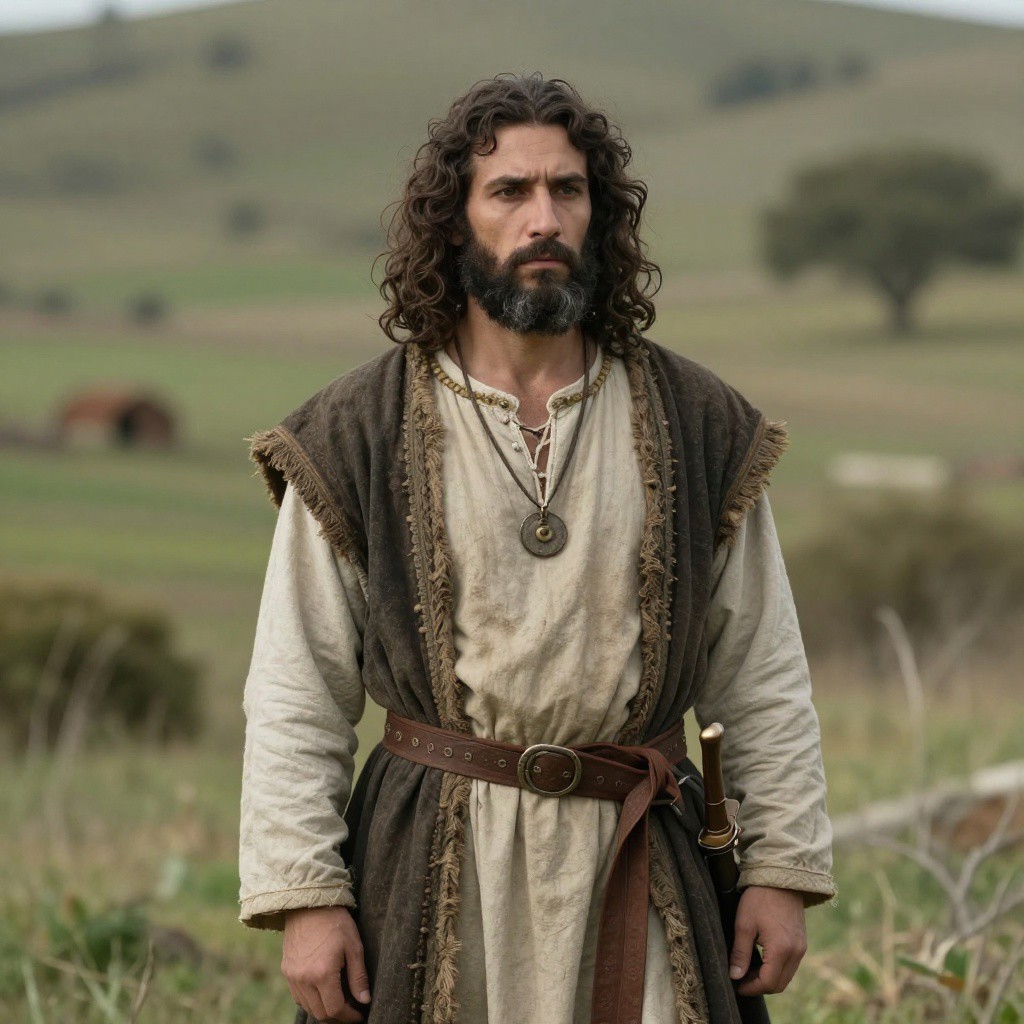
AI portrait reconstruction for A man buried in Portugal in the  era
AI-generated artistic reconstruction, not a photograph of the individual.
Record

Sample details

Recorded details and available lineage markers.

Individual

Kingdom Of Portugal individual, Portugal

Sample ID: LP113_1

Date Range

1184 CE - 1416 CE

Cultural Period

Portugal KingdomOfPortugal

Biological Sex

Male

mtDNA Haplogroup

Not available

Y-DNA Haplogroup

E-Y141317

Geography

Location

Where this individual was discovered

Country Portugal
Locality Santarém - Rua dos Barcos (Oeste e Vale do Tejo)
Coordinates 39.2300, -8.6900
Chronology

Date range

When this individual lived in the broader context of human history

Kingdom Of Portugal individual, Portugal 1184 CE - 1416 CE
Context

Historical context

Background information associated with the reference record.

Overview

“Portugal KingdomOfPortugal” encompasses the span in which a Portuguese kingdom developed, expanded, and then experienced major historical turns up to the late 16th century. The archaeological record primarily reflects how communities lived, built, and consumed within evolving political and economic conditions.

Region & Environment

Portugal’s geography—coastal access, river systems, and interior agricultural zones—supported a variety of lifeways. Settlement and land use were closely tied to farming potential and transportation routes along the coast and inland corridors. Material remains from this era often derive from towns, villages, and rural estates, where durable construction and regularly replaced household goods preserve archaeological signatures.

Historical Context

The early phase begins in the 12th century as Portuguese political identity solidified in a period of Iberian conflict and shifting frontiers. Over time, the kingdom’s institutions, tax systems, and military organization changed, while trade networks expanded and reoriented. By the later 15th and 16th centuries, Portugal’s role in wider Atlantic connections influenced how resources moved and how material culture circulated.

Populations & Lifeways

People lived through changing regimes of land tenure, urban growth, and evolving household economies. Rural communities depended on agriculture and related crafts, while towns concentrated specialized production, commerce, and services. Everyday life included cooking, storage, repair of tools, and participation in market exchange; differences in access to goods would have reflected social and economic standing.

Archaeology & Material Culture

Archaeology for the kingdom period draws on ceramics, domestic objects, building materials, and small finds recovered from settlements and activity deposits. Changes in vessel types, manufacturing methods, and decorative conventions can reflect both local traditions and broader consumer trends. In later centuries, material culture may show increasing presence of imported or regionally distributed goods, consistent with intensified exchange—though the specific patterning varies by site and context.

Culture & Society

Portuguese society during the kingdom era combined inherited medieval traditions with gradual institutional modernization. Social organization included elites, clergy, artisans, merchants, and farming households, each leaving different archaeological footprints. Cultural life also expressed itself through architecture and craftsmanship, as well as through material markers of household identity such as storage and table wares.

Legacy & Transition

The end date (around 1580) signals a major transition in Iberian political history that affected Portugal’s institutions and external relationships. Archaeologically, transitions like this typically appear indirectly through shifts in administrative practice, patterns of investment, and the movement of goods. Yet many local lifeways, craft practices, and built environments persisted beyond the political change, leaving layered traces for later periods to inherit and reshape.

Analysis

Genetic comparisons

These comparisons show genetic similarity, not identity or origin. The populations listed are those whose genomes show statistical alignment to this ancient individual.

Similarity reflects shared history, not shared identity. These are analytical comparisons, not claims about who this person was.

Modern Genetic Admixture

This analysis compares the DNA profile with present-day reference populations, showing statistical similarity to modern reference populations from different regions. The excavation site records where this individual was found, not a fixed modern genetic identity.

Europe 86.4%
Southern European 56.8%
Iberian 34.3%
Italian 14.1%
Sardinian 7.3%
Balkan 1.1%
Northwestern European 29.6%
English 12.2%
Northwestern European 7.5%
Finnish 5.0%
Scandinavian 4.9%
Asia 9.5%
Northern West Asian 4.7%
Cypriot 4.7%
Arab, Egyptian & Levantine 3.4%
Arabian 3.4%
Central Asian, Northern Indian & Pakistani 1.2%
Indian 1.2%
Africa 4.1%
Northern East African 4.1%
Ethiopian 4.1%

Closest Modern Populations

These are the modern populations showing the closest statistical alignment to A man buried in Portugal in the era, ranked by genetic distance. Lower distance values indicate closer statistical similarity. Cross-region similarity can reflect shared ancestry, population movement, continuity, or later admixture.

1
Spanish Andalucia
1.7725
2
Spanish Eivissa
2.0656
3
Spanish Castilla Y Leon
2.0926
4
Spanish Castilla La Mancha
2.1569
5
Portuguese
2.1910
6
Spanish Galicia
2.2521
7
Spanish Menorca
2.2758
8
Spanish Valencia
2.3751
9
Spanish Alacant
2.3885
10
Spanish Extremadura
2.3932
Context

Related Samples

This individual exists within a broader network of ancient samples. No ancient genome stands alone.

Individual Culture/Period Date Location Action
Early Medieval individual, Portugal 484 CE Castro de Avelãs - Torre Velha, Portugal View
Kingdom Of Portugal individual, Portugal 1184 CE Santarém - Rua dos Barcos (Oeste e Vale do Tejo), Portugal View
Early Medieval individual, Portugal 370 CE Idanha-a-Velha - Espírito Santo (Idanha-a-Nova), Portugal View
Early Medieval individual, Portugal 576 CE Castro de Avelãs - Torre Velha, Portugal View
Kingdom Of Portugal individual, Portugal 1184 CE Santarém - Rua dos Barcos (Oeste e Vale do Tejo), Portugal View
Islamic individual, Portugal 676 CE Santarém - Islamic Necropolis (Oeste e Vale do Tejo), Portugal View
Islamic individual, Portugal 970 CE Loulé - Hospital da Misericordia, Portugal View
N individual, Portugal 3277 BCE Leiria - Cova das Lapas (Largo das Catacumbas), Portugal View
Islamic individual, Portugal 1184 CE Loulé - Quinta da Boavista, Portugal View
Kingdom Of Portugal individual, Portugal 1184 CE Santarém - Rua dos Barcos (Oeste e Vale do Tejo), Portugal View
Roman individual, Portugal 239 CE Idanha-a-Velha - Espírito Santo Muralha (Centro Region, Castelo Branco District, Idanha-a-Nova Municipality, Idanha-a-Velha Village), Portugal View
Islamic individual, Portugal 970 CE Loulé - Hospital da Misericordia, Portugal View
Islamic individual, Portugal 1192 CE Loulé - Quinta da Boavista, Portugal View
Islamic individual, Portugal 970 CE Loulé - Quinta da Boavista, Portugal View
N individual, Portugal 3277 BCE Leiria - Cova das Lapas (Largo das Catacumbas), Portugal View
Kingdom Of Portugal individual, Portugal 1184 CE Santarém - Rua dos Barcos (Oeste e Vale do Tejo), Portugal View
Kingdom Of Portugal individual, Portugal 1092 CE Santarém - Rua dos Barcos (Oeste e Vale do Tejo), Portugal View
Reconquista individual, Portugal 984 CE Castro de Avelãs - Torre Velha, Portugal View
Kingdom Of Portugal individual, Portugal 1192 CE Santarém - Rua dos Barcos (Oeste e Vale do Tejo), Portugal View
Reconquista individual, Portugal 1092 CE Castro de Avelãs - Torre Velha, Portugal View
Early Medieval individual, Portugal 586 CE Castro de Avelãs - Torre Velha, Portugal View
Reconquista individual, Portugal 770 CE Guarda - Prazo (Freixo de Numão) (Chota), Portugal View
Reconquista individual, Portugal 776 CE Guarda - Prazo (Freixo de Numão) (Chota), Portugal View
Reconquista individual, Portugal 1076 CE Guarda - Prazo (Freixo de Numão) (Chota), Portugal View
Early Medieval individual, Portugal 576 CE Guarda - Prazo (Freixo de Numão) (Chota), Portugal View
N individual, Portugal 3277 BCE Leiria - Cova das Lapas (Largo das Catacumbas), Portugal View
Islamic individual, Portugal 676 CE Santarém - Islamic Necropolis (Oeste e Vale do Tejo), Portugal View
Roman individual, Portugal 226 CE Idanha-a-Velha - Porta Sul (Idanha-a-Nova), Portugal View
Roman individual, Portugal 239 CE Idanha-a-Velha - Porta Sul (Idanha-a-Nova), Portugal View
Roman individual, Portugal 226 CE Idanha-a-Velha - Porta Norte (Idanha-a-Nova), Portugal View
N individual, Portugal 3277 BCE Leiria - Cova das Lapas (Largo das Catacumbas), Portugal View
Portugal C individual, Portugal 3277 BCE Leiria - Cova das Lapas (Largo das Catacumbas), Portugal View
N individual, Portugal 3277 BCE Leiria - Cova das Lapas (Largo das Catacumbas), Portugal View
Roman individual, Portugal 239 CE Idanha-a-Velha - Porta Norte (Idanha-a-Nova), Portugal View
Page 1
Individual Culture/Period Date Location Action
Kingdom Of Portugal individual, Portugal 1184 CE Santarém - Rua dos Barcos (Oeste e Vale do Tejo), Portugal View
Kingdom Of Portugal individual, Portugal 1092 CE Santarém - Rua dos Barcos (Oeste e Vale do Tejo), Portugal View
Kingdom Of Portugal individual, Portugal 1192 CE Santarém - Rua dos Barcos (Oeste e Vale do Tejo), Portugal View
Page 1
Sources

References

Scientific publications and genetic data that inform this profile.

G25 Coordinates

These coordinates represent a position in genetic space, a tool for comparison, not a conclusion. You can use these to perform custom admixture analysis in G25 Studio.

LP113_1,0.10883762,0.14300876,0.0324782,-0.00566306,0.04160016,-0.0060716,-0.00056212,0.00463286,0.02937076,0.02518306,-0.00479824,0.00666068,-0.00572896,-0.00763734,0.00940398,-0.00021798,-0.0139848,0.00023682,-0.00085908,-0.00322096,0.00535116,0.0037809,-0.00399448,-0.00603102,-0.00224589
Continue in G25 Studio
Use code for 30% off • Expires Nov 16