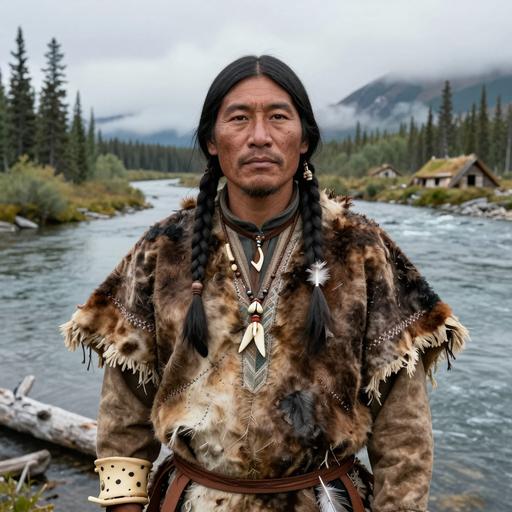
A man buried in USA in the Pre-Columbian North America era

Download PDF creates a visual, rasterized copy. Use Print for selectable text and better assistive-technology support.

Loading Report

Preparing your ancestry journey

Preparing the available report content...

Your report will open automatically.

Skip to main content
Reference library / Sample profile

A man buried in USA in the Pre-Columbian North America era

Explore the recorded context, genetic comparisons and research behind this reference sample.

USAAncient Athabaskan, Alaska, USA 1,100 Years Ago

A reference profile describes this sample. It does not establish a personal or family relationship.

AI portrait reconstruction for A man buried in USA in the Pre-Columbian North America era
AI-generated artistic reconstruction, not a photograph of the individual.
Record

Sample details

Recorded details and available lineage markers.

Individual

Alaska Ancient Athabaskan individual, USA

Sample ID: I5320

Date Range

1000 CE - 1450 CE

Cultural Period

Ancient Athabaskan, Alaska, USA 1,100 Years Ago

Biological Sex

Male

mtDNA Haplogroup

A2-a

Y-DNA Haplogroup

Q-BY72965

Social Role

Hunter (AI estimate, era-typical)

Geography

Location

Where this individual was discovered

Country USA
Locality Alaska. western interior. Tochak McGrath. Upper Kuskokwim River
Chronology

Date range

When this individual lived in the broader context of human history

Alaska Ancient Athabaskan individual, USA 1000 CE - 1450 CE
Context

Historical context

Background information associated with the reference record.

The Ancient Athabaskan culture, particularly around Alaska, roughly 1,100 years ago, is a fascinating and complex society deeply connected to the landscape and ecosystem of what we now call the North American Arctic and sub-Arctic. The Athabaskan people, ancestors of many modern Native American groups such as the Diné (Navajo) and Apache in the Southwestern United States, thrived in this challenging environment through a combination of adaptation, innovation, and rich cultural traditions.

Environment and Geography

The terrain of Alaska during this period was harsh and demanded resilience. The region is characterized by vast boreal forests, mountainous terrains, tundra, and numerous rivers, including the major Yukon and Kuskokwim river systems. The climate was colder than today, with long, harsh winters and short, mild summers. Despite these challenging conditions, the Ancient Athabaskans were adept at using the resources available to them. The seasonal availability of different species of flora and fauna shaped their subsistence patterns.

Subsistence and Economy

The Athabaskans had a subsistence economy heavily reliant on hunting, fishing, and gathering. Caribou and moose were primary sources of protein and raw materials. Hunting these large animals required intricate knowledge of animal behavior and migration patterns, as well as sophisticated tools and cooperative group efforts. Fishing also played a central role, with salmon being a crucial species; fish were caught with nets, traps, and weirs. People also gathered a variety of plant resources, including berries, roots, and other edible plants, particularly in the summers.

Tools and Technology

The Athabaskans utilized a diverse toolkit constructed primarily from the natural materials in their environment. This included bone, antler, stone, and wood. Tools such as spears, bows, arrows, and snares, alongside specific implements for fishing, like bone fishhooks and leisters, were commonly used. The designing of these tools demonstrated a deep understanding of materials and craftsmanship.

Social Organization and Culture

Social structure was typically organized around family bands or small kin-based groups, flexible enough to adapt to the environment's demands. Leadership was often informal or situational, with individuals recognized for their particular skills or wisdom.

Cultural life was rich and deeply intertwined with the spiritual and material world. The Athabaskans had animistic beliefs, viewing the landscape and its creatures as imbued with spirits. This worldview was reflected in their storytelling, rituals, and practices. Oral tradition was highly prized, passing down essential survival knowledge and cultural narratives from generation to generation.

Settlement and Housing

Settlements were generally temporary, aligning with the migratory patterns of game and the seasonal availability of resources. They utilized various types of shelters suitable to their nomadic lifestyle, such as semi-subterranean pit houses in winter or temporary wooden or skin tents in the summer. These shelters were efficient in conserving heat and protecting against the elements.

Art and Craftsmanship

Artistic expression was evident in the decoration of functional items such as clothing, tools, and utensils. Clothing was crafted from animal hides and furs, skillfully sewn and often decorated with intricate beadwork and dyes. These garments were not only functional, providing necessary warmth and protection, but also served as a medium for cultural expression.

Interaction and Trade

Although the Ancient Athabaskans were relatively isolated, they were not entirely cut off from interaction with other groups. Trade networks existed that allowed for the exchange of goods, knowledge, and cultural practices. Items such as obsidian, shells, and other materials not locally available have been found in Athabaskan regions, indicating long-distance trade ties.

Legacy

The legacy of the Ancient Athabaskans is profound, with their descendants continuing many of their cultural traditions. Understanding this past enriches our appreciation of the cultural diversity and resilience of Indigenous peoples in Alaska and their lasting influence across North America.

Overall, the Ancient Athabaskan culture was one of adaptability, resilience, and deep connection to nature, allowing them to thrive in a challenging and ever-changing environment.

Analysis

Genetic comparisons

These comparisons show genetic similarity, not identity or origin. The populations listed are those whose genomes show statistical alignment to this ancient individual.

Similarity reflects shared history, not shared identity. These are analytical comparisons, not claims about who this person was.

Modern Genetic Admixture

This analysis compares the DNA profile with present-day reference populations, showing statistical similarity to modern reference populations from different regions. The excavation site records where this individual was found, not a fixed modern genetic identity.

America 56.4%
America 56.4%
Native American 56.4%
Asia 42.4%
Northern Asian 35.5%
Siberian 25.6%
Mongolian 9.9%
Chinese & Southeast Asian 3.0%
Tibetan 1.3%
Chinese 1.0%
Indonesian Khmer Thai Myanma 0.7%
Japanese & Korean 2.1%
Japanese 2.1%
Central Asian, Northern Indian & Pakistani 1.8%
Central Asian 1.8%
Europe 0.8%
Northwestern European 0.8%
Finnish 0.8%

Closest Modern Populations

These are the modern populations showing the closest statistical alignment to A man buried in USA in the Pre-Columbian North America era, ranked by genetic distance. Lower distance values indicate closer statistical similarity. Cross-region similarity can reflect shared ancestry, population movement, continuity, or later admixture.

1
Chipewyan
3.3289
2
Amerindian North
4.7260
Context

Related Samples

This individual exists within a broader network of ancient samples. No ancient genome stands alone.

Individual Culture/Period Date Location Action
Alaska Paleo Aleut individual, USA Paleo-Aleut Culture, Alaska, USA 690 CE Alaska. Aleutian Islands. Umnak Island. Chaluka Midden, USA View
Alaska Ancient Athabaskan individual, USA Ancient Athabaskan, Alaska, USA 1,100 Years Ago 1000 CE Alaska. western interior. Tochak McGrath. Upper Kuskokwim River, USA View
Arctic Cultures individual, Russia Old Bering Sea Culture Uelen, Russia 60 CE Uelen Chukotka. Bering Strait, Russia View
Siberian Hunter-Gatherers individual, Russia Ust-Belaya Angara Culture, Russia 2897 BCE Baikal Region. Angara river basin. Mouth of the Belaya River, Russia View
Arctic Cultures individual, Russia Old Bering Sea Culture Ekven, Russia 510 CE Chukotka. Bering Strait. Ekven, Russia View
Chukotka Old Bering Sea individual, Russia Old Bering Sea Culture Ekven, Russia 1050 CE Chukotka. Bering Strait. Ekven, Russia View
Arctic Cultures individual, Russia Old Bering Sea Culture Ekven, Russia 640 CE Chukotka. Bering Strait. Ekven, Russia View
Arctic Cultures individual, Russia Old Bering Sea Culture Ekven, Russia 480 CE Chukotka. Bering Strait. Ekven, Russia View
Irkutsk N Angara individual, Russia Ust-Belaya Angara Culture, Russia 5210 BCE Baikal Region. Angara river basin. Mouth of the Belaya River, Russia View
Irkutsk N Angara individual, Russia Ust-Belaya Angara Culture, Russia 2900 BCE Baikal Region. Angara river basin. Mouth of the Belaya River, Russia View
Irkutsk Eneolithic individual, Russia Ust-Belaya Angara Culture, Russia 1280 CE Baikal Region. Angara river basin. Mouth of the Belaya River, Russia View
Arctic Cultures individual, Russia Old Bering Sea Culture Ekven, Russia 630 CE Chukotka. Bering Strait. Ekven, Russia View
Arctic Cultures individual, Russia Old Bering Sea Culture Ekven, Russia 720 CE Chukotka. Bering Strait. Ekven, Russia View
Arctic Cultures individual, Russia Old Bering Sea Culture Ekven, Russia 690 CE Chukotka. Bering Strait. Ekven, Russia View
Irkutsk N Angara individual, Russia Ust-Belaya Angara Culture, Russia 2570 BCE Baikal Region. Angara river basin. Mouth of the Belaya River, Russia View
Arctic Cultures individual, Russia Old Bering Sea Culture Ekven, Russia 810 CE Chukotka. Bering Strait. Ekven, Russia View
Chukotka Old Bering Sea individual, Russia Old Bering Sea Culture Ekven, Russia 1210 CE Chukotka. Bering Strait. Ekven, Russia View
Arctic Cultures individual, Russia Old Bering Sea Culture Ekven, Russia 970 CE Chukotka. Bering Strait. Ekven, Russia View
Arctic Cultures individual, Russia Old Bering Sea Culture Ekven, Russia 730 CE Chukotka. Bering Strait. Ekven, Russia View
Arctic Cultures individual, Russia Old Bering Sea Culture Ekven, Russia 620 CE Chukotka. Bering Strait. Ekven, Russia View
Siberian Hunter-Gatherers individual, Russia Ust-Belaya Angara Culture, Russia 3950 BCE Baikal Region. Angara river basin. Mouth of the Belaya River, Russia View
Ancestral Athabaskan individual, USA Ancient Athabaskan, Alaska, USA 1,100 Years Ago 1050 CE Alaska. western interior. Tochak McGrath. Upper Kuskokwim River, USA View
Chukotka Old Bering Sea individual, Russia Old Bering Sea Culture Uelen, Russia 830 CE Uelen Chukotka. Bering Strait, Russia View
Arctic Cultures individual, USA Paleo-Aleut Culture, Alaska, USA 730 CE Alaska. Aleutian Islands. Umnak Island. Chaluka Midden, USA View
Arctic Cultures individual, USA Paleo-Aleut Culture, Alaska, USA 350 BCE Alaska. Aleutian Islands. Umnak Island. Chaluka Midden, USA View
Siberian Hunter-Gatherers individual, Russia Ust-Belaya Angara Culture, Russia 2860 BCE Baikal Region. Angara river basin. Mouth of the Belaya River, Russia View
Arctic Cultures individual, Russia Old Bering Sea Culture Uelen, Russia 990 CE Uelen Chukotka. Bering Strait, Russia View
Siberian Hunter-Gatherers individual, Russia Ust-Belaya Angara Culture, Russia 2620 BCE Baikal Region. Angara river basin. Mouth of the Belaya River, Russia View
Siberian Hunter-Gatherers individual, Russia Ust-Belaya Angara Culture, Russia 3790 BCE Baikal Region. Angara river basin. Mouth of the Belaya River, Russia View
Arctic Cultures individual, Canada Middle Dorset Culture, Canada 50 CE Victoria Island, Canada View
Beringia Ia individual, Russia 348 BCE Chukotka. Bering Strait. Ekven, Russia View
Beringia Ancient individual, USA 350 BCE Alaska. Aleutian Islands. Umnak Island. Chaluka Midden, USA View
Beringia Ema individual, USA 730 CE Alaska. Aleutian Islands. Umnak Island. Chaluka Midden, USA View
America North Ancient individual, USA 1050 CE Alaska. western interior. Tochak McGrath. Upper Kuskokwim River, USA View
Ustbelaya N individual, Russia 2860 BCE Baikal Region. Angara river basin. Mouth of the Belaya River, Russia View
America North Ancient individual, USA 1050 CE Alaska. western interior. Tochak McGrath. Upper Kuskokwim River, USA View
America North Ancient individual, Canada 50 CE Victoria Island, Canada View
Beringia Ma individual, Russia 990 CE Uelen Chukotka. Bering Strait, Russia View
Ustbelaya N individual, Russia 2620 BCE Baikal Region. Angara river basin. Mouth of the Belaya River, Russia View
Ustbelaya N individual, Russia 2860 BCE Baikal Region. Angara river basin. Mouth of the Belaya River, Russia View
Ustbelaya N individual, Russia 3790 BCE Baikal Region. Angara river basin. Mouth of the Belaya River, Russia View
Page 1
Individual Culture/Period Date Location Action
Alaska Ancient Athabaskan individual, USA Ancient Athabaskan, Alaska, USA 1,100 Years Ago 1000 CE Alaska. western interior. Tochak McGrath. Upper Kuskokwim River, USA View
Ancestral Athabaskan individual, USA Ancient Athabaskan, Alaska, USA 1,100 Years Ago 1050 CE Alaska. western interior. Tochak McGrath. Upper Kuskokwim River, USA View
Page 1
Sources

References

Scientific publications and genetic data that inform this profile.

G25 Coordinates

These coordinates represent a position in genetic space, a tool for comparison, not a conclusion. You can use these to perform custom admixture analysis in G25 Studio.

I5320,0.05565604,-0.3117714,0.10530028,0.0665242,-0.10192548,-0.0200044,-0.1768974,-0.20717326,-0.00251864,-0.01437544,0.01493342,-0.00442338,0.00500988,-0.0050788,-0.0205923,-0.0061836,0.00339154,0.01204858,0.01929878,0.00840796,0.01036016,-0.01823856,0.00420354,0.0145263,0.0187288
Continue in G25 Studio
Use code for 30% off • Expires Nov 16