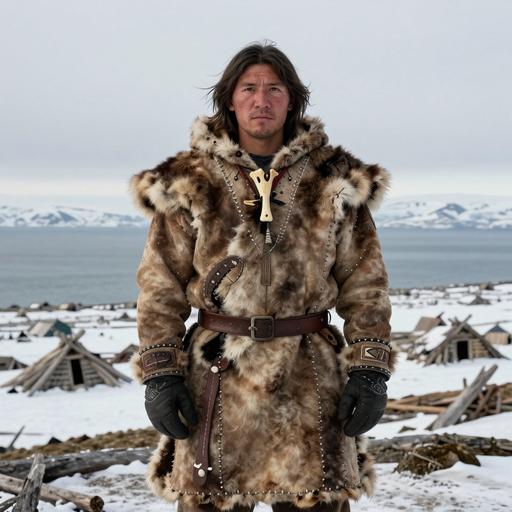
A man buried in Russia in the Middle Ages era

Download PDF creates a visual, rasterized copy. Use Print for selectable text and better assistive-technology support.

Loading Report

Preparing your ancestry journey

Preparing the available report content...

Your report will open automatically.

Skip to main content
Reference library / Sample profile

A man buried in Russia in the Middle Ages era

Explore the recorded context, genetic comparisons and research behind this reference sample.

RussiaOld Bering Sea Culture Uelen, Russia

A reference profile describes this sample. It does not establish a personal or family relationship.

AI portrait reconstruction for A man buried in Russia in the Middle Ages era
AI-generated artistic reconstruction, not a photograph of the individual.
Record

Sample details

Recorded details and available lineage markers.

Individual

Chukotka Old Bering Sea individual, Russia

Sample ID: I1524

Date Range

830 CE - 1260 CE

Cultural Period

Old Bering Sea Culture Uelen, Russia

Biological Sex

Male

mtDNA Haplogroup

A2a*

Y-DNA Haplogroup

Q-A15256

Social Role

Hunter (AI estimate, era-typical)

Geography

Location

Where this individual was discovered

Country Russia
Locality Uelen Chukotka. Bering Strait
Chronology

Date range

When this individual lived in the broader context of human history

Chukotka Old Bering Sea individual, Russia 830 CE - 1260 CE
Context

Historical context

Background information associated with the reference record.

The Old Bering Sea culture is a fascinating prehistoric cultural complex that thrived along the coasts of the Bering Sea, particularly in the regions that are now part of eastern Siberia, including the vicinity of Uelen in Russia. This culture is a significant component of the broader Neoeskimo tradition and played a critical role in the peopling of the Arctic regions.

Overview:

The Old Bering Sea culture is believed to have developed around 2000 BCE and persisted until around 1000 CE. This culture is primarily noted for its unique adaptation to the harsh Arctic environment and its maritime focus. The people were adept at utilizing the Arctic and sub-Arctic seas for their survival, which is evident in their settlement patterns, subsistence strategies, and material culture.

Geographic and Environmental Context:

Uelen is located at the easternmost part of the Chukotka Peninsula, directly across from Alaska, where the Bering Strait separates Asia and North America. This location was strategically significant for the Old Bering Sea culture, as it offered abundant marine resources and served as a critical point for trade and cultural exchange between the Old World and the New World Arctic.

Subsistence and Economy:

The Old Bering Sea peoples were primarily hunter-gatherers and sea mammal hunters. They developed sophisticated technologies for hunting marine mammals, such as seals, walrus, and whales. Harpoon heads, made from ivory or bone, were intricately crafted and are among the most distinctive artifacts of this culture. These tools reflect not only the technological ingenuity but also the aesthetic sensibilities of the Old Bering Sea people.

Fishing and gathering supplemented their diet, alongside some terrestrial hunting of caribou and other available land animals. The Old Bering Sea people were also known to have engaged in limited trade, exchanging goods such as furs, ivory, and crafted artifacts with other Arctic cultures.

Material Culture and Art:

One of the hallmarks of the Old Bering Sea culture is its elaborate and sophisticated art, often carved into ivory artifacts. These decorations featured complex geometric motifs and animal figures, articulated with precision that suggests both spiritual significance and a keen artistic tradition. The art from this culture is considered one of the highest achievements of prehistoric Arctic artisans.

Ivory carvings—not only utilitarian harpoon heads but also ornamental objects—provide insights into their beliefs and social organization. The motifs often have links to symbolic meanings or clan identities.

Social Organization:

The Old Bering Sea culture likely consisted of small, kin-based, semi-nomadic groups that moved seasonally in pursuit of game and marine resources. Social structure would have been influenced by kinship ties, with leadership possibly based on skills in hunting and knowledge of the sea and land.

Housing:

The people of the Old Bering Sea culture lived in semi-subterranean dwellings, designed to maintain heat and provide insulation against the severe Arctic conditions. These structures were primarily constructed using driftwood, whale bones, and sod. The interior would have focused around a central living area, usually with a hearth.

Burial Practices and Spirituality:

Archaeological findings suggest that the Old Bering Sea people had complex burial practices, which included grave goods that reflected the status and role of the individual within the community. The presence of animal carvings and other artifacts in graves indicates the potential belief in a spiritual connection with the animal world, possibly hinting at shamanistic practices.

Interaction and Legacy:

The Old Bering Sea culture is an integral part of the prehistoric Arctic cultural sequence, preceding and influencing subsequent cultures, such as the Punuk and Thule. Its influence is seen in the continuity of artistic styles and technological innovations that were passed down through generations and across the Bering Strait.

In summary, the Old Bering Sea culture represents a highly adaptive and artistically sophisticated society that expertly navigated the challenges of the Arctic environment. Their legacy can be observed in the continuity of cultural practices, artistic expressions, and technological adaptations seen in later Arctic cultures.

Analysis

Genetic comparisons

These comparisons show genetic similarity, not identity or origin. The populations listed are those whose genomes show statistical alignment to this ancient individual.

Similarity reflects shared history, not shared identity. These are analytical comparisons, not claims about who this person was.

Modern Genetic Admixture

This analysis compares the DNA profile with present-day reference populations, showing statistical similarity to modern reference populations from different regions. The excavation site records where this individual was found, not a fixed modern genetic identity.

Asia 59.8%
Northern Asian 47.8%
Siberian 47.4%
Chinese & Southeast Asian 12.1%
Chinese 8.3%
Tibetan 3.8%
America 38.1%
America 38.1%
Native American 38.1%
Oceania 1.7%
Melanesian 1.7%
Papuan 1.7%

Closest Modern Populations

These are the modern populations showing the closest statistical alignment to A man buried in Russia in the Middle Ages era, ranked by genetic distance. Lower distance values indicate closer statistical similarity. Cross-region similarity can reflect shared ancestry, population movement, continuity, or later admixture.

1
Eskimo Naukan
4.1878
2
Eskimo
4.9460
3
Eskimo Sireniki
6.5070
Context

Related Samples

This individual exists within a broader network of ancient samples. No ancient genome stands alone.

Individual Culture/Period Date Location Action
Alaska Paleo Aleut individual, USA Paleo-Aleut Culture, Alaska, USA 690 CE Alaska. Aleutian Islands. Umnak Island. Chaluka Midden, USA View
Alaska Ancient Athabaskan individual, USA Ancient Athabaskan, Alaska, USA 1,100 Years Ago 1000 CE Alaska. western interior. Tochak McGrath. Upper Kuskokwim River, USA View
Arctic Cultures individual, Russia Old Bering Sea Culture Uelen, Russia 60 CE Uelen Chukotka. Bering Strait, Russia View
Siberian Hunter-Gatherers individual, Russia Ust-Belaya Angara Culture, Russia 2897 BCE Baikal Region. Angara river basin. Mouth of the Belaya River, Russia View
Arctic Cultures individual, Russia Old Bering Sea Culture Ekven, Russia 510 CE Chukotka. Bering Strait. Ekven, Russia View
Chukotka Old Bering Sea individual, Russia Old Bering Sea Culture Ekven, Russia 1050 CE Chukotka. Bering Strait. Ekven, Russia View
Arctic Cultures individual, Russia Old Bering Sea Culture Ekven, Russia 640 CE Chukotka. Bering Strait. Ekven, Russia View
Arctic Cultures individual, Russia Old Bering Sea Culture Ekven, Russia 480 CE Chukotka. Bering Strait. Ekven, Russia View
Irkutsk N Angara individual, Russia Ust-Belaya Angara Culture, Russia 5210 BCE Baikal Region. Angara river basin. Mouth of the Belaya River, Russia View
Irkutsk N Angara individual, Russia Ust-Belaya Angara Culture, Russia 2900 BCE Baikal Region. Angara river basin. Mouth of the Belaya River, Russia View
Irkutsk Eneolithic individual, Russia Ust-Belaya Angara Culture, Russia 1280 CE Baikal Region. Angara river basin. Mouth of the Belaya River, Russia View
Arctic Cultures individual, Russia Old Bering Sea Culture Ekven, Russia 630 CE Chukotka. Bering Strait. Ekven, Russia View
Arctic Cultures individual, Russia Old Bering Sea Culture Ekven, Russia 720 CE Chukotka. Bering Strait. Ekven, Russia View
Arctic Cultures individual, Russia Old Bering Sea Culture Ekven, Russia 690 CE Chukotka. Bering Strait. Ekven, Russia View
Irkutsk N Angara individual, Russia Ust-Belaya Angara Culture, Russia 2570 BCE Baikal Region. Angara river basin. Mouth of the Belaya River, Russia View
Arctic Cultures individual, Russia Old Bering Sea Culture Ekven, Russia 810 CE Chukotka. Bering Strait. Ekven, Russia View
Chukotka Old Bering Sea individual, Russia Old Bering Sea Culture Ekven, Russia 1210 CE Chukotka. Bering Strait. Ekven, Russia View
Arctic Cultures individual, Russia Old Bering Sea Culture Ekven, Russia 970 CE Chukotka. Bering Strait. Ekven, Russia View
Arctic Cultures individual, Russia Old Bering Sea Culture Ekven, Russia 730 CE Chukotka. Bering Strait. Ekven, Russia View
Arctic Cultures individual, Russia Old Bering Sea Culture Ekven, Russia 620 CE Chukotka. Bering Strait. Ekven, Russia View
Siberian Hunter-Gatherers individual, Russia Ust-Belaya Angara Culture, Russia 3950 BCE Baikal Region. Angara river basin. Mouth of the Belaya River, Russia View
Ancestral Athabaskan individual, USA Ancient Athabaskan, Alaska, USA 1,100 Years Ago 1050 CE Alaska. western interior. Tochak McGrath. Upper Kuskokwim River, USA View
Chukotka Old Bering Sea individual, Russia Old Bering Sea Culture Uelen, Russia 830 CE Uelen Chukotka. Bering Strait, Russia View
Arctic Cultures individual, USA Paleo-Aleut Culture, Alaska, USA 730 CE Alaska. Aleutian Islands. Umnak Island. Chaluka Midden, USA View
Arctic Cultures individual, USA Paleo-Aleut Culture, Alaska, USA 350 BCE Alaska. Aleutian Islands. Umnak Island. Chaluka Midden, USA View
Siberian Hunter-Gatherers individual, Russia Ust-Belaya Angara Culture, Russia 2860 BCE Baikal Region. Angara river basin. Mouth of the Belaya River, Russia View
Arctic Cultures individual, Russia Old Bering Sea Culture Uelen, Russia 990 CE Uelen Chukotka. Bering Strait, Russia View
Siberian Hunter-Gatherers individual, Russia Ust-Belaya Angara Culture, Russia 2620 BCE Baikal Region. Angara river basin. Mouth of the Belaya River, Russia View
Siberian Hunter-Gatherers individual, Russia Ust-Belaya Angara Culture, Russia 3790 BCE Baikal Region. Angara river basin. Mouth of the Belaya River, Russia View
Arctic Cultures individual, Canada Middle Dorset Culture, Canada 50 CE Victoria Island, Canada View
Beringia Ia individual, Russia 348 BCE Chukotka. Bering Strait. Ekven, Russia View
Beringia Ancient individual, USA 350 BCE Alaska. Aleutian Islands. Umnak Island. Chaluka Midden, USA View
Beringia Ema individual, USA 730 CE Alaska. Aleutian Islands. Umnak Island. Chaluka Midden, USA View
America North Ancient individual, USA 1050 CE Alaska. western interior. Tochak McGrath. Upper Kuskokwim River, USA View
Ustbelaya N individual, Russia 2860 BCE Baikal Region. Angara river basin. Mouth of the Belaya River, Russia View
America North Ancient individual, USA 1050 CE Alaska. western interior. Tochak McGrath. Upper Kuskokwim River, USA View
America North Ancient individual, Canada 50 CE Victoria Island, Canada View
Beringia Ma individual, Russia 990 CE Uelen Chukotka. Bering Strait, Russia View
Ustbelaya N individual, Russia 2620 BCE Baikal Region. Angara river basin. Mouth of the Belaya River, Russia View
Ustbelaya N individual, Russia 2860 BCE Baikal Region. Angara river basin. Mouth of the Belaya River, Russia View
Ustbelaya N individual, Russia 3790 BCE Baikal Region. Angara river basin. Mouth of the Belaya River, Russia View
Page 1
Individual Culture/Period Date Location Action
Arctic Cultures individual, Russia Old Bering Sea Culture Uelen, Russia 60 CE Uelen Chukotka. Bering Strait, Russia View
Chukotka Old Bering Sea individual, Russia Old Bering Sea Culture Uelen, Russia 830 CE Uelen Chukotka. Bering Strait, Russia View
Chukotka Old Bering Sea individual, Russia Old Bering Sea Culture Uelen, Russia 900 CE Uelen Chukotka. Bering Strait, Russia View
Arctic Cultures individual, Russia Old Bering Sea Culture Uelen, Russia 990 CE Uelen Chukotka. Bering Strait, Russia View
Page 1
Sources

References

Scientific publications and genetic data that inform this profile.

G25 Coordinates

These coordinates represent a position in genetic space, a tool for comparison, not a conclusion. You can use these to perform custom admixture analysis in G25 Studio.

I1524,0.05085536,-0.3398647,0.11253066,0.05217422,-0.11316936,-0.03429796,-0.12386194,-0.14235324,0.00561302,-0.0134607,0.02539308,-0.00780808,0.00824512,-0.02223344,-0.03310228,-0.01566584,0.00125088,0.01781984,0.03510588,0.01780068,0.02351256,-0.04320542,0.00981718,0.02655008,0.03629617
Continue in G25 Studio
Use code for 30% off • Expires Nov 16