A man buried in Poland in the era

Download PDF creates a visual, rasterized copy. Use Print for selectable text and better assistive-technology support.

Loading Report

Preparing your ancestry journey

Preparing the available report content...

Your report will open automatically.

Skip to main content
Reference library / Sample profile

A man buried in Poland in the era

Explore the recorded context, genetic comparisons and research behind this reference sample.

PolandThe Corded Ware Culture

A reference profile describes this sample. It does not establish a personal or family relationship.

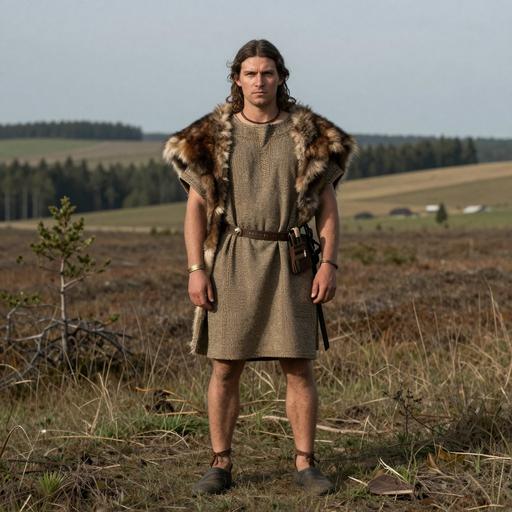
AI portrait reconstruction for A man buried in Poland in the  era
AI-generated artistic reconstruction, not a photograph of the individual.
Record

Sample details

Recorded details and available lineage markers.

Individual

Corded Ware individual, Poland

Sample ID: poz81

Date Range

2881 BCE - 2627 BCE

Cultural Period

The Corded Ware Culture

Biological Sex

Male

mtDNA Haplogroup

U4b1b2

Y-DNA Haplogroup

R-CTS4385

Social Role

Farmer (AI estimate, era-typical)

Geography

Location

Where this individual was discovered

Country Poland
Locality Oblaczkowo
Coordinates 52.3000, 17.5500
Chronology

Date range

When this individual lived in the broader context of human history

Corded Ware individual, Poland 2881 BCE - 2627 BCE
Context

Historical context

Background information associated with the reference record.

Overview

Corded Ware denotes a broad prehistoric horizon spanning much of Northern and Central Europe around the early-to-mid third millennium BCE. Archaeologists use pottery and burial signatures—especially cord-impressed decoration—to group related communities.

Region & Environment

This culture is documented across varied landscapes, including river valleys, uplands, and plains. Environments range from forested regions to more open agricultural zones, with settlement locations often tied to fertile soils, waterways, and routes between regions.

Historical Context

Corded Ware sits within the transition from earlier Neolithic lifeways to increasingly metallurgy-influenced Early Bronze Age developments. Over time, regional differences emerge in how communities managed farming, herding, and the circulation of prestige goods.

Populations & Lifeways

Populations were largely agricultural and pastoral, with animals and crops forming the basis of subsistence. Evidence for repeated burial practices and household material assemblages suggests stable communities organized around kin groups, with social distinctions expressed through grave goods and architectural choices.

Archaeology & Material Culture

The most recognizable marker is pottery decorated with cord impressions and related techniques. Assemblages also include metal objects (typically in limited quantities compared with later periods), stone tools, and personal items. Burial contexts—such as graves with standardized layouts—are crucial for tying communities to the Corded Ware horizon.

Culture & Society

Social identity in Corded Ware communities is visible through shared stylistic conventions in ceramics and mortuary practice. Variability between regions implies that shared traditions coexisted with local customs in settlement layout, burial form, and artifact repertoires.

Legacy & Transition

Corded Ware traditions do not represent a single political entity; rather, they reflect networks of cultural practices. After this horizon, archaeologically visible traditions shift again into later Bronze Age developments, with changes in material style, burial customs, and patterns of exchange.

Analysis

Genetic comparisons

These comparisons show genetic similarity, not identity or origin. The populations listed are those whose genomes show statistical alignment to this ancient individual.

Similarity reflects shared history, not shared identity. These are analytical comparisons, not claims about who this person was.

Modern Genetic Admixture

This analysis compares the DNA profile with present-day reference populations, showing statistical similarity to modern reference populations from different regions. The excavation site records where this individual was found, not a fixed modern genetic identity.

Europe 83.2%
Northwestern European 55.9%
English 35.8%
Finnish 10.7%
Scandinavian 9.4%
Eastern European 27.3%
Asia 13.4%
Central Asian, Northern Indian & Pakistani 13.4%
Pakistan 12.4%
Indian 1.0%
America 3.4%
America 3.4%
Native American 3.4%

Closest Modern Populations

These are the modern populations showing the closest statistical alignment to A man buried in Poland in the era, ranked by genetic distance. Lower distance values indicate closer statistical similarity. Cross-region similarity can reflect shared ancestry, population movement, continuity, or later admixture.

1
Tatar Mishar
5.3685
2
Moksha
5.5980
3
Mordovian
5.7315
4
Erzya
5.8389
5
Russian Kostroma
6.2221
6
Russian Krasnoborsky
6.3655
7
Finnish Central
6.7661
8
Finnish Southwest
6.7706
9
Moldovan O
6.8796
10
Russian Ryazan
6.9564
Context

Related Samples

This individual exists within a broader network of ancient samples. No ancient genome stands alone.

Individual Culture/Period Date Location Action
Proto-Indo-European individual, Sweden Battle Axe Culture, Sweden 2622 BCE Bergsgraven, Sweden View
Proto-Indo-European individual, Sweden Battle Axe Culture, Sweden 2859 BCE Olljso, Sweden View
Nordic Bronze Age individual, Sweden Pitted Ware Culture, Sweden 3008 BCE Ajvide, Sweden View
North European Neolithic individual, Sweden Funnel Beaker Culture, Sweden 3096 BCE Rossberga, Sweden View
Proto-Indo-European individual, Sweden Late Neolithic Sweden 1931 BCE Olljso, Sweden View
North European Neolithic individual, Sweden Funnel Beaker Culture, Sweden 3331 BCE Rossberga, Sweden View
Proto-Indo-European individual, Sweden Battle Axe Culture, Sweden 2625 BCE Bergsgraven, Sweden View
Proto-Indo-European individual, Sweden Late Neolithic Sweden 1879 BCE Olljso, Sweden View
Indo-European individual, Poland Corded Ware Culture, Poland 2881 BCE Oblaczkowo, Poland View
Indo-European individual, Poland Corded Ware Culture, Poland 2866 BCE Oblaczkowo, Poland View
Proto-Indo-European individual, Estonia Corded Ware Culture, Estonia 2447 BCE Karlova, Estonia View
TRB individual, Sweden Funnel Beaker Culture, Sweden 3096 BCE Rössberga, Sweden View
Corded Ware individual, Sweden 2622 BCE Bergsgraven, Sweden View
Corded Ware individual, Sweden 2625 BCE Bergsgraven, Sweden View
Corded Ware individual, Estonia 2447 BCE Karlova, Estonia View
Nordic Mn individual, Sweden 3096 BCE Rossberga, Sweden View
Pitted Ware individual, Sweden 3008 BCE Ajvide, Sweden View
Megalithic individual, Sweden 2859 BCE Olljso, Sweden View
Megalithic individual, Sweden 1931 BCE Olljso, Sweden View
Megalithic individual, Sweden 1879 BCE Olljso, Sweden View
Corded Ware individual, Poland 2866 BCE Oblaczkowo, Poland View
Corded Ware individual, Poland 2881 BCE Oblaczkowo, Poland View
Nordic Mn individual, Sweden 3331 BCE Rossberga, Sweden View
Page 1
Individual Culture/Period Date Location Action
Corded Ware individual, Estonia 2575 BCE Jäbara. Ida-Viru. Sope, Estonia View
Corded Ware individual, Estonia 2872 BCE Ardu. Harju, Estonia View
Corded Ware individual, Estonia 2850 BCE Kursi. Jõgeva, Estonia View
Corded Ware individual, Sweden 2622 BCE Bergsgraven, Sweden View
Corded Ware individual, Sweden 2625 BCE Bergsgraven, Sweden View
Corded Ware individual, Estonia 2447 BCE Karlova, Estonia View
Corded Ware individual, Denmark 2567 BCE Eastern Jutland. Djursland. Gjerrild Cist, Denmark View
Corded Ware individual, Germany 2500 BCE Esperstedt, Germany View
Corded Ware individual, Denmark 2848 BCE Kyndelöse, Denmark View
Corded Ware individual, Sweden 2623 BCE Viby, Sweden View
Corded Ware individual, Germany 2880 BCE Tiefbrunn, Germany View
Corded Ware individual, Germany 2865 BCE Tiefbrunn, Germany View
Corded Ware individual, Germany 2869 BCE Tiefbrunn, Germany View
Corded Ware individual, Germany 2662 BCE Bergrheinfeld, Germany View
Corded Ware individual, Poland 2866 BCE Oblaczkowo, Poland View
Corded Ware individual, Poland 2881 BCE Oblaczkowo, Poland View
Corded Ware individual, Estonia 2865 BCE Ida-Viru. Sope, Estonia View
Corded Ware individual, Denmark 2567 BCE Eastern Jutland. Djursland. Gjerrild Cist, Denmark View
Page 1
Sources

References

Scientific publications and genetic data that inform this profile.

G25 Coordinates

These coordinates represent a position in genetic space, a tool for comparison, not a conclusion. You can use these to perform custom admixture analysis in G25 Studio.

poz81,0.11929604,0.07734226,0.0432625,0.05208132,0.0050095,0.01890866,0.00702368,0.00815502,-0.00925212,-0.02092942,0.00114908,-0.00130442,0.00339848,-0.0076914,0.00394356,-0.00480814,-0.01228044,-0.00041414,-0.00564488,-0.00744492,0.00026922,0.00407724,-0.00665266,0.00848384,-0.00222069
Continue in G25 Studio
Use code for 30% off • Expires Nov 16