Menu
Store
Blog
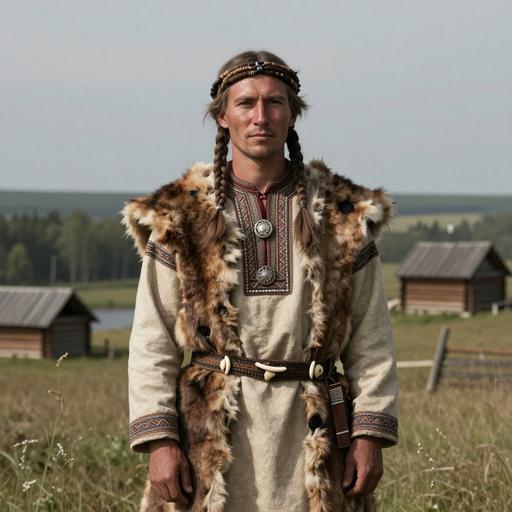
Portrait reconstruction of CHV002
Ancient Individual

A man buried in Russia in the Modern era

CHV002
1700 CE - 1900 CE
Male
Chalmny-Varre Site, Russia
Russia
Scroll to begin
Chapter I

Identity

The biological and cultural markers that define this ancient individual

Sample ID

CHV002

Date Range

1700 CE - 1900 CE

Biological Sex

Male

mtDNA Haplogroup

V7a1

Y-DNA Haplogroup

I-CTS10936

Cultural Period

Chalmny-Varre Site, Russia

Chapter II

Place

Where this individual was discovered

Country Russia
Locality Murmansk. Chalmny-Varre
Coordinates 67.1675, 37.5864
Chapter III

Time

When this individual lived in the broader context of human history

CHV002 1700 CE - 1900 CE
Chapter IV

Story

The narrative of this ancient life

The Chalmny-Varre site is an archaeological location that provides insight into the culture and lifestyle of early Slavic peoples in what is now Russia. Situated in the Arctic region, the site has been crucial for understanding the migration patterns, adaptation strategies, and cultural practices of these early communities. Here's an extensive description of this fascinating era and culture:

Geographical Context

The Chalmny-Varre site is located in the northwestern part of Russia, near the contemporary borders of Norway and Finland. This area is characterized by its harsh Arctic climate, a factor that significantly influenced the lifestyle and cultural practices of its inhabitants. The landscape features a mix of tundra, taiga, and coastal areas, providing a diverse range of resources and challenges for early settlers.

Historical Background

The region saw a blend of influences from various migrating groups, including Finno-Ugric, Scandinavian, and Slavic tribes. The Chalmny-Varre site primarily represents the Slavic cultural sphere during the early medieval period, roughly between the 7th and 11th centuries. This timeframe overlaps with a period of significant sociopolitical transformations in Eastern Europe, including the establishment of early Slavic states and increased interaction with neighboring regions.

Archaeological Discoveries

Excavations at Chalmny-Varre have uncovered a range of artifacts that offer insights into the daily life, economy, and spiritual practices of its inhabitants:

  1. Dwelling Structures: The site features remnants of semi-subterranean houses, which were designed to provide insulation against the harsh climate. These structures were typically made using wood and earth, with central hearths that served as a source of heat and a focal point for domestic activities.

  2. Tools and Implements: A variety of tools, including bone and antler implements, have been discovered. These tools were used for hunting, fishing, and gathering, indicating a semi-nomadic lifestyle that was heavily reliant on the natural environment.

  3. Ceramics and Pottery: Pottery fragments found at the site demonstrate the skill and artistry of the inhabitants. The ceramics often feature intricate designs and were used for both practical and ceremonial purposes.

  4. Textiles and Clothing: Evidence of textile production, including spindle whorls and loom weights, suggests that the inhabitants engaged in weaving and fabric crafting. Clothing would have been essential for survival in the Arctic conditions and may have served as a status symbol within the community.

  5. Burial Practices: The site includes burial grounds with grave goods, providing insights into the spiritual beliefs and social structures of the culture. The orientation and composition of the graves suggest a society that valued ritual and possibly believed in an afterlife.

Cultural Practices

  1. Subsistence Strategies: The inhabitants of Chalmny-Varre adapted to their environment through a mix of hunting, fishing, and gathering. Marine resources, such as seals and fish, were particularly important, supplemented by terrestrial game and plant foraging.

  2. Trade and Interaction: The site indicates that the community was not isolated but participated in broader trade networks. Artifacts such as foreign beads and metal objects suggest exchanges with neighboring cultures, including Viking and Finno-Ugric groups.

  3. Spiritual Beliefs: The community likely practiced animism, attributing spiritual significance to natural elements and animals. Shamanistic rituals might have been conducted to ensure hunting success and community well-being, as suggested by certain ceremonial artifacts.

Social Organization

The social structure at Chalmny-Varre may have been organized around kinship groups, with leadership roles possibly held by elders or individuals with spiritual influence. The presence of grave goods indicates some level of social stratification, with distinctions made based on age, gender, or social role.

Conclusion

The Chalmny-Varre site provides a valuable window into the lives of early Slavic peoples living in the challenging Arctic environment. The study of this site helps reconstruct how these communities adapted to their surroundings, developed their cultural identity, and interacted with neighboring peoples. Overall, Chalmny-Varre represents a fascinating chapter in the prehistory of the Slavic world, highlighting resilience, adaptability, and cultural complexity.

Chapter V

Genetics

The genetic ancestry of this ancient individual

Ancient Genetic Admixture

This analysis compares the DNA profile of CHV002 with ancient reference populations, showing the genetic composition in terms of prehistoric ancestral groups.

European Hunter-Gatherers 33.6%
Western Steppe Pastoralists 31.1%
Ancient Asians 27.8%
Neolithic Farmers 5.1%
Ancient Native Americans 2.3%

Modern Genetic Admixture

This analysis compares the DNA profile with present-day reference populations, showing what percentage of genetic makeup resembles modern populations from different regions.

Europe 79.3%
Northwestern European 54.7%
Finnish 54.4%
Eastern European 24.5%
Asia 20.0%
Northern Asian 16.6%
Siberian 16.6%
Chinese & Southeast Asian 3.1%
Indonesian Khmer Thai Myanma 3.1%
America 0.8%
America 0.8%
Native American 0.8%

Closest Modern Populations

These are the modern populations showing the closest statistical alignment to A man buried in Russia in the Modern era, ranked by genetic distance. Lower distance values indicate closer statistical similarity.

1
Komi A
2.9889
2
Kom
48.9175
Chapter VI

Context

Other ancient individuals connected to this sample

Sources

References

Scientific publications and genetic data

Scientific Publication

Ancient Fennoscandian genomes reveal origin and spread of Siberian ancestry in Europe

Authors Lamnidis TC, Majander K, Jeong C
Abstract

European population history has been shaped by migrations of people, and their subsequent admixture. Recently, ancient DNA has brought new insights into European migration events linked to the advent of agriculture, and possibly to the spread of Indo-European languages. However, little is known about the ancient population history of north-eastern Europe, in particular about populations speaking Uralic languages, such as Finns and Saami. Here we analyse ancient genomic data from 11 individuals from Finland and north-western Russia. We show that the genetic makeup of northern Europe was shaped by migrations from Siberia that began at least 3500 years ago. This Siberian ancestry was subsequently admixed into many modern populations in the region, particularly into populations speaking Uralic languages today. Additionally, we show that ancestors of modern Saami inhabited a larger territory during the Iron Age, which adds to the historical and linguistic information about the population history of Finland.

G25 Coordinates

The G25 coordinates for sample CHV002 can be used for detailed admixture analysis in our G25 Studio tool.

CHV002,0.12107308,0.0167408,0.09677592,0.07466952,0.00198758,0.01059536,0.0085275,0.01499264,6.286E-05,-0.03019688,0.01418234,-0.01019292,0.02076516,-0.01715798,-0.01323676,-0.01291964,-0.01118174,-0.00046838,-0.00908926,-0.0048542,0.00499968,0.00506148,-0.00542358,0.00353968,0.00121119
Analyze in G25 Studio
Use code for 40% off Expires Feb 27