Menu
Store
Blog
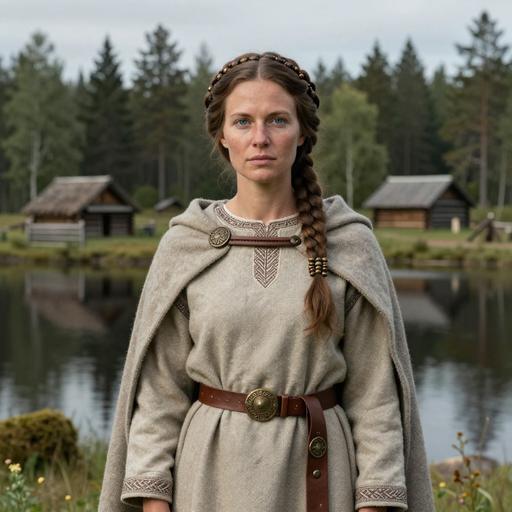
Portrait reconstruction of JK2067
Ancient Individual

An individual buried in Finland in the Bronze Age era

JK2067
300 CE - 800 CE
Not known
Levanluhta B
Finland
Scroll to begin
Chapter I

Identity

The biological and cultural markers that define this ancient individual

Sample ID

JK2067

Date Range

300 CE - 800 CE

Biological Sex

Not known

mtDNA Haplogroup

K1a4a1b

Cultural Period

Levanluhta B

Chapter II

Place

Where this individual was discovered

Country Finland
Locality Isokyro. Levanluhta
Coordinates 62.9487, 22.4101
Chapter III

Time

When this individual lived in the broader context of human history

JK2067 300 CE - 800 CE
Chapter IV

Story

The narrative of this ancient life

The Levanluhta B site, located in Finland, provides fascinating insights into the Nordic Bronze Age, which lasted approximately from 1700 BCE to 500 BCE. This period marked significant cultural, social, and technological changes in the regions that now comprise modern-day Scandinavia, including Finland. Although Finland is often peripheral in discussions of the Nordic Bronze Age—since much of the focus tends to be on Denmark, Sweden, and Norway—the finds at Levanluhta highlight unique aspects of the era and culture in this region.

Geographical and Environmental Context

Levanluhta is situated in western Finland, an area characterized by a landscape of dense forests, lakes, and rivers. During the Bronze Age, the climate was relatively milder compared to today, allowing for more extended agricultural activities. This fertile environment facilitated a mixed economy based on agriculture, hunting, fishing, and gathering.

Cultural and Social Structure

The Nordic Bronze Age in Finland, as exemplified by Levanluhta, was a time when communities were generally organized into small, kin-based groups or tribes. These groups relied on a combination of farming and hunting, reflecting a semi-nomadic lifestyle adapted to the region's ecological constraints.

Social structures during this period were likely characterized by tribal leadership, with chiefs or chieftains holding sway over smaller communities. There was likely some degree of social stratification, although not as pronounced as seen in later periods; prestige was probably garnered through skills in hunting, metallurgy, and possibly spiritual or ritual power.

Material Culture and Technology

Bronze was a prized material that, while not produced locally due to the lack of tin deposits, was imported and played a crucial role in society. Artifacts from the Nordic Bronze Age typically include bronze tools, weapons, and jewelry. The ability to possess and work bronze was likely a status symbol and indicative of connections to broader trade networks.

The Levanluhta site itself provides evidence of sophisticated handicrafts. Pottery and textiles from the area demonstrate advanced techniques and artistic expression, with decorations that often hold symbolic meanings.

Burial Practices and Rituals

Levanluhta is particularly noted for its burial practices, which are distinct from other contemporary Nordic cultures. The site is unique due to the discovery of numerous human remains deposited in a spring or wetland area. This wetland location for burials is unusual and suggests ritualistic significance. It implies a spiritual or symbolic association with water, perhaps connected to beliefs about the afterlife or the soul's journey.

These burials were not merely depositories; they were likely part of complex and repeated rituals. The presence of grave goods, such as jewelry and weapons, signifies the importance of status and the belief in an afterlife where such items would be useful.

Religion and Beliefs

While specific details about religion during the Nordic Bronze Age in Finland are sparse, it can be inferred that natural elements like water, forests, and celestial bodies held spiritual significance. The orientation of burial sites, the inclusion of offerings, and the depiction of sun symbols suggest a cosmology that valued the natural world and its cycles.

The Levanluhta site's use of water in burial practices indicates that water might have been seen as a boundary or gateway between worlds – both a place of life-giving properties and of spiritual passage.

Trade and External Influences

Despite Finland's relative isolation, Levanluhta and other sites show that local cultures were not completely isolated. Evidence of trade with southern Scandinavia, the Baltic region, and beyond is present in the bronze artifacts and certain pottery types. This highlights cultural exchanges that brought not just materials, but ideas, technology, and perhaps people to the region.

Conclusion

The Levanluhta site of the Nordic Bronze Age in Finland offers a unique glimpse into this era, characterized by a blend of local adaptation to a challenging environment and influences from wider trans-Scandinavian and European cultures. It reflects a society that, while perhaps more modest in scope compared to its southern neighbors, was no less complex or significant in cultural and spiritual terms. The artifacts and burial practices discovered at Levanluhta continue to intrigue archaeologists and historians as they seek to understand more about the worldviews and lives of these ancient peoples.

Chapter V

Genetics

The genetic ancestry of this ancient individual

Ancient Genetic Admixture

This analysis compares the DNA profile of JK2067 with ancient reference populations, showing the genetic composition in terms of prehistoric ancestral groups.

Neolithic Farmers 65.8%
Ancient Asians 16.8%
European Hunter-Gatherers 14.2%
Ancient Oceanians 3.3%

Modern Genetic Admixture

This analysis compares the DNA profile with present-day reference populations, showing what percentage of genetic makeup resembles modern populations from different regions.

Asia 62.9%
Chinese & Southeast Asian 27.6%
Chinese 27.6%
Northern West Asian 26.1%
Caucasian 13.5%
Anatolian 12.6%
Central Asian, Northern Indian & Pakistani 5.7%
Indian 5.7%
Arab, Egyptian & Levantine 3.5%
Arabian 3.5%
Europe 35.4%
Northwestern European 28.8%
Finnish 28.8%
Southern European 6.6%
Balkan 6.6%
Oceania 1.8%
Melanesian 1.8%
Papuan 1.8%

Closest Modern Populations

These are the modern populations showing the closest statistical alignment to An individual buried in Finland in the Bronze Age era, ranked by genetic distance. Lower distance values indicate closer statistical similarity.

1
Tatar Crimean Steppe
10.2798
2
Tatar Lipka
10.9910
3
Turkmen Uzbekistan
11.0345
4
Turkmen
11.0920
5
Turkmen Iran
11.4029
6
Tatar Kazan
12.3724
7
Turkish Antalya
12.4304
8
Tajik Tajikistan Ayni
12.7883
9
Roma Granada
12.8667
10
Tajik Tajikistan Hisor
12.8898
Chapter VI

Context

Other ancient individuals connected to this sample

Sources

References

Scientific publications and genetic data

Scientific Publication

Ancient Fennoscandian genomes reveal origin and spread of Siberian ancestry in Europe

Authors Lamnidis TC, Majander K, Jeong C
Abstract

European population history has been shaped by migrations of people, and their subsequent admixture. Recently, ancient DNA has brought new insights into European migration events linked to the advent of agriculture, and possibly to the spread of Indo-European languages. However, little is known about the ancient population history of north-eastern Europe, in particular about populations speaking Uralic languages, such as Finns and Saami. Here we analyse ancient genomic data from 11 individuals from Finland and north-western Russia. We show that the genetic makeup of northern Europe was shaped by migrations from Siberia that began at least 3500 years ago. This Siberian ancestry was subsequently admixed into many modern populations in the region, particularly into populations speaking Uralic languages today. Additionally, we show that ancestors of modern Saami inhabited a larger territory during the Iron Age, which adds to the historical and linguistic information about the population history of Finland.

G25 Coordinates

The G25 coordinates for sample JK2067 can be used for detailed admixture analysis in our G25 Studio tool.

JK2067,0.03773156,-0.01975228,0.0014934,0.01176082,0.02914046,-0.01285916,0.00446052,0.00482284,0.0247192,0.0075475,0.0156926,0.00189506,-0.00249336,-0.01669024,-0.01179816,-0.01058136,0.00342474,-0.00023596,-0.01179416,-0.01330112,0.0030033,0.0026373,-0.0200105,-0.00475378,-0.00050175
Analyze in G25 Studio
Use code for 40% off Expires Feb 27