Menu
Store
Blog
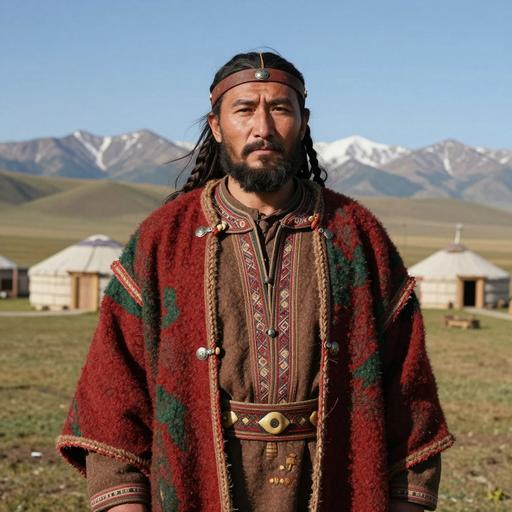
Portrait reconstruction of DA228
Ancient Individual

A man buried in Kazakhstan in the Medieval era

DA228
300 CE - 900 CE
Male
Turkic Period Kazakhstan
Kazakhstan
Scroll to begin
Chapter I

Identity

The biological and cultural markers that define this ancient individual

Sample ID

DA228

Date Range

300 CE - 900 CE

Biological Sex

Male

mtDNA Haplogroup

A15c

Y-DNA Haplogroup

O-CTS5664

Cultural Period

Turkic Period Kazakhstan

Chapter II

Place

Where this individual was discovered

Country Kazakhstan
Locality Tian Shan. Central Steppe
Coordinates 43.0686, 68.2489
Chapter III

Time

When this individual lived in the broader context of human history

DA228 300 CE - 900 CE
Chapter IV

Story

The narrative of this ancient life

The Turkic Period of Kazakhstan, a significant era in the broader narrative of Turkic civilization, spans from the 6th to the 12th century. This period marks a transformative era of socio-political evolution, cultural development, and economic activity that has left a lasting impact on the region's history. Here is an extensive and detailed description of this rich period:

Historical Context

The Turkic Period began with the emergence of the Göktürk Khaganate in the mid-6th century, which was the first Turkic state established by the Ashina clan. This period can be seen as a time when various Turkic tribes and groups, who followed a nomadic lifestyle, started to consolidate power and form influential states that expanded across the steppes of Central Asia, including the region known today as Kazakhstan.

The Göktürk Khaganate laid the foundation for subsequent Turkic states and significantly influenced the political landscape of Central Asia. After the split of the Göktürk Khaganate into Eastern and Western factions, the western part, covering much of modern Kazakhstan, became a center of various successor states, including the Western Turkic Khaganate.

Ethno-cultural Developments

During this period, the region witnessed the amalgamation of different ethnic groups such as Turks, Sogdians, and other indigenous nomadic tribes. The rich cultural tapestry featured a mix of shamanistic practices and the gradual introduction of major world religions, including Buddhism, Nestorian Christianity, and later Islam, which began to spread in the 8th century through trade and conquest.

Language and writing systems flourished during this era, with Old Turkic script used widely for inscriptions and documents. The Orkhon inscriptions from this period provide invaluable insight into the language, culture, and political dynamics of the Turks.

Political and Military Structure

Turkic governance during this era was characterized by a clan-based aristocracy and confederations of tribes led by a Khagan, or a supreme ruler. The political system combined nomadic traditions with elements adapted from neighboring civilizations. Military prowess was essential for maintaining control and expanding territories, relying heavily on the superior mobility and tactics of the cavalry-based armies.

Significant states during this era included the Kimek and Kipchak khanates, which played central roles in the region’s politics. The Oghuz Turks, another major confederation, also had profound influence and paved the way for later Turkic empires, such as the Seljuks.

Trade and Economy

The Silk Road was crucial to Kazakhstan during the Turkic Period, facilitating extensive trade and cultural exchanges between East and West. The nomadic tribes of Kazakhstan became key players in the Silk Road network, trading goods such as furs, horses, and other livestock in exchange for silk, spices, and other luxury items.

This era also saw the rise of cities like Taraz and Yasy (modern-day Turkistan), which became major commercial and cultural hubs. The prosperity of urban centers helped in the spread of ideas and technologies across the region.

Cultural and Artistic Achievements

The Turkic Period was marked by considerable achievements in arts and crafts, influenced by interactions with neighboring cultures such as the Persians, Chinese, and Arabs. The art and craft traditions included intricate metalwork, textiles, and jewelry, often adorned with depictions of animals and mythological motifs reflecting the Turkic nomadic heritage.

Architecture during this era saw the construction of mausoleums, fortresses, and town structures, often integrating elements from Islamic architecture as the religion began to take a stronger hold in the region. The mausoleum of Ahmad Yasawi, although completed later, owes much to the architectural styles developed during this period.

Legacy

The Turkic Period set the stage for the rise of powerful Turkic empires and paved the way for the cultural and political landscape that continues to influence modern-day Kazakhstan and Central Asia. The legacy of the Turkic Period can still be seen in the region’s cultural traditions, linguistic ties, and historical consciousness among the Kazakh people and other Turkic groups.

Overall, the Turkic Period of Kazakhstan represents a dynamic and influential era that contributed significantly to the development of Central Asian civilization and the broader Turkic world, leaving an indelible mark on history and culture.

Chapter V

Genetics

The genetic ancestry of this ancient individual

Ancient Genetic Admixture

This analysis compares the DNA profile of DA228 with ancient reference populations, showing the genetic composition in terms of prehistoric ancestral groups.

Ancient Asians 35.0%
European Hunter-Gatherers 25.9%
Neolithic Farmers 17.7%
Western Steppe Pastoralists 16.6%
Ancient Native Americans 2.8%
Ancient Oceanians 2.0%

Modern Genetic Admixture

This analysis compares the DNA profile with present-day reference populations, showing what percentage of genetic makeup resembles modern populations from different regions.

Asia 57.1%
Northern West Asian 19.6%
Caucasian 19.6%
Chinese & Southeast Asian 17.5%
Chinese 13.5%
Tibetan 4.0%
Northern Asian 14.8%
Siberian 10.1%
Mongolian 4.7%
Japanese & Korean 2.7%
Japanese 2.7%
Central Asian, Northern Indian & Pakistani 2.6%
Indian 1.9%
Central Asian 0.7%
Europe 40.9%
Northwestern European 20.5%
Northwestern European 7.2%
English 5.7%
Finnish 4.2%
Scandinavian 3.3%
Eastern European 18.6%
Southern European 1.9%
Sardinian 1.9%
Africa 1.8%
West African 1.8%
Ghanaian, Liberian, Sierra Leonean 1.0%
Senegambian & Guinean 0.8%

Closest Modern Populations

These are the modern populations showing the closest statistical alignment to A man buried in Kazakhstan in the Medieval era, ranked by genetic distance. Lower distance values indicate closer statistical similarity.

1
Uzbek
5.2484
2
Bashkir
5.7361
3
Tatar Crimean Steppe
6.3085
4
Tatar Siberian
7.0276
5
Hazara O
7.5484
6
Nogai
7.6925
7
Turkmen Uzbekistan
8.0402
8
Uygur
8.2818
9
Turkmen
8.5615
10
Tatar Lipka
9.0131
Chapter VI

Context

Other ancient individuals connected to this sample

Sources

References

Scientific publications and genetic data

Scientific Publication

137 ancient human genomes from across the Eurasian steppes

Authors Damgaard PB, Marchi N, Rasmussen S
Abstract

For thousands of years the Eurasian steppes have been a centre of human migrations and cultural change. Here we sequence the genomes of 137 ancient humans (about 1× average coverage), covering a period of 4,000 years, to understand the population history of the Eurasian steppes after the Bronze Age migrations. We find that the genetics of the Scythian groups that dominated the Eurasian steppes throughout the Iron Age were highly structured, with diverse origins comprising Late Bronze Age herders, European farmers and southern Siberian hunter-gatherers. Later, Scythians admixed with the eastern steppe nomads who formed the Xiongnu confederations, and moved westward in about the second or third century BC, forming the Hun traditions in the fourth-fifth century AD, and carrying with them plague that was basal to the Justinian plague. These nomads were further admixed with East Asian groups during several short-term khanates in the Medieval period. These historical events transformed the Eurasian steppes from being inhabited by Indo-European speakers of largely West Eurasian ancestry to the mostly Turkic-speaking groups of the present day, who are primarily of East Asian ancestry.

G25 Coordinates

The G25 coordinates for sample DA228 can be used for detailed admixture analysis in our G25 Studio tool.

DA228,0.0846562,-0.10370954,0.03523552,0.01017088,-0.00578598,0.00472938,0.00141134,0.00123084,-0.0114893,-0.01213304,-0.00969012,5.32E-06,-0.0019036,-0.01337512,0.0100035,0.00298484,-0.0089623,0.00011922,0.00041288,0.00095234,-0.0114458,0.00684912,0.00340484,0.00525792,0.00017532
Analyze in G25 Studio
Use code for 40% off Expires Feb 26