Menu
Store
Blog
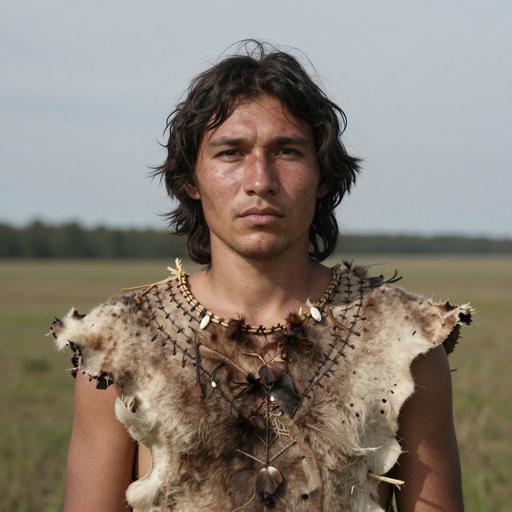
Portrait reconstruction of I0211
Ancient Individual

A man buried in Russia in the Hunter-Gatherer era

I0211
7050 BCE - 5950 BCE
Male
Hunter-Gatherer Karelia, Russia
Russia
Scroll to begin
Chapter I

Identity

The biological and cultural markers that define this ancient individual

Sample ID

I0211

Date Range

7050 BCE - 5950 BCE

Biological Sex

Male

mtDNA Haplogroup

U4a

Y-DNA Haplogroup

J-M267

Cultural Period

Hunter-Gatherer Karelia, Russia

Chapter II

Place

Where this individual was discovered

Country Russia
Locality Karelia. Yuzhnyy Oleni Ostrov
Coordinates 61.6500, 35.6500
Chapter III

Time

When this individual lived in the broader context of human history

I0211 7050 BCE - 5950 BCE
Chapter IV

Story

The narrative of this ancient life

Hunter-Gatherer Karelia, located in present-day northwestern Russia, represents an intriguing intersection of geography, culture, and history. Situated in the region known as Karelia, this area is characterized by its dense forests, countless lakes, and rugged terrain, forming part of the larger Russian landscape. The time frame often associated with hunter-gatherer cultures in this area ranges from the Mesolithic to early Neolithic periods, roughly 10,000 to 5,000 years ago.

Geographical Context

Karelia’s geography significantly influenced the lifestyle and culture of its early inhabitants. The landscape is dotted with thousands of lakes and rivers, bordered by the White Sea to the north. These natural features provided an abundant source of fresh water and a conduit for travel and trade via dugout canoes or similar craft. The region's vast forests, primarily made up of pine, spruce, and birch, offered ample resources for hunting and gathering, as well as materials for building, tool-making, and crafting.

Climatic Influence

The post-glacial rebound in the area led to a varied climate during this period, with cold winters and mild, short summers. These climatic conditions influenced the migration patterns of animals and the growth cycles of plants, shaping the subsistence strategies of the people.

Subsistence Strategies

The hunter-gatherers of Karelia relied on a mixed subsistence strategy. The forests were home to large and small game such as elk, deer, boar, and various species of birds, all of which were hunted using bows, arrows, and spears. Fishing, facilitated by the abundant lakes and rivers, played a crucial role in their diet, with species like salmon and trout being particularly important.

Foraging for wild berries, nuts, and edible plants complemented their diet. These resources were abundant in the warmer months, and the people likely developed methods for preserving surplus food for consumption during the harsh winter months.

Cultural and Material Artifacts

Artifacts from this period include finely crafted stone tools, often made from locally sourced material like flint or quartzite. These tools were essential for hunting, but also for the processing of animal hides, wood, and plant materials. The craftsmanship evident in these tools suggests a complex understanding of material properties and tool-making techniques.

There is also evidence of early artistic expression, including petroglyphs found in rock faces throughout Karelia. These carvings often depicted animals, human figures, and abstract forms, which may have held spiritual or communal significance.

Social Structure

The social structure of these communities likely revolved around small, kin-based groups. Social organization would have been egalitarian, with decisions made communally or by group consensus. Resource sharing and cooperation were essential for survival, particularly during the long winter months.

Spiritual and Ritual Practices

The spiritual life of the hunter-gatherers in Karelia is believed to have involved an animistic worldview, where natural elements and animals were imbued with spiritual significance. Shamans or spiritual leaders may have conducted rituals to appease these spirits, ensure successful hunts, and maintain harmony within the community.

Interaction with Environment

The relationship between these early inhabitants and their environment was one of adaptation and respect. They developed a detailed knowledge of the local ecology, which enabled them to effectively exploit the resources available without exhausting them. Seasonal migrations would have been common, allowing groups to utilize different resources as they became available throughout the year.

Legacy and Influence

Although direct cultural continuities with later Finno-Ugric populations are complex due to the passage of time and movements of people, the hunter-gatherer societies of Karelia laid important foundations. Their knowledge of and relationship with the land influenced subsequent cultures in the region, contributing to the enduring presence of Finno-Ugric linguistic and cultural elements in Karelia and beyond.

In conclusion, the hunter-gatherer cultures of Karelia were marked by their adaptability, intricate knowledge of their environment, and rich spiritual life. These societies were not isolated; they were interconnected in subtle ways with surrounding regions, influencing and being influenced by the broader prehistoric cultural milieu of Eurasia.

Chapter V

Genetics

The genetic ancestry of this ancient individual

Ancient Genetic Admixture

This analysis compares the DNA profile of I0211 with ancient reference populations, showing the genetic composition in terms of prehistoric ancestral groups.

Western Steppe Pastoralists 74.8%
Ancient Asians 16.6%
European Hunter-Gatherers 8.6%

Modern Genetic Admixture

This analysis compares the DNA profile with present-day reference populations, showing what percentage of genetic makeup resembles modern populations from different regions.

Europe 92.6%
Eastern European 56.9%
Northwestern European 35.7%
Finnish 35.7%
America 7.4%
America 7.4%
Native American 7.4%

Closest Modern Populations

These are the modern populations showing the closest statistical alignment to A man buried in Russia in the Hunter-Gatherer era, ranked by genetic distance. Lower distance values indicate closer statistical similarity.

1
Komi A
3.3629
2
Russian Leshukonsky
3.8792
3
Tatar Mishar
4.0860
4
Russian Pinega
5.1495
5
Russian Pinezhsky
5.1673
6
Tatar Kazan
5.2829
7
Saami Kola
5.3985
8
Russian Krasnoborsky
5.9421
9
Vepsian
5.9435
10
Mordovian
6.2053
Chapter VI

Context

Other ancient individuals connected to this sample

Sources

References

Scientific publications and genetic data

Scientific Publication

Genome-wide patterns of selection in 230 ancient Eurasians

Authors Mathieson I, Lazaridis I, Rohland N
Abstract

Ancient DNA makes it possible to observe natural selection directly by analysing samples from populations before, during and after adaptation events. Here we report a genome-wide scan for selection using ancient DNA, capitalizing on the largest ancient DNA data set yet assembled: 230 West Eurasians who lived between 6500 and 300 bc, including 163 with newly reported data. The new samples include, to our knowledge, the first genome-wide ancient DNA from Anatolian Neolithic farmers, whose genetic material we obtained by extracting from petrous bones, and who we show were members of the population that was the source of Europe's first farmers. We also report a transect of the steppe region in Samara between 5600 and 300 bc, which allows us to identify admixture into the steppe from at least two external sources. We detect selection at loci associated with diet, pigmentation and immunity, and two independent episodes of selection on height.

G25 Coordinates

The G25 coordinates for sample I0211 can be used for detailed admixture analysis in our G25 Studio tool.

I0211,0.12018566,0.03589252,0.08021656,0.06875638,0.0045915,0.0149695,-0.00387772,-0.00425458,-0.00619218,-0.03116336,0.00601018,-0.00933614,0.01944808,0.00475328,-0.01625908,-0.0099335,-0.00792334,-0.00280332,-0.00806692,-0.00859672,-0.00147916,0.00418028,-0.0102951,0.00067752,-0.00594637
Analyze in G25 Studio
Use code for 40% off Expires Feb 26