Menu
Store
Blog
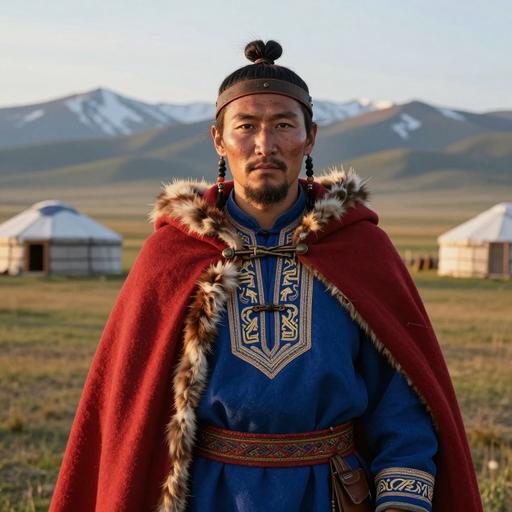
Portrait reconstruction of I12116
Ancient Individual

A man buried in Kazakhstan in the Middle Ages era

I12116
995 CE - 1153 CE
Male
Karluk Culture 2, Kazakhstan
Kazakhstan
Scroll to begin
Chapter I

Identity

The biological and cultural markers that define this ancient individual

Sample ID

I12116

Date Range

995 CE - 1153 CE

Biological Sex

Male

mtDNA Haplogroup

F1b1e

Y-DNA Haplogroup

J-FT384007

Cultural Period

Karluk Culture 2, Kazakhstan

Chapter II

Place

Where this individual was discovered

Country Kazakhstan
Locality Tian Shan. Central Steppe. Butakty
Coordinates 43.2025, 76.9817
Chapter III

Time

When this individual lived in the broader context of human history

I12116 995 CE - 1153 CE
Chapter IV

Story

The narrative of this ancient life

The Karluk Culture, specifically referred to as \Karluk Culture 2" in the context of your query, represents a significant period and cultural entity within the broader Turkic civilization in Central Asia during the early medieval era. The Karluks were a prominent Turkic tribal confederation that played a crucial role in the historical and cultural development of the region now known as Kazakhstan and parts of present-day Kyrgyzstan, Uzbekistan, and China.

Historical Context

The Karluks first appeared in historical records around the 8th century. They were originally part of the Gokturk Khaganate, one of the major early Turkic empires, but later asserted their independence as the Khaganate weakened due to internal strife and external pressures. This period saw the Karluk tribes migrate westward from their original homeland in the Altai Mountains, eventually settling in the territory we now associate with Eastern Kazakhstan and beyond.

Political Structure and Society

The Karluks were organized into a confederation, a common political structure among the nomadic peoples of the Central Asian steppes. This confederation was composed of several tribes, each led by a chieftain or a "beg." The Karluk confederation was governed by a khan, who held the highest authority, though the leadership structure was often fluid and could shift due to changes in allegiance or external threats.

As they expanded their influence, the Karluks established the Kara-Khanid Khanate in the late 9th century, marking a pivotal transformation from a tribal confederation to a more centralized form of governance. This transition allowed for greater administrative efficiency and paved the way for economic and cultural development.

Economic Activities

The Karluk culture was characterized by a dual economic structure that capitalized on both nomadic pastoralism and sedentary agriculture. The steppe regions were ideally suited for raising livestock, such as horses, sheep, and camels, which were integral to the Karluks' nomadic lifestyle. Simultaneously, the proximity to the Silk Road facilitated trade, allowing the Karluks to engage in the exchange of goods such as textiles, seeds, spices, and crafted items, with neighboring regions and distant civilizations.

The development of the Kara-Khanid Khanate also saw an increasing emphasis on agriculture, particularly in more fertile areas, where the Karluks developed irrigation systems to cultivate crops like barley, millet, and wheat.

Cultural and Religious Influences

Culturally, the Karluks contributed to the rich tapestry of Turkic civilization through their language, art, and social customs. Their language, related to other Turkic dialects, evolved over time, and with increased settled life, it began adopting influences from Persian and Arabic as they converted to Islam.

The Karluk conversion to Islam was a significant event in their history, deeply influencing their cultural and artistic expression. Islamic scholarship, art, and architecture began to thrive under their patronage, leading to the establishment of educational and religious institutions, such as madrasas and mosques, that further enriched the cultural landscape.

Artistic Contributions

Karluk art is noted for its combination of nomadic Turkic elements with Islamic motifs. The production of textiles, metalwork, and ceramics often reflected intricate designs drawing from nature and geometric patterns prevalent in Islamic art. The use of vibrant colors and detailed patterns in Karluk artistic expressions illustrates a synthesis of their nomadic heritage with the settled artistic traditions adopted after their conversion to Islam.

Legacy

The legacy of the Karluk culture is evident today in various aspects of Central Asian culture, from oral traditions and music to architecture and culinary practices. The Karluk period served as a foundational epoch that facilitated the transmission of Turkic culture throughout Central Asia and into the realms of the Islamic world, significantly impacting the geopolitical and cultural development of the region.

In summary, the Karluk Culture 2 era represents a pivotal chapter in the history of Turkic civilization, characterized by dynamic socio-political transformations, economic diversification, and cultural amalgamation. Its impacts resonate through the annals of Central Asian history, marking it as a critical period in the development of a unique and enduring cultural heritage."

Chapter V

Genetics

The genetic ancestry of this ancient individual

Ancient Genetic Admixture

This analysis compares the DNA profile of I12116 with ancient reference populations, showing the genetic composition in terms of prehistoric ancestral groups.

Ancient Asians 49.0%
Neolithic Farmers 18.9%
European Hunter-Gatherers 15.3%
Western Steppe Pastoralists 10.4%
Ancient Native Americans 3.7%
Ancient Africans 2.7%

Modern Genetic Admixture

This analysis compares the DNA profile with present-day reference populations, showing what percentage of genetic makeup resembles modern populations from different regions.

Asia 84.9%
Central Asian, Northern Indian & Pakistani 28.1%
Central Asian 20.2%
Pakistan 4.0%
Indian 3.9%
Northern West Asian 24.9%
Caucasian 16.3%
Mesopotamian 8.2%
Northern Asian 14.7%
Siberian 11.9%
Mongolian 2.8%
Chinese & Southeast Asian 12.0%
Chinese 9.6%
Tibetan 2.3%
Japanese & Korean 5.2%
Japanese 5.2%
Europe 12.0%
Northwestern European 11.4%
English 6.3%
Finnish 4.6%
Southern European 0.6%
Italian 0.6%
Africa 1.6%
West African 1.6%
Nigerian 1.6%
America 1.5%
America 1.5%
Native American 1.5%

Closest Modern Populations

These are the modern populations showing the closest statistical alignment to A man buried in Kazakhstan in the Middle Ages era, ranked by genetic distance. Lower distance values indicate closer statistical similarity.

1
Nogai
4.2598
2
Uygur
4.3866
3
Uzbek
4.8854
4
Hazara
5.2752
5
Hazara O
5.4796
6
Karakalpak
5.5191
7
Tatar Siberian
7.3698
8
Bashkir
8.4132
9
Altaian Kizhi O
8.8327
10
Turkmen Uzbekistan
9.2573
Chapter VI

Context

Other ancient individuals connected to this sample

Sources

References

Scientific publications and genetic data

Scientific Publication

137 ancient human genomes from across the Eurasian steppes

Authors Damgaard PB, Marchi N, Rasmussen S
Abstract

For thousands of years the Eurasian steppes have been a centre of human migrations and cultural change. Here we sequence the genomes of 137 ancient humans (about 1× average coverage), covering a period of 4,000 years, to understand the population history of the Eurasian steppes after the Bronze Age migrations. We find that the genetics of the Scythian groups that dominated the Eurasian steppes throughout the Iron Age were highly structured, with diverse origins comprising Late Bronze Age herders, European farmers and southern Siberian hunter-gatherers. Later, Scythians admixed with the eastern steppe nomads who formed the Xiongnu confederations, and moved westward in about the second or third century BC, forming the Hun traditions in the fourth-fifth century AD, and carrying with them plague that was basal to the Justinian plague. These nomads were further admixed with East Asian groups during several short-term khanates in the Medieval period. These historical events transformed the Eurasian steppes from being inhabited by Indo-European speakers of largely West Eurasian ancestry to the mostly Turkic-speaking groups of the present day, who are primarily of East Asian ancestry.

G25 Coordinates

The G25 coordinates for sample I12116 can be used for detailed admixture analysis in our G25 Studio tool.

I12116,0.06717502,-0.13718312,0.0172332,-0.00632196,-0.0278235,-0.00418208,0.00690888,0.0080653,-0.0080019,0.0015932,-0.01695696,-0.00201636,-0.00638606,-0.0048105,0.00400304,-0.00169462,-0.00384884,-0.00071386,0.00532632,0.00646786,-0.00346352,0.00193448,-0.00317344,-0.00086338,0.00176397
Analyze in G25 Studio
Use code for 40% off Expires Feb 26