Menu
Store
Blog
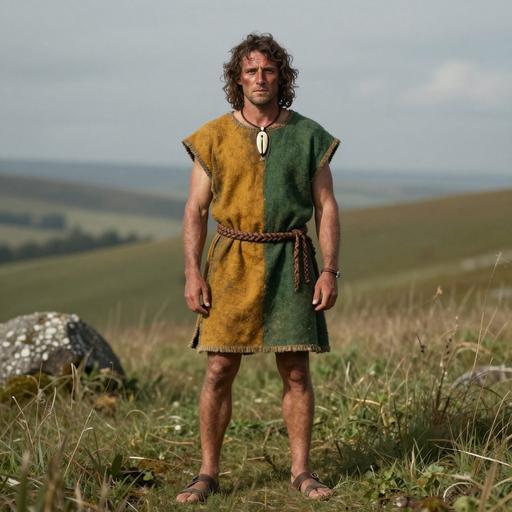
Portrait reconstruction of I1775
Ancient Individual

A man buried in United Kingdom in the Copper Age to Early Bronze Age era

I1775
1731 BCE - 1536 BCE
Male
Chalcolithic to Early Bronze Age Wales
United Kingdom
Scroll to begin
Chapter I

Identity

The biological and cultural markers that define this ancient individual

Sample ID

I1775

Date Range

1731 BCE - 1536 BCE

Biological Sex

Male

mtDNA Haplogroup

I3

Y-DNA Haplogroup

R1b1a1b1a1a2

Cultural Period

Chalcolithic to Early Bronze Age Wales

Chapter II

Place

Where this individual was discovered

Country United Kingdom
Locality Wales. North Wales. Llandudno. Great Orme
Coordinates 53.3300, -3.8400
Chapter III

Time

When this individual lived in the broader context of human history

I1775 1731 BCE - 1536 BCE
Chapter IV

Story

The narrative of this ancient life

The Chalcolithic to Early Bronze Age period in Wales covers a transformative era in prehistoric times, roughly spanning from around 2500 BCE to 1500 BCE. This era is significant for its advances in metallurgy, particularly the introduction and use of copper, followed by bronze, which marked a transition from the Neolithic stone tool technologies.

Geography and Environment

Wales during this period was characterized by its rugged landscapes, with mountainous regions, lush valleys, and extensive coastlines. The environment played a crucial role in shaping the cultures and societies. The land provided rich mineral resources, contributing to the emerging metallurgical practices, while its diverse ecosystems supported a variety of flora and fauna.

Cultural and Societal Structure

Chalcolithic Period (Copper Age)

  1. Technological Innovations: The introduction of copper metallurgy marked the Chalcolithic period. Tools and ornaments made from copper began to appear, although stone tools remained predominant.

  2. Settlement Patterns: Communities were predominantly agrarian, with people living in small, dispersed settlements. They engaged in farming, animal husbandry, and foraging.

  3. Economic and Social Organization: Society was likely organized in small kinship-based groups. There is evidence of burgeoning trade networks, as seen from non-local raw materials such as flint and copper.

  4. Ceremonial and Ritual Practices: Megalithic structures continued to be a focal point for communities, with sites like Bryn Celli Ddu on Anglesey showing complex ceremonial significance.

Early Bronze Age

  1. Advancements in Metallurgy: The introduction of bronze—an alloy of copper and tin—revolutionized toolmaking. Bronze tools were more durable and efficient than their stone predecessors.

  2. Settlements and Architecture: There was an increase in the construction of roundhouses, indicating more permanent settlements. These structures provided greater protection against the elements and potential invaders.

  3. Social Hierarchy and Trade: The accumulation of wealth via bronze tools and ornaments possibly led to more distinct social stratification. There was a significant exchange network encompassing not only material goods but also ideas, as evidenced by stylistic similarities in pottery and metalwork throughout the British Isles and beyond.

  4. Funerary Practices: Burial practices became more elaborate, with the construction of barrows and cairns. Grave goods, including pottery, weapons, and ornaments, suggest beliefs in an afterlife and social status differentiation.

  5. Cultural Identity: This period saw the cultural identity of Wales becoming more distinct, with advances in technology and changes in social organization setting it apart from neighboring regions.

Religion and Cosmology

The alignment of megalithic structures to celestial events hints at sophisticated understanding of astronomy, which was likely intertwined with religious beliefs. The emphasis on burial monuments suggests ancestor worship or a belief in an afterlife.

Art and Symbolism

Artistic expression during this period was often manifested through metalwork and pottery. Elaborate designs and patterns on bronze items and ceramics indicate a rich symbolic language or ideology.

Conclusion

The Chalcolithic to Early Bronze Age in Wales was a period of profound change. Technological advancements intertwined with evolving social structures laid foundational elements for the Celtic cultures that would dominate the landscape in the following centuries. These developments, set against the backdrop of Wales' challenging yet resource-rich geography, fostered a unique and resilient culture that contributed significantly to the broader prehistoric context of the British Isles.

Chapter V

Genetics

The genetic ancestry of this ancient individual

Ancient Genetic Admixture

This analysis compares the DNA profile of I1775 with ancient reference populations, showing the genetic composition in terms of prehistoric ancestral groups.

Western Steppe Pastoralists 41.4%
European Hunter-Gatherers 35.2%
Neolithic Farmers 23.4%

Modern Genetic Admixture

This analysis compares the DNA profile with present-day reference populations, showing what percentage of genetic makeup resembles modern populations from different regions.

Europe 99.7%
Northwestern European 73.6%
English 41.3%
Northwestern European 19.8%
Scandinavian 12.5%
Eastern European 16.0%
Southern European 10.1%
Iberian 7.1%
Balkan 3.0%

Closest Modern Populations

These are the modern populations showing the closest statistical alignment to A man buried in United Kingdom in the Copper Age to Early Bronze Age era, ranked by genetic distance. Lower distance values indicate closer statistical similarity.

1
Orcadian
2.0922
2
Scottish
2.2013
3
Icelandic
2.2647
4
Irish
2.4068
5
Norwegian
2.4277
6
Danish
2.5837
7
English
2.6788
8
Shetlandic
2.6944
9
Dutch
2.7581
10
Welsh
2.8755
Chapter VI

Context

Other ancient individuals connected to this sample

Sources

References

Scientific publications and genetic data

Scientific Publication

The Beaker phenomenon and the genomic transformation of northwest Europe

Authors Olalde I, Brace S, Allentoft ME
Abstract

From around 2750 to 2500 bc, Bell Beaker pottery became widespread across western and central Europe, before it disappeared between 2200 and 1800 bc. The forces that propelled its expansion are a matter of long-standing debate, and there is support for both cultural diffusion and migration having a role in this process. Here we present genome-wide data from 400 Neolithic, Copper Age and Bronze Age Europeans, including 226 individuals associated with Beaker-complex artefacts. We detected limited genetic affinity between Beaker-complex-associated individuals from Iberia and central Europe, and thus exclude migration as an important mechanism of spread between these two regions. However, migration had a key role in the further dissemination of the Beaker complex. We document this phenomenon most clearly in Britain, where the spread of the Beaker complex introduced high levels of steppe-related ancestry and was associated with the replacement of approximately 90% of Britain's gene pool within a few hundred years, continuing the east-to-west expansion that had brought steppe-related ancestry into central and northern Europe over the previous centuries.

G25 Coordinates

The G25 coordinates for sample I1775 can be used for detailed admixture analysis in our G25 Studio tool.

I1775,0.13117848,0.1255749,0.06315306,0.05456134,0.03559926,0.01557972,0.00625454,0.0080207,0.0014742,-0.00375414,-0.00258554,0.00660982,-0.0055524,-0.01005244,0.02815542,-0.00395412,-0.01799064,6.626E-05,0.00192336,-0.00167676,0.0038071,0.00125446,-0.00516776,0.00737696,-0.00510855
Analyze in G25 Studio
Use code for 40% off Expires Feb 27