Menu
Store
Blog
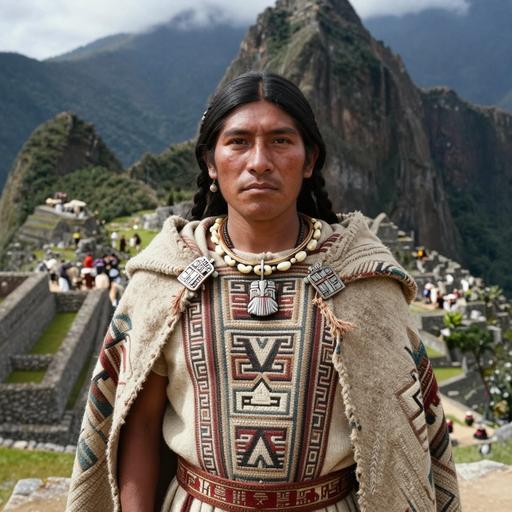
Portrait reconstruction of I2258
Ancient Individual

A man buried in Peru in the Pre-Columbian South America era

I2258
1310 CE - 1405 CE
Male
Late Intermediate Period La Galgada, Peru 600 Years Ago
Peru
Scroll to begin
Chapter I

Identity

The biological and cultural markers that define this ancient individual

Sample ID

I2258

Date Range

1310 CE - 1405 CE

Biological Sex

Male

mtDNA Haplogroup

C1b

Y-DNA Haplogroup

Q-Z780

Cultural Period

Late Intermediate Period La Galgada, Peru 600 Years Ago

Chapter II

Place

Where this individual was discovered

Country Peru
Locality Ancash. Pallasca. La Galgada
Chapter III

Time

When this individual lived in the broader context of human history

I2258 1310 CE - 1405 CE
Chapter IV

Story

The narrative of this ancient life

The Late Intermediate Period (LIP) in the Andean region, roughly from 1000 to 1476 CE, was a time of significant cultural, political, and social transformation. La Galgada, located in the highlands of what is now Peru, presents a fascinating case study of this era, existing around 600 years ago (circa 1400 CE).

Geographical Context:

La Galgada is situated in the north-central highlands of Peru, in the Santa River Valley. This region is characterized by its rugged mountain landscapes and diverse ecological zones, offering a variety of resources that supported ancient communities. The area’s proximity to both the highland ecosystems and the coastal regions facilitated trade and cultural exchange.

Cultural and Historical Background:

The Late Intermediate Period succeeded the collapse of the Wari and Tiwanaku empires and preceded the rise of the Inca Empire, who began to consolidate power across the Andes in the late 14th and early 15th centuries. This period was marked by regional differentiation, as smaller polities and cultures developed distinctive identities.

Social Structure:

Societies during the Late Intermediate Period were typically organized in decentralized chiefdoms or small kingdoms. Social structure was influenced by kinship ties, with power often residing in lineage leaders or local elites. These societies exhibited increasing social stratification, which can be seen through archaeological remains indicating differences in dwelling sizes and grave goods.

Economy and Subsistence:

The economy of La Galgada was primarily based on agriculture, supplemented by hunting, fishing, and trading. The inhabitants cultivated crops such as maize, beans, potatoes, and quinoa, adapted to the altitude and microclimates of the region. Terracing and irrigation techniques indicate sophisticated agricultural practices. Alpaca and llama herding were also important for both transportation and as sources of wool and meat.

Religion and Cosmology:

Religious practices in the Andes were deeply connected to the natural environment, with a pantheon that included deities related to mountains, water, and agricultural fertility. Rituals and ceremonial architecture played significant roles in community life. Although specific information about religious practices at La Galgada during the LIP is sparse, the continuity of Andean religious traditions is well-documented in other sites from the period.

Art and Architecture:

The art of this period reflected both continuity and change from previous eras. Pottery, textiles, and metalwork were prevalent, often featuring elaborate designs that held symbolic meanings. Architecture in the region included both residential and ceremonial structures, with evidence suggesting that buildings served not only practical purposes but also reflected social status and played roles in religious activities.

Technological Developments:

During the Late Intermediate Period, technological advancements in metallurgy were noteworthy. The Andean civilizations were skilled at alloying metals such as silver, copper, and gold, creating tools, weapons, and ornamental items. The period also saw innovations in textile production, with intricate patterns and vibrant colors crafted using complex weaving techniques.

Interaction and Conflict:

This period was characterized by both collaboration and conflict among the various regional groups. Trade networks were extensive, allowing for the exchange of goods, ideas, and cultural influences. However, this era also saw increased warfare and fortification, evidence of which is found in hillforts and defensive structures. These conflicts may have been driven by competition for resources and political power, contributing to the shifting dynamics between societies.

Conclusion:

La Galgada during the Late Intermediate Period embodies the transitional and dynamic nature of Andean civilizations prior to the expansion of the Inca Empire. The archaeological and cultural records of this era offer invaluable insights into the resilience and adaptability of Andean societies as they navigated the complex interplay of environmental challenges, social transformations, and political change.

Chapter V

Genetics

The genetic ancestry of this ancient individual

Ancient Genetic Admixture

This analysis compares the DNA profile of I2258 with ancient reference populations, showing the genetic composition in terms of prehistoric ancestral groups.

Ancient Native Americans 79.9%
Ancient Asians 20.1%

Modern Genetic Admixture

This analysis compares the DNA profile with present-day reference populations, showing what percentage of genetic makeup resembles modern populations from different regions.

America 86.9%
America 86.9%
Native American 86.9%
Asia 13.1%
Japanese & Korean 8.2%
Japanese 8.2%
Central Asian, Northern Indian & Pakistani 3.8%
Indian 3.8%
Chinese & Southeast Asian 1.1%
Indonesian Khmer Thai Myanma 0.7%

Closest Modern Populations

These are the modern populations showing the closest statistical alignment to A man buried in Peru in the Pre-Columbian South America era, ranked by genetic distance. Lower distance values indicate closer statistical similarity.

1
Piapoco
1.8927
2
Aymara
2.1005
3
Wichi
2.3047
4
Yukpa
2.3892
5
Bolivian Lapaz
3.0981
6
Karitiana
3.3113
7
Colla
3.5309
8
Cachi
4.0625
9
Surui
4.3351
10
Mixe
4.4440
Chapter VI

Context

Other ancient individuals connected to this sample

Sources

References

Scientific publications and genetic data

Scientific Publication

A Paleogenomic Reconstruction of the Deep Population History of the Andes

Authors Nakatsuka N, Lazaridis I, Barbieri C
Abstract

There are many unanswered questions about the population history of the Central and South Central Andes, particularly regarding the impact of large-scale societies, such as the Moche, Wari, Tiwanaku, and Inca. We assembled genome-wide data on 89 individuals dating from ∼9,000-500 years ago (BP), with a particular focus on the period of the rise and fall of state societies. Today's genetic structure began to develop by 5,800 BP, followed by bi-directional gene flow between the North and South Highlands, and between the Highlands and Coast. We detect minimal admixture among neighboring groups between ∼2,000-500 BP, although we do detect cosmopolitanism (people of diverse ancestries living side-by-side) in the heartlands of the Tiwanaku and Inca polities. We also highlight cases of long-range mobility connecting the Andes to Argentina and the Northwest Andes to the Amazon Basin. VIDEO ABSTRACT.

G25 Coordinates

The G25 coordinates for sample I2258 can be used for detailed admixture analysis in our G25 Studio tool.

I2258,0.05727462,-0.31450226,0.1117589,0.10161188,-0.1137991,-0.0094783,-0.30559358,-0.35918934,-0.01556012,-0.01774554,0.00135898,-0.00120888,-0.00080488,0.02513114,-0.00594394,-0.00087412,0.00598038,0.00263042,3.94E-06,-0.0022425,-0.00113326,0.00820676,-0.00285366,-0.00538656,-0.00628468
Analyze in G25 Studio
Use code for 40% off Expires Feb 27