Menu
Store
Blog
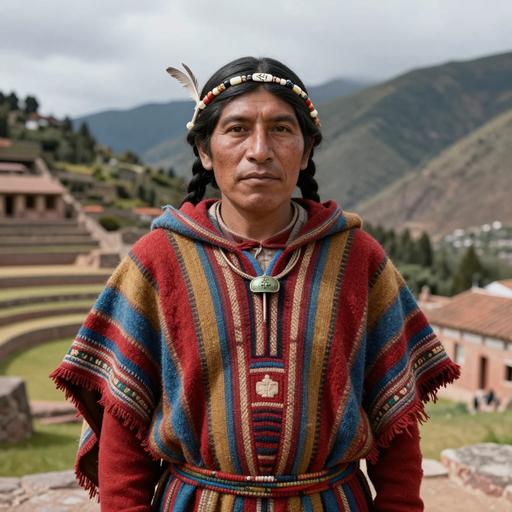
Portrait reconstruction of I2543
Ancient Individual

A man buried in Peru in the Pre-Columbian South America era

I2543
985 CE - 1030 CE
Male
Middle Horizon Campanayuq, Peru 1,000 Years Ago
Peru
Scroll to begin
Chapter I

Identity

The biological and cultural markers that define this ancient individual

Sample ID

I2543

Date Range

985 CE - 1030 CE

Biological Sex

Male

mtDNA Haplogroup

C1d1

Y-DNA Haplogroup

F-M89

Cultural Period

Middle Horizon Campanayuq, Peru 1,000 Years Ago

Chapter II

Place

Where this individual was discovered

Country Peru
Locality Chanka
Chapter III

Time

When this individual lived in the broader context of human history

I2543 985 CE - 1030 CE
Chapter IV

Story

The narrative of this ancient life

The Middle Horizon period, which spans from approximately 600 to 1000 CE, is a critical era in Andean history marked by significant cultural and political evolution. Within this broader timeline, the region of Campanayuq in present-day Peru played a role reflective of the broader shifts occurring across the Andes during this period.

Geographic and Cultural Context

Campanayuq is situated in the Andean highlands, a region characterized by its mountainous terrain and varied climate zones. This area was part of a broader cultural and political landscape influenced by major powers such as the Wari and Tiwanaku empires. These empires spread their influence over vast territories, shaping local customs, architecture, and social structures.

Political Structure and Influence

During the Middle Horizon, the Wari Empire was one of the dominant forces in the central Andes. Emerging from the region of Ayacucho, the Wari developed a network of administrative centers that communicated across extensive road systems, facilitating control and cultural dissemination. The influence of the Wari likely extended to areas like Campanayuq through such networks, although local adaptations would have been prominent.

Economic Activities

Economically, the inhabitants of Campanayuq, like much of the Andean societies of the time, engaged in advanced agricultural practices. They utilized terracing to maximize arable land in the mountainous terrain and developed sophisticated irrigation systems. The cultivation of staple crops such as maize, potatoes, and quinoa would have been central, alongside camelid herding, which provided meat, wool, and transportation.

Social and Cultural Practices

The social structure during the Middle Horizon was likely hierarchical, with power centralized in the hands of elite ruling classes. These elites were often connected to religious or ceremonial roles, with spirituality playing a central role in daily life. While the Wari culture is noted for its elaborate textiles and ceramics, local variations would have existed in Campanayuq, characterized by unique artistic expressions and material culture.

Religion in this era was deeply interwoven with politics and economy, with deities and rituals playing critical roles in legitimizing power and ensuring agricultural fertility. The Wari, in particular, are known for blending religious themes with political governance, and these themes might have permeated into Campanayuq's local beliefs.

Architectural and Artistic Developments

Architecturally, the Middle Horizon is known for its urban planning and monumental constructions. While specifics about Campanayuq's architecture during this period might be sparse, it is plausible that influences of Wari architectural styles such as large stone constructions, rectangular buildings, and planned cities were present to some extent. Artisans in the region likely created textiles and ceramics that reflected both local traditions and broader Middle Horizon motifs.

Decline and Legacy

Toward the end of the Middle Horizon, around 1000 CE, the centralized control exhibited by powers like the Wari began to wane, leading to a period of regionalism and fragmentation. Despite this decline, the legacy of the Middle Horizon continues to influence the Andean cultural landscape, setting foundations for subsequent societies, including the Inca.

In summary, Campanayuq during the Middle Horizon would have been a microcosm of the broader Andean transformations—a place where local traditions intersected with the influential wave of the Wari Empire, creating a dynamic and evolving cultural tapestry.

Chapter V

Genetics

The genetic ancestry of this ancient individual

Ancient Genetic Admixture

This analysis compares the DNA profile of I2543 with ancient reference populations, showing the genetic composition in terms of prehistoric ancestral groups.

Ancient Native Americans 83.0%
Ancient Asians 11.0%
Neolithic Farmers 3.0%
Ancient Oceanians 2.9%

Modern Genetic Admixture

This analysis compares the DNA profile with present-day reference populations, showing what percentage of genetic makeup resembles modern populations from different regions.

America 85.6%
America 85.6%
Native American 85.6%
Asia 12.4%
Chinese & Southeast Asian 12.4%
Chinese 12.4%
Africa 2.1%
West African 2.1%
Senegambian & Guinean 2.1%

Closest Modern Populations

These are the modern populations showing the closest statistical alignment to A man buried in Peru in the Pre-Columbian South America era, ranked by genetic distance. Lower distance values indicate closer statistical similarity.

1
Piapoco
1.7119
2
Wichi
1.8792
3
Aymara
2.1108
4
Yukpa
2.3944
5
Karitiana
3.0310
6
Bolivian Lapaz
3.3675
7
Colla
3.8947
8
Surui
4.1080
9
Cachi
4.5151
10
Mixe
4.6355
Chapter VI

Context

Other ancient individuals connected to this sample

Sources

References

Scientific publications and genetic data

Scientific Publication

A Paleogenomic Reconstruction of the Deep Population History of the Andes

Authors Nakatsuka N, Lazaridis I, Barbieri C
Abstract

There are many unanswered questions about the population history of the Central and South Central Andes, particularly regarding the impact of large-scale societies, such as the Moche, Wari, Tiwanaku, and Inca. We assembled genome-wide data on 89 individuals dating from ∼9,000-500 years ago (BP), with a particular focus on the period of the rise and fall of state societies. Today's genetic structure began to develop by 5,800 BP, followed by bi-directional gene flow between the North and South Highlands, and between the Highlands and Coast. We detect minimal admixture among neighboring groups between ∼2,000-500 BP, although we do detect cosmopolitanism (people of diverse ancestries living side-by-side) in the heartlands of the Tiwanaku and Inca polities. We also highlight cases of long-range mobility connecting the Andes to Argentina and the Northwest Andes to the Amazon Basin. VIDEO ABSTRACT.

G25 Coordinates

The G25 coordinates for sample I2543 can be used for detailed admixture analysis in our G25 Studio tool.

I2543,0.05643264,-0.31900108,0.11383542,0.10170236,-0.11790856,-0.011415,-0.3072476,-0.36114924,-0.01482618,-0.01698548,0.00175152,-0.0008362,-0.00132676,0.0256954,-0.00605334,-0.00072276,0.00616426,0.00336456,0.00117092,-0.00157388,-0.000434,0.00734482,-0.00255382,-0.00519732,-0.00554032
Analyze in G25 Studio
Use code for 40% off Expires Feb 27