Menu
Store
Blog
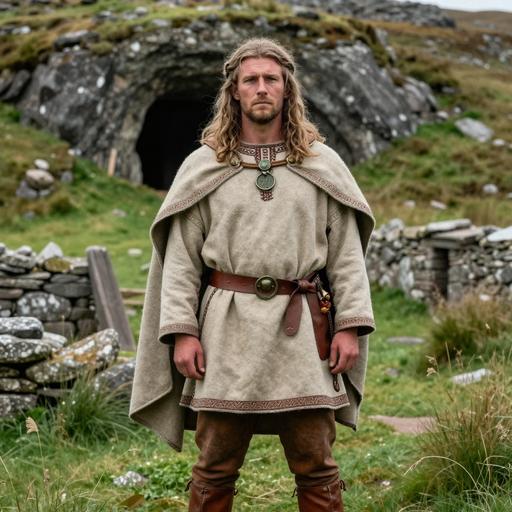
Portrait reconstruction of I2860
Ancient Individual

A man buried in United Kingdom in the Late Bronze Age era

I2860
969 BCE - 812 BCE
Male
Late Bronze Age Scotland
United Kingdom
Scroll to begin
Chapter I

Identity

The biological and cultural markers that define this ancient individual

Sample ID

I2860

Date Range

969 BCE - 812 BCE

Biological Sex

Male

mtDNA Haplogroup

H5a1*

Y-DNA Haplogroup

R1b1a1b1a1a2

Cultural Period

Late Bronze Age Scotland

Chapter II

Place

Where this individual was discovered

Country United Kingdom
Locality Scotland. Covesea Cave 2
Coordinates 57.7210, -3.3881
Chapter III

Time

When this individual lived in the broader context of human history

I2860 969 BCE - 812 BCE
Chapter IV

Story

The narrative of this ancient life

The Late Bronze Age in Scotland, approximately spanning from 1200 to 500 BCE, marks a dynamic period in its prehistory characterized by significant technological advancement, social complexity, and cultural interchange. During this era, the use of bronze, an alloy of copper and tin, was at its peak, profoundly influencing various aspects of life, from toolmaking to societal organization.

Technological and Economic Developments

The Late Bronze Age was defined by a well-established bronze metallurgy. Metalworking skills reached sophisticated levels, enabling the production of a wide array of items, from weapons such as swords and spears to tools and everyday implements including axes and sickles. This period saw the widespread production of elaborate metalwork, often with intricate designs, reflecting both local styles and influences from other regions.

Scotland, with its varied and rugged landscapes, was populated by communities that engaged in mixed farming economies. They cultivated cereal crops such as barley and wheat while also engaging in animal husbandry, predominantly herding cattle, sheep, and pigs. The presence of bronze tools and implements facilitated more efficient agricultural practices, boosting productivity and supporting a growing population.

Settlements and Architecture

Late Bronze Age communities in Scotland were primarily organized into small, dispersed settlements. The archaeological record reveals the presence of roundhouses, which served as primary dwellings. These structures were usually built with wooden frames, wattle and daub walls, and thatched roofs, designed to provide shelter against the harsh Scottish climate.

In certain areas, more permanent and protective structures emerged, such as enclosures and hillforts, indicating increased concerns with security and defense. These constructions suggest a degree of social stratification and the potential for conflicts either between or within communities.

Social Structure and Culture

The social fabric of Late Bronze Age Scotland was complex and likely stratified. Metalworkers, given their crucial role in society, might have held elevated status due to their specialized skills. The existence of burial sites containing grave goods, including crafted weapons and ornaments, hints at an emerging elite class. Such distinctions might reflect power dynamics based on control over resources or trade routes.

Culturally, the period was marked by dynamic interchange both within Scotland and with neighboring regions. The spread of styles and motifs in artifacts indicates that Scottish communities were part of broader trade networks extending across the British Isles and even into continental Europe. This contact facilitated the exchange not only of goods but also of ideas and cultural practices.

Art and Rituals

Artistic expression in Late Bronze Age Scotland is visible in the decorative motifs found on bronze objects and pottery. These designs often featured geometric patterns and sometimes depicted animals or natural scenes, suggesting symbolic or ritual significance.

Rituals and religious practices were likely closely tied to the natural environment and agrarian calendar. Evidence of ritual deposits in wetland areas and waterways implies a belief system that revered nature and perhaps involved offerings to deities or spiritual entities. Such practices reflect a deep connection to the landscape, which held both economic and spiritual importance.

Transition and Legacy

Towards the end of the Late Bronze Age, around 800 BCE, Scotland began transitioning into the Iron Age. This shift brought about changes in material culture, technology, and social structures as iron gradually supplanted bronze as the dominant material for tools and weapons.

Despite these changes, the contributions of the Late Bronze Age to Scottish prehistory are substantial, as it laid the groundwork for subsequent societal developments. The innovations and cultural practices of this era influenced the evolving identities of communities in the region and left lasting imprints on their descendants.

In summary, Late Bronze Age Scotland was a period of significant cultural achievement, marked by technological advancements in metallurgy, evolving social structures, and a rich tapestry of art and ritual, all of which played a crucial role in shaping the prehistoric landscape of Scotland.

Chapter V

Genetics

The genetic ancestry of this ancient individual

Ancient Genetic Admixture

This analysis compares the DNA profile of I2860 with ancient reference populations, showing the genetic composition in terms of prehistoric ancestral groups.

Western Steppe Pastoralists 41.1%
European Hunter-Gatherers 34.8%
Neolithic Farmers 20.7%
Ancient Asians 3.4%

Modern Genetic Admixture

This analysis compares the DNA profile with present-day reference populations, showing what percentage of genetic makeup resembles modern populations from different regions.

Europe 100.0%
Northwestern European 67.8%
English 40.1%
Scandinavian 13.9%
Northwestern European 10.4%
Finnish 3.4%
Southern European 26.5%
Iberian 20.6%
Italian 5.4%
Eastern European 5.7%

Closest Modern Populations

These are the modern populations showing the closest statistical alignment to A man buried in United Kingdom in the Late Bronze Age era, ranked by genetic distance. Lower distance values indicate closer statistical similarity.

1
Orcadian
2.1732
2
Scottish
2.3364
3
English
2.6038
4
Dutch
2.7012
5
Irish
2.7035
6
Norwegian
2.7547
7
Icelandic
2.7581
8
Welsh
2.7877
9
English Cornwall
2.8285
10
Danish
2.8882
Chapter VI

Context

Other ancient individuals connected to this sample

Sources

References

Scientific publications and genetic data

Scientific Publication

The Beaker phenomenon and the genomic transformation of northwest Europe

Authors Olalde I, Brace S, Allentoft ME
Abstract

From around 2750 to 2500 bc, Bell Beaker pottery became widespread across western and central Europe, before it disappeared between 2200 and 1800 bc. The forces that propelled its expansion are a matter of long-standing debate, and there is support for both cultural diffusion and migration having a role in this process. Here we present genome-wide data from 400 Neolithic, Copper Age and Bronze Age Europeans, including 226 individuals associated with Beaker-complex artefacts. We detected limited genetic affinity between Beaker-complex-associated individuals from Iberia and central Europe, and thus exclude migration as an important mechanism of spread between these two regions. However, migration had a key role in the further dissemination of the Beaker complex. We document this phenomenon most clearly in Britain, where the spread of the Beaker complex introduced high levels of steppe-related ancestry and was associated with the replacement of approximately 90% of Britain's gene pool within a few hundred years, continuing the east-to-west expansion that had brought steppe-related ancestry into central and northern Europe over the previous centuries.

G25 Coordinates

The G25 coordinates for sample I2860 can be used for detailed admixture analysis in our G25 Studio tool.

I2860,0.12963452,0.12345606,0.0634807,0.04903798,0.03695284,0.01203818,0.00600592,0.00898308,0.0059637,0.00182976,-0.00329056,0.0063805,-0.0064065,-0.00906194,0.0222797,-0.0051448,-0.01888316,-0.00069696,-0.0001425,-0.0027181,0.00355058,0.00327596,-0.00736552,0.00384414,-0.00457745
Analyze in G25 Studio
Use code for 40% off Expires Feb 27