Menu
Store
Blog
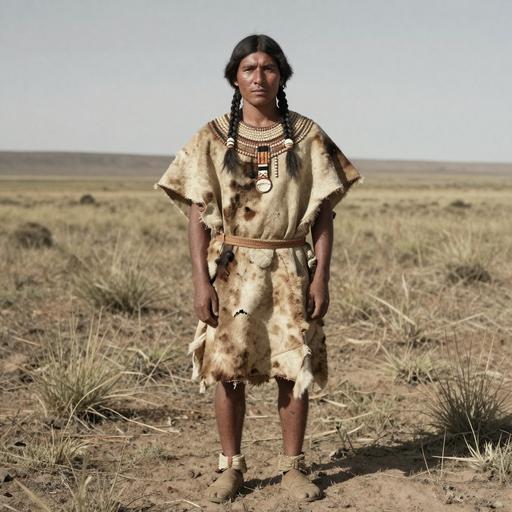
Portrait reconstruction of I8350
Ancient Individual

A man buried in Argentina in the Ancient South America era

I8350
7000 BCE - 4500 BCE
Male
Laguna Chica Site 6800 Years Ago
Argentina
Scroll to begin
Chapter I

Identity

The biological and cultural markers that define this ancient individual

Sample ID

I8350

Date Range

7000 BCE - 4500 BCE

Biological Sex

Male

mtDNA Haplogroup

A2

Y-DNA Haplogroup

Q-M3

Cultural Period

Laguna Chica Site 6800 Years Ago

Chapter II

Place

Where this individual was discovered

Country Argentina
Locality Pampas. Laguna Chica
Chapter III

Time

When this individual lived in the broader context of human history

I8350 7000 BCE - 4500 BCE
Chapter IV

Story

The narrative of this ancient life

The Laguna Chica site in Argentina, dating back approximately 6800 years, offers a fascinating glimpse into the early stages of Andean civilization. This period, which falls within the Late Archaic era, marks a time of significant transition and cultural development as human societies across the Andean region began to shift from predominantly nomadic hunter-gatherer lifestyles to more sedentary, complex societies.

Geography and Environment

The Laguna Chica site is situated in the Andean foothills, characterized by a diverse environment that includes high-altitude grasslands, freshwater lakes, and nearby mountainous regions. This variety provided a rich setting that supported a wide range of flora and fauna, crucial for early Andean societies. The climate during this period was likely variable, with seasonal weather patterns influencing the availability of resources.

Subsistence Strategies

The inhabitants of the Laguna Chica site practiced a mixed subsistence strategy, integrating hunting, gathering, and early forms of agriculture. Archaeobotanical evidence suggests the collection and consumption of native plants, such as tubers and grains like quinoa, alongside the gathering of wild fruits and nuts. These early agricultural practices were supplemented by hunting local game, which might have included guanacos (wild relatives of the llama), deer, and small game. Fishing and the harvesting of aquatic resources from nearby lakes would have also played an integral role in their diet.

Tools and Technology

The technological toolkit of the site's inhabitants was diverse and indicative of a society adept at exploiting its environment. Stone tools, such as projectile points and scrapers, were expertly crafted, reflecting advanced skills in lithic technology. The presence of grinding stones and pottery fragments suggests the processing of plant materials and the storage or cooking of food. Innovation in tool-making during this era marks a step towards increased efficiency in food processing and daily life.

Social Structure and Settlement Patterns

Evidence from the Laguna Chica site hints at the beginnings of more permanent settlement patterns. While still partially nomadic, people began to establish semi-permanent camps, likely based around resource availability. These settlements may have served as central bases from which foraging and hunting expeditions were launched.

Social structures during this time were likely kin-based, with extended family groups or small bands cooperating to exploit local resources. The sharing of tasks such as hunting, gathering, and tool-making would have fostered strong communal bonds and a cooperative social structure.

Cultural and Spiritual Life

Artifacts and burial sites suggest a rich cultural and spiritual life. The Laguna Chica inhabitants likely participated in rituals or ceremonies linked to the changing seasons, hunting practices, or social cohesion. Items such as carved bone or stone amulets hint at the importance of spiritual or symbolic items which might have been used in personal adornment or religious practices.

Interaction and Trade

Despite the remote and rugged location, there is evidence to suggest interaction with other contemporary groups. The exchange of goods such as obsidian, shells, or other exotic materials points to a network of trade and communication. These interactions would have facilitated not only the exchange of goods but also ideas and cultural practices.

Conclusion

The Laguna Chica site 6800 years ago represents a critical juncture in the development of early Andean civilization. It reflects a society in transition, balancing between traditional nomadic ways and emerging sedentism, with increasing complexity in technology, social structure, and culture. This period set the groundwork for future developments in the Andes, leading to the rise of complex societies and ultimately the great civilizations of the region, such as the Inca.

Chapter V

Genetics

The genetic ancestry of this ancient individual

Ancient Genetic Admixture

This analysis compares the DNA profile of I8350 with ancient reference populations, showing the genetic composition in terms of prehistoric ancestral groups.

Ancient Native Americans 73.5%
Ancient Asians 26.5%

Modern Genetic Admixture

This analysis compares the DNA profile with present-day reference populations, showing what percentage of genetic makeup resembles modern populations from different regions.

America 91.8%
America 91.8%
Native American 91.8%
Asia 8.2%
Japanese & Korean 2.8%
Japanese 2.8%
Northern Asian 2.8%
Siberian 2.1%
Mongolian 0.7%
Chinese & Southeast Asian 2.6%
Tibetan 2.6%

Closest Modern Populations

These are the modern populations showing the closest statistical alignment to A man buried in Argentina in the Ancient South America era, ranked by genetic distance. Lower distance values indicate closer statistical similarity.

1
Mixe
2.7312
2
Aymara
3.0446
3
Bolivian Lapaz
3.2149
4
Piapoco
3.6117
5
Huichol
3.6564
6
Pima
3.7541
7
Cachi
3.8015
8
Yukpa
3.8451
9
Colla
3.8712
10
Wichi
3.9224
Chapter VI

Context

Other ancient individuals connected to this sample

Sources

References

Scientific publications and genetic data

Scientific Publication

Reconstructing the Deep Population History of Central and South America

Authors Posth C, Nakatsuka N, Lazaridis I
Abstract

We report genome-wide ancient DNA from 49 individuals forming four parallel time transects in Belize, Brazil, the Central Andes, and the Southern Cone, each dating to at least ∼9,000 years ago. The common ancestral population radiated rapidly from just one of the two early branches that contributed to Native Americans today. We document two previously unappreciated streams of gene flow between North and South America. One affected the Central Andes by ∼4,200 years ago, while the other explains an affinity between the oldest North American genome associated with the Clovis culture and the oldest Central and South Americans from Chile, Brazil, and Belize. However, this was not the primary source for later South Americans, as the other ancient individuals derive from lineages without specific affinity to the Clovis-associated genome, suggesting a population replacement that began at least 9,000 years ago and was followed by substantial population continuity in multiple regions.

G25 Coordinates

The G25 coordinates for sample I8350 can be used for detailed admixture analysis in our G25 Studio tool.

I8350,0.05564284,-0.32435094,0.1151401,0.0952967,-0.11900058,-0.01517348,-0.28990732,-0.34024406,-0.01216026,-0.01492458,0.0047472,-0.00050664,-0.00181834,0.02431824,-0.00660152,-0.00189542,0.00585608,0.00399652,0.00295082,-0.00061002,0.00275264,0.0041841,-0.0019569,-0.00446202,-0.00419361
Analyze in G25 Studio
Use code for 40% off Expires Feb 27