Menu
Store
Blog
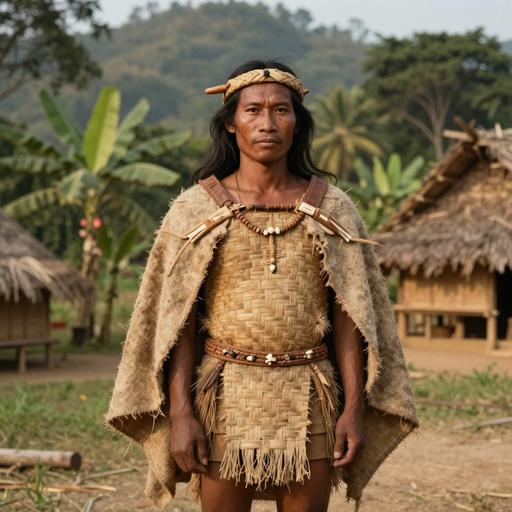
Portrait reconstruction of La364
Ancient Individual

A man buried in Laos in the Late Neolithic To Bronze Age era

La364
1125 BCE - 926 BCE
Male
Late Neolithic to Bronze Age Laos
Laos
Scroll to begin
Chapter I

Identity

The biological and cultural markers that define this ancient individual

Sample ID

La364

Date Range

1125 BCE - 926 BCE

Biological Sex

Male

mtDNA Haplogroup

F1a1a1

Y-DNA Haplogroup

O-B426

Cultural Period

Late Neolithic to Bronze Age Laos

Chapter II

Place

Where this individual was discovered

Country Laos
Locality Northeast Huapan. Tam Pa Ping
Chapter III

Time

When this individual lived in the broader context of human history

La364 1125 BCE - 926 BCE
Chapter IV

Story

The narrative of this ancient life

The transition from the Late Neolithic to the Bronze Age in Laos is a fascinating period that encapsulates significant cultural, technological, and societal transformations. This era in Southeast Asian history marks a critical juncture where prehistoric communities began adopting advancements that would lay the groundwork for subsequent civilizations. Let's explore this transitional phase in detail.

Geography and Environment

Laos, located in the heart of the Indochina Peninsula, is characterized by its rugged terrains, extensive river systems, and fertile valleys. During the Late Neolithic to Bronze Age, these geographic features would have significantly influenced settlement patterns and subsistence strategies. The Mekong River, in particular, served as a crucial artery for trade, communication, and transportation, linking various communities within the region and beyond.

Societal Organization

In the Late Neolithic period, Laos was primarily composed of small, kin-based groups practicing subsistence agriculture, hunting, and gathering. As people began transitioning into the Bronze Age, evidence suggests the emergence of more complex societal structures. Hierarchical organization started to appear, potentially led by chieftains or tribal leaders. These communities were likely organized around extended families or clans, involved in both agricultural practices and craft specialization.

Technological and Agricultural Advances

The Late Neolithic period in Laos saw the development of advanced stone tool technologies. As the Bronze Age approached, metallurgy began to surface, though at a slower pace than in other parts of Southeast Asia. The introduction of bronze tools and ornaments marked a significant technological advancement, allowing for improved agricultural practices, craftsmanship, and trade. This metallurgy was primarily based on copper-tin alloys, which were either produced locally or acquired through trade networks.

Agriculture during this period saw intensified rice cultivation, facilitated by improved farming techniques. Communities also practiced slash-and-burn agriculture and domesticated animals such as pigs and chickens, contributing to a more stable food supply and increased sedentism.

Cultural and Artistic Expressions

Artifacts from this era provide insight into the cultural and artistic expressions of the time. Pottery from the Late Neolithic period typically features simple designs, but as the Bronze Age emerged, ceramics became more sophisticated, with intricate decorations and varied forms. Jewelry, made from bronze and sometimes adorned with semi-precious stones, suggests a society placing increasing emphasis on personal adornment and status symbols.

Trade and Interaction

The Late Neolithic to Bronze Age transition in Laos was marked by increased regional interaction. Communities engaged in trade, exchanging commodities such as pottery, metals, and beads. These trade networks connected Laos with surrounding regions, facilitating cultural exchanges that influenced local technological and artistic developments.

Rituals and Beliefs

The archaeological record indicates that spiritual and ritual practices were an integral part of life during this era. Burial sites provide evidence of complex rituals, with graves often containing pottery, tools, and jewelry, suggesting beliefs in an afterlife or spiritual continuity. These practices indicate a society with evolving religious or ritualistic frameworks, potentially involving ancestor worship and animistic traditions.

Challenges and Adaptations

While technological advancements brought about significant advantages, these communities faced challenges such as environmental shifts, resource management, and social stratification. The ability to adapt to these changes was crucial and contributed to the resilience and eventual evolution of these societies into more complex Bronze Age cultures.

In summary, the Late Neolithic to Bronze Age period in Laos represents a critical era of transformation. It is characterized by technological advances, the shift from nomadic to semi-sedentary lifestyles, increased social complexity, and vibrant cultural expressions. These developments laid the foundation for future historical and cultural trajectories in Southeast Asia and underscored the dynamic interplay between environment, technology, and human ingenuity.

Chapter V

Genetics

The genetic ancestry of this ancient individual

Ancient Genetic Admixture

This analysis compares the DNA profile of La364 with ancient reference populations, showing the genetic composition in terms of prehistoric ancestral groups.

Ancient Asians 88.6%
Ancient Oceanians 3.7%
Western Steppe Pastoralists 3.1%
Neolithic Farmers 2.6%
Ancient Africans 2.1%

Modern Genetic Admixture

This analysis compares the DNA profile with present-day reference populations, showing what percentage of genetic makeup resembles modern populations from different regions.

Asia 95.5%
Chinese & Southeast Asian 90.6%
Chinese 42.1%
Vietnamese 31.9%
Indonesian Khmer Thai Myanma 16.7%
Central Asian, Northern Indian & Pakistani 4.9%
Indian 4.9%
Oceania 2.8%
Melanesian 2.8%
Papuan 2.8%
Africa 1.5%
Congolese & Southern East African 1.1%
South East African 1.1%

Closest Modern Populations

These are the modern populations showing the closest statistical alignment to A man buried in Laos in the Late Neolithic To Bronze Age era, ranked by genetic distance. Lower distance values indicate closer statistical similarity.

1
Kuy Suay
2.3244
2
Nyah Kur
2.5576
3
Khmer
2.6146
4
Cambodian
2.7077
Chapter VI

Context

Other ancient individuals connected to this sample

Sources

References

Scientific publications and genetic data

Scientific Publication

The prehistoric peopling of Southeast Asia

Authors McColl H, Racimo F, Vinner L
Abstract

The human occupation history of Southeast Asia (SEA) remains heavily debated. Current evidence suggests that SEA was occupied by Hòabìnhian hunter-gatherers until ~4000 years ago, when farming economies developed and expanded, restricting foraging groups to remote habitats. Some argue that agricultural development was indigenous; others favor the "two-layer" hypothesis that posits a southward expansion of farmers giving rise to present-day Southeast Asian genetic diversity. By sequencing 26 ancient human genomes (25 from SEA, 1 Japanese Jōmon), we show that neither interpretation fits the complexity of Southeast Asian history: Both Hòabìnhian hunter-gatherers and East Asian farmers contributed to current Southeast Asian diversity, with further migrations affecting island SEA and Vietnam. Our results help resolve one of the long-standing controversies in Southeast Asian prehistory.

G25 Coordinates

The G25 coordinates for sample La364 can be used for detailed admixture analysis in our G25 Studio tool.

La364,0.01586226,-0.3949699,-0.0715237,-0.02975964,0.12295528,0.06515016,-0.00208212,-0.008776,-0.00737684,-0.01293946,0.05814962,0.00421732,-0.0053219,-0.0035845,0.0019708,0.00277572,0.00397944,-0.0024566,-0.00210538,0.00915822,-0.00606162,0.00765032,-0.00353812,0.00011214,0.02394342
Analyze in G25 Studio
Use code for 40% off Expires Feb 27