Menu
Store
Blog
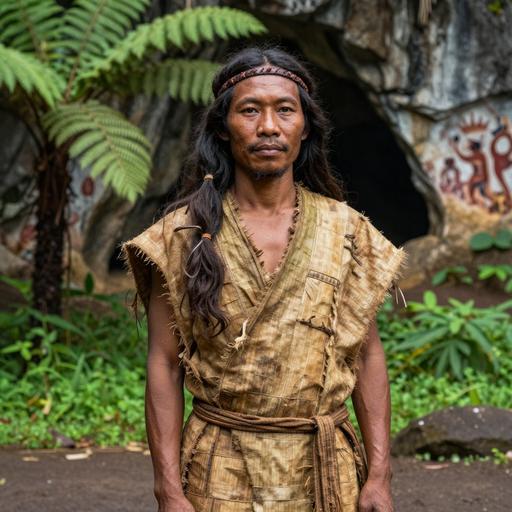
Portrait reconstruction of Ma911
Ancient Individual

A man buried in Malaysia in the Mesolithic era

Ma911
2463 BCE - 2209 BCE
Male
Hoabinhian Culture, Malaysia
Malaysia
Scroll to begin
Chapter I

Identity

The biological and cultural markers that define this ancient individual

Sample ID

Ma911

Date Range

2463 BCE - 2209 BCE

Biological Sex

Male

mtDNA Haplogroup

M21b1a

Y-DNA Haplogroup

D-M174

Cultural Period

Hoabinhian Culture, Malaysia

Chapter II

Place

Where this individual was discovered

Country Malaysia
Locality West Peninsular Kelantan. Gua Cha Cave
Coordinates 5.0170, 101.7700
Chapter III

Time

When this individual lived in the broader context of human history

Ma911 2463 BCE - 2209 BCE
Chapter IV

Story

The narrative of this ancient life

The Hoabinhian culture, also known as the Hoabinhian culture, is an important prehistoric cultural and archaeological complex that flourished in Southeast Asia, particularly in regions such as Malaysia, Vietnam, Thailand, Laos, and parts of Sumatra and Borneo. This culture is generally dated from around 10,000 BCE to 2,000 BCE, representing a significant period during the Mesolithic era, known for its distinctive stone tool technology and subsistence strategies.

Overview

The Hoabinhian name is derived from the site of Hoa Binh in northern Vietnam, where some of the earliest findings associated with this culture were discovered. Throughout its long history, the Hoabinhian culture contributed significantly to our understanding of prehistoric Southeast Asian societies, providing insights into their adaptation to local environments, technological innovations, and cultural practices.

Geography and Environment

The Hoabinhian culture primarily developed in the tropical, forested lowland regions of Southeast Asia. These areas provided a rich variety of ecological niches and resources, such as streams, rivers, coastal areas, and dense forests. These environments supported a broad-spectrum foraging economy, emphasizing a diverse diet including hunting, gathering, fishing, and possibly early forms of plant management.

Subsistence and Economy

Hoabinhian communities were highly adapted to the forested environments they inhabited. Their subsistence strategies were flexible and opportunistic, focusing on a wide variety of available resources. Evidence suggests that the Hoabinhian people engaged in:

  • Hunting and Gathering: They hunted small to medium-sized game such as monkeys, deer, and wild boar, and gathered a variety of plant foods, nuts, and fruits.
  • Fishing and Shellfish Gathering: Proximity to water bodies meant that fish and shellfish were essential components of their diet, as evidenced by shell middens found at various archaeological sites.
  • Early Plant Cultivation: Some researchers suggest that the Hoabinhian people may have practiced early forms of plant management or cultivation, as indicated by the presence of plant remains and cultivation tools at some sites.

Technology and Material Culture

The Hoabinhian culture is best known for its distinctive tool-making tradition, characterized by:

  • Stone Tools: These tools are mainly unifacially flaked pebble tools, such as axes and adzes, which exhibit a unique form of craftsmanship called the \Hoabinhian technique." This technique involves heavy chipping of stones on one side, producing tools that were efficient for woodworking and other tasks.

  • Use of Organic Materials: Although less preserved, tools made of bones, antler, and bamboo were likely crucial components of their technology, given the resource-rich environments they occupied.

Settlement Patterns and Social Organization

The Hoabinhian communities were likely semi-nomadic, occupying temporary campsites and caves, as evidenced by archaeological finds in coastal and inland regions of Malaysia. These sites suggest small, mobile groups that moved according to seasonal availability of resources. It is hypothesized that their social organization was relatively egalitarian, with social structures centered around kinship and cooperative survival strategies.

Cultural and Artistic Expressions

While direct evidence of complex symbolic or artistic expression is limited, the Hoabinhian culture may have had rich oral traditions and material culture that have not survived archaeologically. Some sites have uncovered ochre, suggesting possible body decoration, which hints at aesthetic and symbolic practices.

Impact and Legacy

The Hoabinhian culture represents a critical stage in the prehistory of Southeast Asia, showcasing early adaptation to tropical environments and setting the stage for later cultural developments. Understanding this culture helps researchers trace the transitions from hunter-gatherer lifestyles to more complex societies and the eventual arrival of the Austronesian-speaking peoples who further transformed the region's cultural landscape.

The following centuries saw significant cultural and technological advancements that built upon the foundation laid by the Hoabinhian communities, marking an essential chapter in the broader narrative of human history in Southeast Asia."

Chapter V

Genetics

The genetic ancestry of this ancient individual

Ancient Genetic Admixture

This analysis compares the DNA profile of Ma911 with ancient reference populations, showing the genetic composition in terms of prehistoric ancestral groups.

Ancient Asians 58.4%
Ancient Oceanians 17.1%
Neolithic Farmers 12.9%
Ancient Africans 9.6%
Western Steppe Pastoralists 2.0%

Modern Genetic Admixture

This analysis compares the DNA profile with present-day reference populations, showing what percentage of genetic makeup resembles modern populations from different regions.

Asia 76.9%
Central Asian, Northern Indian & Pakistani 49.0%
Indian 49.0%
Chinese & Southeast Asian 21.1%
Tibetan 11.3%
Chinese 4.9%
Vietnamese 4.2%
Indonesian Khmer Thai Myanma 0.8%
Japanese & Korean 6.8%
Japanese 6.8%
Oceania 14.6%
Melanesian 14.6%
Papuan 14.6%
Africa 8.3%
Northern East African 7.3%
Eastern African 7.3%
West African 0.6%
Senegambian & Guinean 0.6%

Closest Modern Populations

These are the modern populations showing the closest statistical alignment to A man buried in Malaysia in the Mesolithic era, ranked by genetic distance. Lower distance values indicate closer statistical similarity.

1
Jarawa
9.0763
2
Onge
9.1396
3
Damai
13.6343
4
Tharu O2
13.9471
5
Rohingya
13.9642
6
Nepali Indo Aryan D
14.0508
7
Nyishi
14.4400
8
Brahmin Manipuri
14.4543
9
Newar
14.6184
10
Bahun O
14.9082
Chapter VI

Context

Other ancient individuals connected to this sample

Sources

References

Scientific publications and genetic data

Scientific Publication

The prehistoric peopling of Southeast Asia

Authors McColl H, Racimo F, Vinner L
Abstract

The human occupation history of Southeast Asia (SEA) remains heavily debated. Current evidence suggests that SEA was occupied by Hòabìnhian hunter-gatherers until ~4000 years ago, when farming economies developed and expanded, restricting foraging groups to remote habitats. Some argue that agricultural development was indigenous; others favor the "two-layer" hypothesis that posits a southward expansion of farmers giving rise to present-day Southeast Asian genetic diversity. By sequencing 26 ancient human genomes (25 from SEA, 1 Japanese Jōmon), we show that neither interpretation fits the complexity of Southeast Asian history: Both Hòabìnhian hunter-gatherers and East Asian farmers contributed to current Southeast Asian diversity, with further migrations affecting island SEA and Vietnam. Our results help resolve one of the long-standing controversies in Southeast Asian prehistory.

G25 Coordinates

The G25 coordinates for sample Ma911 can be used for detailed admixture analysis in our G25 Studio tool.

Ma911,-0.01783106,-0.18232688,-0.12079708,0.07634944,0.0360541,-0.02817122,-0.00768822,0.00458078,0.01476338,0.01853896,0.0075915,0.00189396,-0.00288166,0.00193066,-0.00258546,-0.00540148,0.00092938,0.00061214,0.00156562,-0.00119406,-0.00084998,-0.00065456,-0.0054224,-0.00066144,-0.00201022
Analyze in G25 Studio
Use code for 40% off Expires Feb 27