Menu
Store
Blog
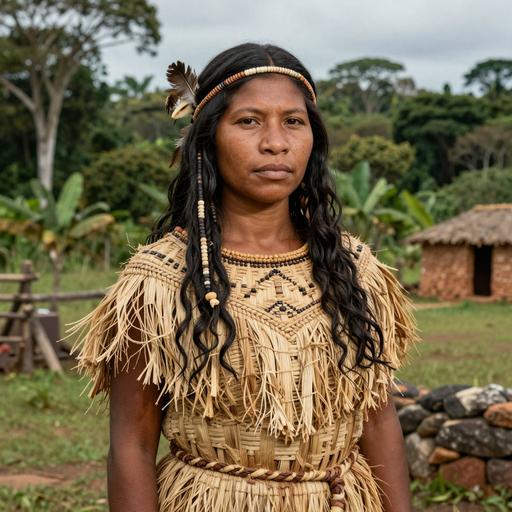
Portrait reconstruction of MOS001
Ancient Individual

A woman buried in Brazil in the Ancient South America era

MOS001
3960 BCE - 3714 BCE
Female
Moraes Site, Brazil 5,800 Years Ago
Brazil
Scroll to begin
Chapter I

Identity

The biological and cultural markers that define this ancient individual

Sample ID

MOS001

Date Range

3960 BCE - 3714 BCE

Biological Sex

Female

mtDNA Haplogroup

D4h3a

Cultural Period

Moraes Site, Brazil 5,800 Years Ago

Chapter II

Place

Where this individual was discovered

Country Brazil
Locality Moraes
Chapter III

Time

When this individual lived in the broader context of human history

MOS001 3960 BCE - 3714 BCE
Chapter IV

Story

The narrative of this ancient life

The Moraes site in Brazil, dating back approximately 5,800 years, provides valuable insights into the pre-Columbian civilizations of South America during the Late Archaic period. This era represents a time of significant transition and development for human societies in this region, as communities began to establish more permanent settlements and develop complex social structures and cultural practices. Here is an extensive and detailed description of this era:

Geographic and Environmental Context

The Moraes site is situated within a diverse ecological landscape that includes tropical forests, savannas, and riverine systems, providing a rich array of resources that supported human habitation. The climatic conditions during this period were characterized by warm temperatures and seasonal rainfall patterns, which influenced the availability of plant and animal resources.

Subsistence and Economy

The inhabitants of the Moraes site were primarily foragers, relying on a mixed subsistence economy that included hunting, fishing, gathering, and possibly early forms of horticulture. The abundance of natural resources, such as freshwater fish, terrestrial game, fruits, nuts, and tubers, supported a semi-sedentary lifestyle. There is evidence to suggest that the Moraes community engaged in the cultivation of domesticated plants, such as manioc and maize, indicating the beginnings of agricultural practices, which would later become more widespread and central to the economies of pre-Columbian civilizations in the region.

Social Structure

The social structure of the Moraes community was likely organized around kinship and extended family groups, with a strong emphasis on communal cooperation and resource sharing. Archaeological evidence suggests the existence of social differentiation, possibly based on age, gender, or skill, though a rigid hierarchical system was likely not present. The development of trade networks, both local and regional, enabled the exchange of goods, ideas, and cultural practices, strengthening social bonds and fostering inter-group relations.

Material Culture

The material culture of the Moraes site reveals a community adept at toolmaking and craft production. Stone tools, such as projectile points, scrapers, and axes, were commonly used for hunting and processing food. The presence of ceramics is noteworthy, as it marks an important technological advancement, allowing for improved food storage and preparation techniques. Pottery styles and decorations offer insights into the cultural and artistic expressions of the community, as well as their interactions with neighboring groups.

Spiritual and Ritual Life

The spiritual beliefs and practices of the Moraes inhabitants were deeply intertwined with the natural world. Archaeological evidence, such as burial sites and ritual artifacts, suggests the existence of complex belief systems that included ancestor worship and animistic elements. The use of symbolic motifs and ceremonial artifacts likely played a role in community rituals and ceremonies, aimed at ensuring the prosperity and well-being of the group.

Challenges and Adaptations

The Moraes site represents a period of adaptation to environmental changes and shifting resource availability. The community's ability to exploit diverse ecological niches and develop sustainable subsistence strategies highlights their resilience in the face of climatic fluctuations and environmental pressures. These adaptive strategies were crucial for the long-term survival and growth of pre-Columbian civilizations in Brazil.

In summary, the Moraes site from 5,800 years ago reflects a dynamic and evolving society characterized by a complex interplay of environmental adaptation, social organization, technological innovation, and cultural expression. Understanding this era provides a foundation for comprehending the broader tapestry of pre-Columbian civilizations in South America and their legacy in shaping the continent's history.

Chapter V

Genetics

The genetic ancestry of this ancient individual

Ancient Genetic Admixture

This analysis compares the DNA profile of MOS001 with ancient reference populations, showing the genetic composition in terms of prehistoric ancestral groups.

Ancient Native Americans 76.7%
Ancient Asians 17.5%
Western Steppe Pastoralists 5.8%

Modern Genetic Admixture

This analysis compares the DNA profile with present-day reference populations, showing what percentage of genetic makeup resembles modern populations from different regions.

America 91.2%
America 91.2%
Native American 91.2%
Asia 7.7%
Northern Asian 7.6%
Mongolian 4.1%
Siberian 3.5%
Europe 1.2%
Northwestern European 1.2%
Finnish 1.2%

Closest Modern Populations

These are the modern populations showing the closest statistical alignment to A woman buried in Brazil in the Ancient South America era, ranked by genetic distance. Lower distance values indicate closer statistical similarity.

1
Bolivian Lapaz
2.3860
2
Aymara
2.4652
3
Colla
2.7088
4
Cachi
2.7295
5
Yukpa
2.8877
6
Piapoco
2.9221
7
Mixe
3.1535
8
Wichi
3.4552
9
Mayan
3.4809
10
Pima
3.6983
Chapter VI

Context

Other ancient individuals connected to this sample

Sources

References

Scientific publications and genetic data

Scientific Publication

Reconstructing the Deep Population History of Central and South America

Authors Posth C, Nakatsuka N, Lazaridis I
Abstract

We report genome-wide ancient DNA from 49 individuals forming four parallel time transects in Belize, Brazil, the Central Andes, and the Southern Cone, each dating to at least ∼9,000 years ago. The common ancestral population radiated rapidly from just one of the two early branches that contributed to Native Americans today. We document two previously unappreciated streams of gene flow between North and South America. One affected the Central Andes by ∼4,200 years ago, while the other explains an affinity between the oldest North American genome associated with the Clovis culture and the oldest Central and South Americans from Chile, Brazil, and Belize. However, this was not the primary source for later South Americans, as the other ancient individuals derive from lineages without specific affinity to the Clovis-associated genome, suggesting a population replacement that began at least 9,000 years ago and was followed by substantial population continuity in multiple regions.

G25 Coordinates

The G25 coordinates for sample MOS001 can be used for detailed admixture analysis in our G25 Studio tool.

MOS001,0.05619012,-0.31217958,0.10858858,0.09847288,-0.11140508,-0.0127553,-0.29397936,-0.34683896,-0.0146849,-0.01681414,0.00066072,-0.0001397,-0.00092036,0.02392192,-0.00606136,0.00177358,0.00607464,0.00436334,0.00130604,-0.00198608,-0.00198336,0.00758344,-0.00361374,-0.00294904,-0.00389755
Analyze in G25 Studio
Use code for 40% off Expires Feb 27